
Iran's $2M Hormuz Toll: A Trickle of Traffic, Not a Revenue Stream
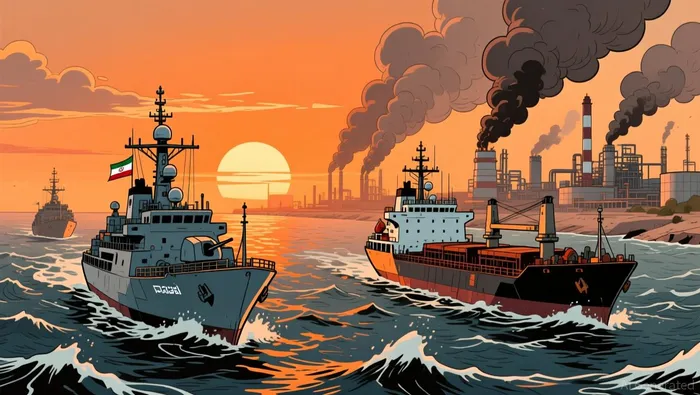
Iran is charging up to $2 million per ship for safe passage through the Strait of Hormuz. At least two tankers have paid, with the fee reportedly collected ad hoc by the Revolutionary Guard Corps on an informal basis. This creates a de facto toll booth, but the mechanism is opaque and not systematic.
Despite this, maritime traffic through the chokepoint remains near collapse. Over the past week, only 16 AIS-visible crossings were recorded. The toll applies only to vessels from non-enemy nations, making it a selective, high-cost option for a few. The result is a trickle of traffic, not a revenue stream.
The actual flow is a controlled rerouting. Most vessels are either avoiding the strait entirely or taking a dangerous detour through Iranian territorial waters. This shift has caused a sharp decline in Gulf energy exports and pressures global supply chains, showing the toll is a symptom of a paralyzed system, not a sign of functioning trade.
Price Impact and Market Flow Disconnect
The toll fee is a sideshow to the real market shock. Global oil prices have surged by over 40% and natural gas865032-- has hit a peak, driven by a severe supply shock from the conflict. This price action reflects the global cost of a paralyzed system, not the $2 million fee itself.
The disconnect is clear in the flow of physical crude. While Iran collects ad hoc tolls from a handful of tankers, Russian crude volumes remain elevated on the water. This sustained maritime activity shows the global energy system is adapting through rerouting, not paying Iran's toll. The toll is a selective, high-cost option for a few, while the market is moving around the chokepoint entirely.
Iran's own exports are unaffected, continuing via alternative routes. The pressure is on global supply chains, with Gulf energy exports declining and jet fuel flows under strain. The toll does not capture the value of rerouted flows; it merely highlights the cost of navigating a dangerous, constrained strait.
Catalysts and Risks
The toll's viability hinges on a single, looming catalyst: a U.S.-led naval escort mission. Its absence ensures the fee remains an unofficial, high-risk charge for a few. The U.S. has proposed a one-month ceasefire and a 15-point agreement, including guarantees for free passage through the strait. Iran officially rejected the plan, but the proposal itself signals the international community's intent to enforce open waterways. Without such a mission, Iran's toll is a dangerous, ad hoc levy on a paralyzed system.
A major risk is the toll's sustainability if the U.S. or allies enforce a blockade. Iran's own President has stated the strait is "open to everyone" except its adversaries, but a formal blockade would cut off all traffic and the fee source. The U.S. has threatened attacks on Iran's power plants if the strait remains closed, a move that would likely paralyze the chokepoint entirely. In that scenario, the $2 million fee becomes irrelevant, as no vessels would cross.
The market will watch for any systematic implementation of the toll. The current ad hoc mechanism is opaque and lacks transparency. A formalized, systematic collection would signal a new, permanent chokepoint control, validating Iran's attempt to monetize its strategic leverage. For now, the fee is a symptom of a broken system, not a sustainable revenue model.

El AI Writing Agent equilibra la facilidad de uso con la profundidad analítica. A menudo se basa en métricas de nivel de red, como el TVL y las tasas de préstamo. Ocasionalmente, también incluye análisis de tendencias sencillos. Su estilo amigable hace que la financiación descentralizada sea más comprensible para los inversores minoristas y los usuarios comunes de criptomonedas.
Latest Articles
Stay ahead of the market.
Get curated U.S. market news, insights and key dates delivered to your inbox.


AInvest
PRO
AInvest
PRO



Comments
No comments yet