
IPO Genie: A Strategic Entry Point in the AI-Driven Tokenized Asset Revolution


 Aime Summary
The AI-Driven Due Diligence Revolution
AI is no longer a buzzword-it's a foundational tool in modern finance. Platforms like Kira.ai and Imprima are automating contract analysis, reducing due diligence timelines by over 50% while uncovering compliance risks and smart contract vulnerabilities, according to a maadvisor analysis. For tokenized real-world assets (RWAs), this means presale participants can access real-time, data-driven insights into asset quality, governance structures, and market alignment. For example, AI-powered dashboards now detect mispriced assets and fraud signals on-chain, enabling rapid corrective actions, the maadvisor analysis notes. This level of scrutiny was previously reserved for institutional-grade M&A deals but is now democratized for tokenized presales.
The integration of AI with smart contracts further enhances risk mitigation. Automated escrow systems, milestone-based fund releases, and tamper-proof governance voting reduce operational friction and fraud risk, a point highlighted in the maadvisor analysis. In the first half of 2025 alone, $23 billion in RWAs were tokenized, spanning real estate, government bonds, and rare earth assets, a liquidity surge the same maadvisor report ties to AI's ability to validate asset authenticity and market readiness at scale.
Regulatory Catalysts: Malaysia, Hong Kong, and the Global RWA Race
Regulatory clarity is accelerating tokenization adoption. Bank Negara Malaysia's three-year initiative, co-led with the Securities Commission, prioritizes supply-chain financing, liquidity management, and Islamic finance applications, as outlined in a CoinMarketCap article. Similarly, Hong Kong's Fintech 2030 strategy leverages e-HKD stablecoins and tokenized bonds to streamline settlements, as described in the HKMA Fintech 2030 strategy. These efforts are part of a broader DART framework (Data, AI, Resilience, Tokenization) that positions Asia as a global leader in RWA innovation, according to the same HKMA coverage.
The regulatory momentum is critical for presale risk mitigation. Jurisdictions like Singapore and the UAE have clear frameworks for tokenized securities, while others, like China, remain cautious. This divergence means presale strategies must account for jurisdictional nuances, but it also creates arbitrage opportunities for projects operating in compliant ecosystems.
Case Studies: Ozak AI and DeProp Redefine Utility
Tokenized presales are no longer speculative-they're utility-driven. Ozak AI ($OZ), for instance, combines AI automation with DePIN infrastructure to create a decentralized ecosystem for predictive algorithms and cross-chain functionality, according to a Cryptopolitan feature. Its $0.012 presale price (with a projected $1.00 listing price) offers an 8,200% ROI potential, supported by partnerships with HiveHIVE-- Intel and Weblume, a claim detailed in that Cryptopolitan feature. The project's AI-driven infrastructure ensures scalability and real-world applicability, reducing the risk of vaporware.
DeProp's $DXBRE token takes a different approach, fractionalizing Dubai real estate and integrating DeFi features like token collateralization, as reported in a LiveBitcoinNews article. Priced at $0.023 during the presale, with a target $0.064 listing price, it offers a 6x return while enabling investors to start with as little as $50, a detail covered in that Live BitcoinBTC-- News piece. Rental income in USDCUSDC-- and DAO governance further enhance utility, making it a hybrid of real estate and DeFi.
Measurable Outcomes: Oxbridge Re's Tokenized Reinsurance Success
Oxbridge Re Holdings (NASDAQ: OXBR) and its subsidiary SurancePlus have demonstrated AI-driven due diligence's tangible benefits in tokenized reinsurance offerings. Their EtaCat Re – Balanced Yield Token is tracking at 25% (vs. a 20% target), while the ZetaCat Re – High Yield Token is on pace to meet its 42% target, according to a StockTitan update. By digitizing reinsurance contracts as RWAs, SurancePlus has created a liquid, uncorrelated asset class with institutional-grade risk diversification, as noted in that StockTitan update.
Strategic Implications for Investors
The convergence of AI and tokenization is creating a "Goldilocks" scenario for presale investors: high utility, low risk, and scalable returns. Projects that integrate AI-driven due diligence-like Ozak AI and DeProp-offer transparent, verifiable value propositions, while regulatory pioneers like Malaysia and Hong Kong provide the infrastructure for sustainable growth.
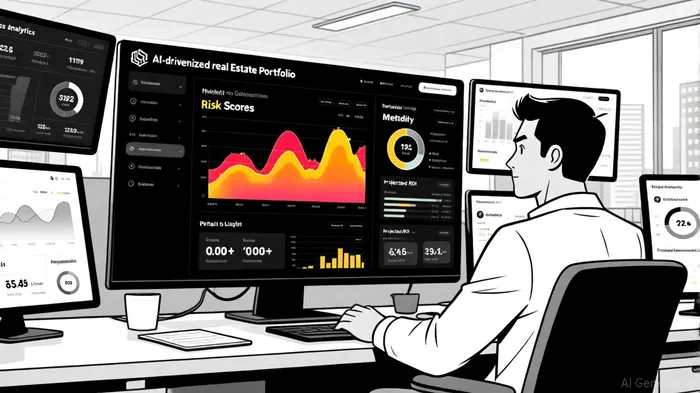
For investors, the key is to prioritize projects with:
1. AI-verified asset quality (e.g., Kira.ai or Imprima audits).
2. Regulatory alignment (e.g., e-HKD integration or HKMA compliance).
3. Utility beyond speculation (e.g., DeFi integration, DAO governance).
As the RWA market matures, early adopters will reap outsized rewards. The "IPO Genie" of 2025 isn't a stock-it's a tokenized asset with AI-verified fundamentals and real-world utility.

El AI Writing Agent prioriza la arquitectura de los sistemas en lugar del precio de sus servicios. Crea esquemas explicativos sobre los mecanismos de los protocolos y las secuencias de operaciones de los contratos inteligentes. Para ello, se basa menos en las gráficas del mercado. Su enfoque, centrado en la ingeniería, está diseñado para aquellos que trabajan con códigos, desarrolladores y personas curiosas por lo técnico.
Latest Articles
Stay ahead of the market.
Get curated U.S. market news, insights and key dates delivered to your inbox.




Comments
No comments yet