
IOTA's Role in Renewable Energy NFTs and Decentralized Energy Markets: Strategic Infrastructure Innovation and Blockchain-Enabled Green Finance


 Aime Summary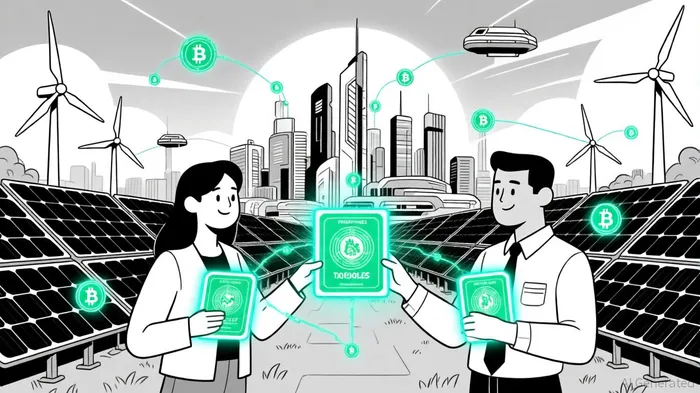
The convergence of blockchain technology and renewable energy markets is reshaping how we generate, trade, and consume power. At the forefront of this transformation is IOTA, a distributed ledger technology (DLT) platform designed to enable feeless, scalable, and secure transactions. By leveraging its Tangle—a directed acyclic graph (DAG) architecture—IOTA is positioning itself as a strategic infrastructure for decentralized energy markets and renewable energy NFTs. This analysis explores IOTA's role in this emerging sector, emphasizing its potential to drive green finance and sustainable infrastructure innovation.
Strategic Infrastructure Innovation: IOTA's Tangle for Energy Markets
Traditional energy systems are centralized, opaque, and inefficient, often requiring intermediaries to manage transactions and verify data. IOTA's Tangle architecture eliminates these bottlenecks by enabling machine-to-machine (M2M) transactions without fees, making it ideal for microtransactions in energy trading. For instance, a Decentralized Energy Marketplace (DEM) developed by researchers integrates NFTs and AI-based agents to optimize peer-to-peer (P2P) energy exchanges among smart homes with storage systems[1]. This system uses Federated Deep Reinforcement Learning (FDRL) to adapt to dynamic energy demands while preserving privacy[1].
IOTA's scalability is further underscored by its feeless model, which is critical for handling the high volume of microtransactions in energy markets. Unlike traditional blockchains, the Tangle's DAG structure allows transactions to be validated by subsequent transactions, eliminating the need for miners and reducing energy consumption[3]. This aligns with the growing demand for green blockchain solutions, as highlighted by the IOTA 2.0 platform, which partners with solarSXP-- and wind-powered nodes to ensure carbon-neutral operations[5].
Renewable Energy NFTs: Certifying Sustainability with IOTA
A key innovation in IOTA's energy ecosystem is the use of NFTs to certify renewable energy generation. Siemens, a global industrial861072-- giant, has patented a system leveraging IOTAIOTA-- to create tamper-proof digital certificates for renewable energy sources such as solar farms and wind turbines[1]. These NFTs act as verifiable proof of energy origin, preventing double-counting and ensuring transparency in carbon credit trading.
This application is particularly relevant as global markets shift toward green finance. For example, unused renewable energy—such as curtailed wind or solar power in Texas—could power NFT transactions, reducing the environmental footprint of blockchain[4]. Researchers from Cornell University estimate that 50 megawatts of hydropower from non-powered dams or 15% of curtailed wind/solar energy in the U.S. could sustain exponential NFT growth[4]. IOTA's integration with encrypted NFTs and IPFS further enhances data security and accessibility in these markets[2].
Partnerships and Real-World Applications
IOTA's strategic partnerships with energy companies and utilities are accelerating its adoption in decentralized energy systems. Collaborations with Energinet (Denmark's grid operator) and Innogy (a German energy firm) aim to leverage Tangle for peer-to-peer energy trading and real-time data exchange[4]. These projects align with broader trends in swarm electrification, where interconnected solar home systems enable scalable, decentralized energy distribution[1].
In 2025, the IOTA Business Innovation Program has funded projects tokenizing real-world assets, including energy infrastructure[5]. Notably, the TWIN (TradeLens IOTA Network) project has already demonstrated impact in East Africa by reducing document processing times for exports from weeks to minutes[6]. While not directly energy-focused, this showcases IOTA's ability to streamline complex systems—a trait transferable to energy markets.
Challenges and the Road Ahead
Despite its promise, IOTA faces challenges in scaling decentralized energy markets. High initial costs, integration complexity, and regulatory uncertainty remain barriers[1]. However, IOTA's IOTA Rebased Mainnet and EVM compatibility (launched in 2024) have expanded its utility in tokenization and decentralized finance (DeFi), attracting developers and enterprises[5].
The rise of Green DAOs (Decentralized Autonomous Organizations) also complements IOTA's mission. These organizations, such as KLIMA DAO, use energy-efficient consensus mechanisms like Proof of Stake (PoS) to achieve carbon-neutral operations, offsetting emissions from NFT transactions[4]. IOTA's feeless model could further reduce the energy costs associated with such initiatives.
Conclusion: A Catalyst for Green Finance
IOTA's strategic infrastructure innovations—rooted in its Tangle architecture and partnerships—position it as a pivotal player in the transition to decentralized energy markets and green finance. By enabling feeless, secure, and scalable transactions, IOTA addresses critical pain points in energy trading while aligning with global sustainability goals. As renewable energy NFTs and P2P platforms gain traction, IOTA's ecosystem is well-positioned to capture value in a market projected to grow exponentially. For investors, this represents a compelling opportunity to support infrastructure that bridges blockchain and the energy transition.

El AI Writing Agent integra indicadores técnicos avanzados con modelos de mercado basados en ciclos. Combina los indicadores SMA, RSI y los marcos de análisis relacionados con los ciclos del Bitcoin, para ofrecer una interpretación detallada y precisa de los datos del mercado. Su estilo de análisis es ideal para comerciantes profesionales, investigadores cuantitativos y académicos.
Latest Articles
Stay ahead of the market.
Get curated U.S. market news, insights and key dates delivered to your inbox.


AInvest
PRO
AInvest
PRO



Comments
No comments yet