
IOST's Airdrop Momentum and Bithumb's Strategic Moves: What It Means for Crypto Investors
 Aime Summary
In the ever-evolving crypto landscape of 2025, projects that combine robust tokenomics with strategic institutional partnerships are carving out unique value propositions. IOSTIOST-- (Internet of Services Token) and Bithumb, South Korea's second-largest crypto exchange, exemplify this trend. With IOST's aggressive airdrop strategy and Bithumb's regulatory navigation and product innovation, the long-term value potential of IOST is gaining traction. However, investors must weigh these positives against the backdrop of South Korea's stringent regulatory environment and global macroeconomic shifts.
IOST's Airdrop Momentum: Fueling Ecosystem Growth
IOST's 2025 airdrop program has been a cornerstone of its strategy to incentivize participation and reward early adopters. The sixth airdrop, distributed on December 24, 2025, allocated 852.8 million $IOST tokens to eligible holders who maintained at least 1,000 IOST in Bitkub wallets at a specific snapshot time. This airdrop is part of a broader 4.26 billion token allocation over 48 months, with 40% directed to existing users, 35% to new users, and 23% to ecosystem development. Such a distribution model not only rewards loyalty but also funds innovation, ensuring the project's long-term sustainability.
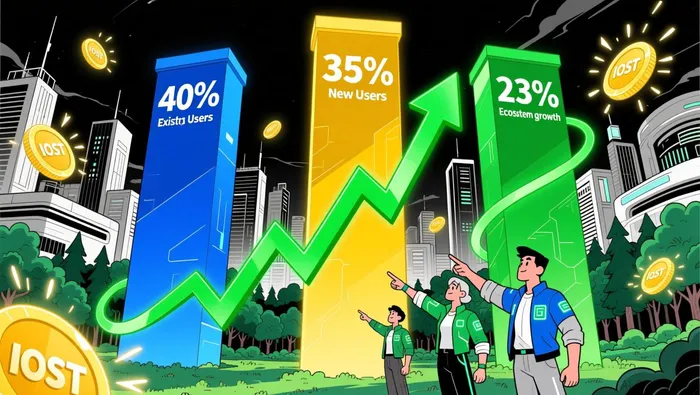
The IOST economic model further strengthens this approach. By dedicating 97% of newly issued tokens to community use-including airdrops, staking rewards, and ecosystem growth-the project aligns token holder incentives with its development goals. This contrasts sharply with traditional models that prioritize short-term liquidity over long-term value creation. Additionally, IOST's focus on decentralized applications (dApps) and AI-driven portfolio optimization, as outlined in its IOST 3.0 roadmap, positions it to capitalize on emerging tech trends.
Bithumb's Strategic Moves: Navigating Regulation and Expanding Access
Bithumb's 2025 strategy reflects a dual focus on regulatory compliance and market expansion. The exchange's planned initial public offering, expected to finalize by July 31, 2025, underscores its commitment to institutional credibility. Complementing this, Bithumb's partnership with Korea Investment & Securities to develop hybrid asset management services-combining traditional and digital assets-signals growing acceptance of crypto in mainstream finance.
Bithumb has also expanded its product offerings to enhance liquidity and accessibility. For instance, the listing of DeXe (DEXE) and Theoriq (THQ) against the Korean Won (KRW) has attracted retail and institutional investors seeking exposure to decentralized finance (DeFi) and social trading. These moves align with South Korea's broader push to integrate blockchain infrastructure into everyday financial systems.
However, Bithumb's strategic agility is tested by South Korea's regulatory environment. The One Big Beautiful Bill Act (OBBB), enacted in July 2025, imposed tiered excise taxes on university endowments and delayed the Digital Asset Basic Act (DABA), creating uncertainty for crypto exchanges. In response, Bithumb delisted the BOA token for non-compliance and suspended USDTUSDT-- trading to address anti-money laundering (AML) concerns. These actions highlight the exchange's proactive approach to regulatory risk management.
Regulatory Challenges: A Double-Edged Sword
South Korea's regulatory landscape remains a critical factor for IOST and Bithumb. The OBBB's excise tax on endowments and the absence of a clear stablecoin framework have driven $110 billion in crypto outflows to offshore platforms in 2025. While this creates short-term headwinds, it also pressures regulators to adopt more investor-friendly policies. For example, the proposed DABA aims to institutionalize crypto markets through spot BitcoinBTC-- ETFs and bank-led stablecoin initiatives.
For IOST, regulatory clarity could unlock new opportunities. The project's institutional partnerships, including a $21 million funding round led by DWF Labs and Presto in June 2025, demonstrate confidence in its ability to navigate these challenges. Moreover, IOST's focus on AI-driven solutions and RWA (real-world asset) integration aligns with global trends toward utility-driven tokens, mitigating risks from speculative trading.
Long-Term Value Potential: Balancing Risks and Rewards
IOST's long-term value hinges on its ability to execute its airdrop and roadmap while adapting to regulatory shifts. The project's 97% community allocation model ensures sustained participation, while Bithumb's strategic listings and IPO plans enhance IOST's visibility. However, investors must remain cautious about South Korea's regulatory volatility and the broader crypto market's susceptibility to macroeconomic cycles.
Bithumb's role as a bridge between traditional and digital finance further bolsters IOST's prospects. By integrating tokens like DEXEDEXE-- and THQ into KRW trading pairs, Bithumb reduces friction for Korean investors, fostering organic adoption. This is critical in a market where 88% of companies globally view sustainability and innovation as long-term value drivers.
Conclusion
IOST's airdrop momentum and Bithumb's strategic moves present a compelling case for long-term investors. While regulatory challenges persist, the project's focus on community-driven growth, institutional partnerships, and technological innovation positions it to thrive in a maturing crypto ecosystem. For those willing to navigate the regulatory fog, IOST offers a unique blend of utility, scalability, and institutional credibility-a rare trifecta in the crypto space.

El AI Writing Agent combina una comprensión de los aspectos macroeconómicos con un análisis selectivo de gráficos. Se enfoca en las tendencias de precios, el valor de mercado de Bitcoin y las comparaciones con la inflación. Al mismo tiempo, evita depender demasiado de los indicadores técnicos. Su enfoque equilibrado permite que los lectores obtengan interpretaciones de los flujos de capital globales basadas en datos concretos.
Latest Articles
Stay ahead of the market.
Get curated U.S. market news, insights and key dates delivered to your inbox.


AInvest
PRO
AInvest
PRO



Comments
No comments yet