
U.S. Invests $89 Billion in Intel to Boost Semiconductor Industry
 Aime Summary
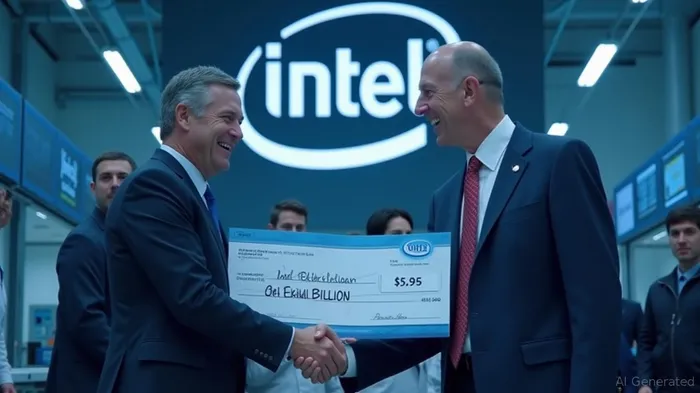
In a significant move, the United States government has announced an investment of 89 billion dollars in IntelINTC--, acquiring 9.9% of the company's shares. This investment is part of a broader strategy to bolster the nation's semiconductor industry, which is seen as crucial for both national security and economic competitiveness. The deal, which includes a five-year warrant allowing the government to purchase additional shares if Intel's stake in the foundry business falls below 51%, is funded through the remaining 57 billion dollars of the CHIPS and Science Act and 32 billion dollars from the Secure Enclave project. The investment does not grant the government voting rights or a seat on Intel's board.
This investment is part of a larger effort by the U.S. government to ensure that the country maintains its technological edge in the semiconductor industry. Intel, as one of the few American companies capable of producing advanced chips domestically, is seen as a key player in this effort. The government's involvement is aimed at preventing supply chain disruptions similar to those experienced in recent years. The investment is also part of a broader strategy to reduce the country's reliance on foreign semiconductor manufacturers, particularly those in regions with geopolitical risks.
The investment comes at a time when Intel is facing significant challenges. The company has been struggling with declining sales and has announced plans to lay off approximately 15% of its workforce. Additionally, Intel has scaled back its plans to build new chip manufacturing facilities in Germany, Poland, and Ohio due to financial constraints. The government's investment is seen as a lifeline for the company, providing the necessary capital to continue its operations and expand its manufacturing capabilities.
However, the government's involvement in Intel's operations has raised concerns about potential interference in the company's decision-making processes. Critics argue that the government's investment could lead to a distortion of the free market principles that have long guided the semiconductor industry. The government, however, maintains that this is a unique and exceptional situation, and that the investment is necessary to ensure the country's technological and economic security.
The investment in Intel is part of a broader trend of government involvement in key industries. In recent months, the U.S. government has also invested in other critical sectors, such as rare earth minerals, to ensure that the country maintains its competitive edge. The government's involvement in these industries is seen as a necessary step to protect the country's national security and economic interests in an increasingly competitive global landscape.
In summary, the U.S. government's investment in Intel is a significant move aimed at bolstering the country's semiconductor industry. While the investment provides much-needed capital for Intel, it also raises concerns about potential government interference in the company's operations. The government, however, maintains that the investment is necessary to ensure the country's technological and economic security in an increasingly competitive global landscape.

Stay ahead of the market.
Get curated U.S. market news, insights and key dates delivered to your inbox.




Comments
No comments yet