
Investors Flee U.S. Stocks in Record Sell-Off
Investors sharply reduced their exposure to U.S. equities in March, marking the biggest-ever decline in allocations.
According to a Bank of AmericaBAC-- survey of nearly 200 fund managers, investor allocation to U.S. stocks plummeted by 40 percentage points, falling from an overweight position of 17% in February to a net underweight of 23% in March. The surveyed fund managers collectively oversee $477 billion in assets.
Investor sentiment toward technology stocks has turned especially bearish, with allocations dropping to a net underweight of 12%—the lowest level in more than two years.
The sharp decline in confidence has been attributed to growing concerns over stagflation, global trade wars, and the end of U.S. exceptionalism. March's drop in sentiment marks the steepest monthly decline since the March 2020 COVID-19 market crash.
It is not surprising that fund managers are moving away from U.S. markets, said Trevor Greetham, Head of Multi-Asset at Royal London Asset Management. U.S. stock valuations remain excessive, while White House policies are acting as an economic drag.
Nearly 70% of investors now believe that the U.S. exceptionalism narrative has peaked. At the start of the year, investors were overwhelmingly bullish, but by the end of winter, they had become outright bearish, said Elyas Galou, Senior Investment Strategist at Bank of America. What was once widespread optimism about U.S. markets has now significantly eroded.
Massive Shift to Europe
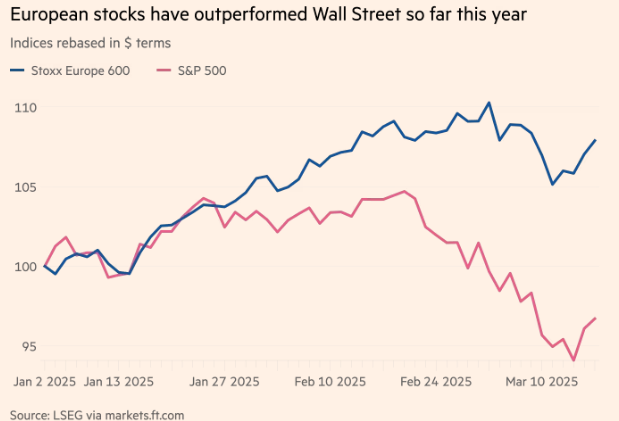
While U.S. equities saw historic outflows, European markets reaped the benefits.
Investor allocations to Eurozone stocks surged by 27 percentage points in March, reaching their highest level since July 2021. This represents the largest-ever recorded shift from U.S. to European equities since Bank of America began tracking fund flows in 1999.
Market Correction or Bear Market?
Despite the dramatic outflows, some strategists believe this isn't a full-blown bear market but rather a rapid rebalancing.
This is not a classic risk-off move where investors are dumping all assets, said Michael Metcalfe, Head of Macro Strategy at State StreetSTT-- Global Markets. He described the shift as more of a reallocation than outright risk aversion.
Investors don't appear to be preparing for a prolonged bear market, Metcalfe added. Instead, what we're seeing looks more like a quick adjustment from the highly concentrated trades at the start of the year.

Expert analysis on U.S. markets and macro trends, delivering clear perspectives behind major market moves.
Latest Articles
Stay ahead of the market.
Get curated U.S. market news, insights and key dates delivered to your inbox.
AInvest
PRO
AInvest
PRO



Comments
No comments yet