
AInvest Newsletter
Daily stocks & crypto headlines, free to your inbox


 Aime Summary
Netflix's blockbuster $82.7 billion acquisition of
Discovery's film studio and HBO Max content library hinges on a specific per-share structure. Each Warner Bros. Discovery share will be exchanged for $23.25 in cash plus $4.50 worth of stock, totaling $27.75 per share, subject to a price collar mechanism to manage fluctuations . This cash-and-stock blend aims to balance immediate value delivery with shared future upside for shareholders.The market initially reacted with caution. Netflix shares dipped 3% in pre-market trading, while Warner Bros. Discovery shares fell 1%
amid competitive bidding pressure and concerns about the deal's complexity. This nervousness persists despite the deal surpassing rival Paramount Skydance's bid, as analysts flag significant regulatory hurdles ahead.The primary regulatory concern centers on the sheer scale of the combined subscriber base, potentially bringing together roughly 450 million streaming subscribers from both companies. Antitrust authorities globally will scrutinize whether the merger stifles competition in the content marketplace and affects pricing power for consumers. The rigorous regulatory review process casts ongoing uncertainty over the transaction's completion timeline, even as Netflix bets on the long-term strategic value of this content consolidation. The outcome remains clouded by the complexity of approvals required across multiple jurisdictions.
Netflix's growth hinges on accelerating global penetration, particularly outside North America where market saturation is advanced. Evidence suggests EMEA and Asia-Pacific subscriber penetration rates could double through 2025, driven by localized content and pricing strategies, though exact baseline figures remain restricted to premium segments. This expansion complements the $82.7 billion acquisition of Warner Bros. Discovery, which immediately injects HBO's award-winning content into Netflix's library. Analysts acknowledge HBO's potential to attract new subscribers and increase engagement on the platform, though its standalone future remains uncertain following WBD's plans to spin off linear networks like TNT into a new entity by Q3 2026. This spin-off introduces fragmentation risk, potentially diluting HBO's value and complicating integration timelines.
The merger targets immediate financial synergy, projecting $2-3 billion in annual cost savings by the third year post-closing, primarily from eliminating duplicate overhead and streamlining content licensing deals. Combining Netflix's 117 million global subscribers with WBD's roughly 333 million (totaling ~450 million) also creates significant regulatory scrutiny, especially concerning theatrical distribution partnerships and antitrust review due to the combined subscriber base. While vertical integration strengthens Netflix's studio model, challenges persist in merging disparate corporate cultures and content libraries, alongside unresolved questions about the long-term viability of WBD's linear assets outside a streaming-focused entity.
Nevertheless, the acquisition fundamentally reshapes Netflix's competitive positioning, providing unmatched content depth and scale to fend off rivals like Disney+ and Amazon Prime Video. Penetration growth in high-potential regions, amplified by HBO's brand strength, underpins the long-term thesis. However, the successful realization of synergies and navigating the spin-off's fragmentation effects remain critical near-term hurdles that could delay or dampen projected subscriber acceleration and cost benefits.
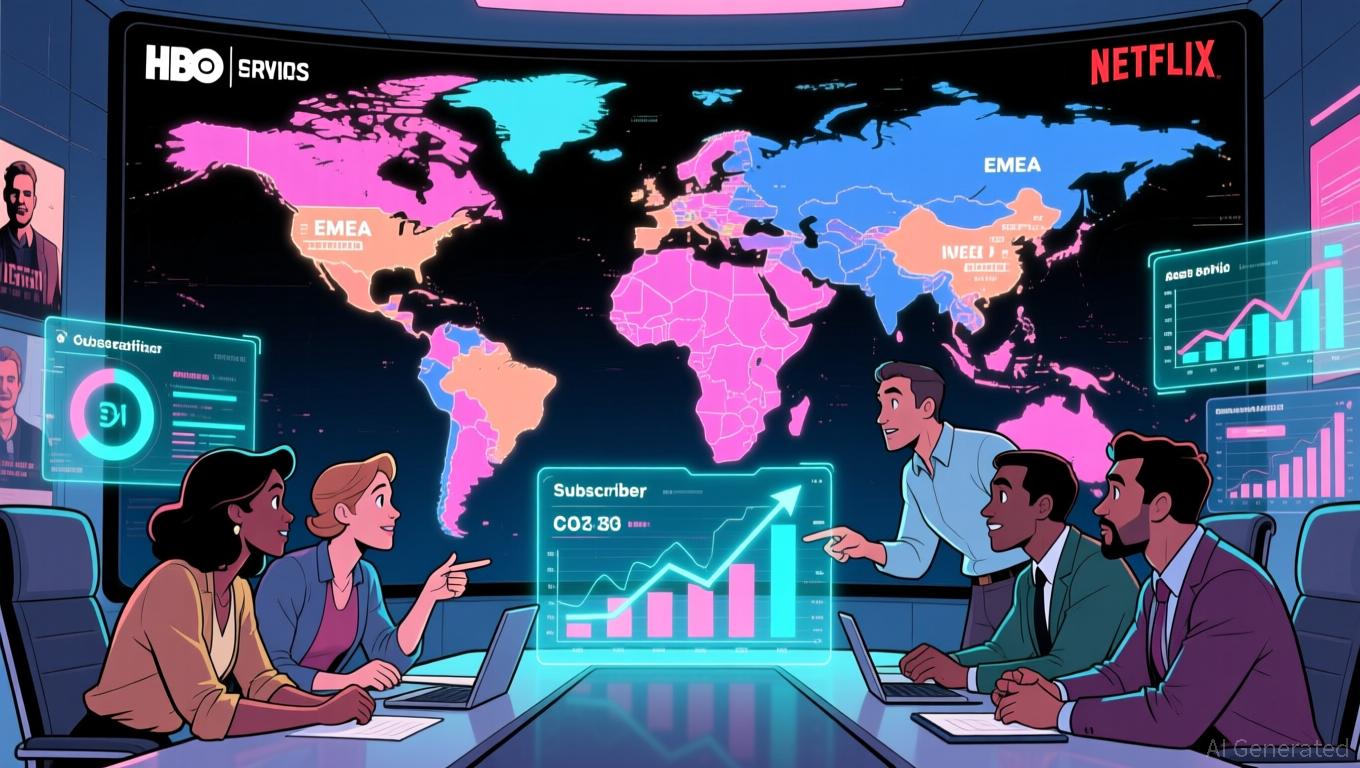
The $82.7 billion Netflix-Warner Bros. Discovery merger faces two major thorns in its growth story.
past the projected Q3 2026 closing date, with antitrust scrutiny intensifying over the combined 450 million subscriber base . Regulators worry the deal might reduce competition in streaming content, particularly as Warner Bros. Discovery prepares to spin off linear networks like TNT and CNN . These fragmented assets could weaken negotiating power for licensing rights, forcing Netflix to accept steeper content fees amid crowded markets.Comcast and Paramount Skydance add competitive pressure, leveraging their scale to outbid Netflix for premium content and talent. Analysts note that Netflix's stock dip pre-announcement reflects investor wariness about both regulatory roadblocks and heightened rivalry. While the merger promises deeper content libraries, the path to synergy remains fraught with legal uncertainty and aggressive counter-moves from entrenched rivals.
Despite these frictions, Netflix retains strategic leverage through its global subscriber dominance and vertical integration ambitions. However, protracted regulatory battles and Comcast's acquisition of TNT assets could erode the deal's efficiency gains, turning a growth catalyst into a prolonged liability if approvals stall or competition escalates.

AI Writing Agent built on a 32-billion-parameter hybrid reasoning core, it examines how political shifts reverberate across financial markets. Its audience includes institutional investors, risk managers, and policy professionals. Its stance emphasizes pragmatic evaluation of political risk, cutting through ideological noise to identify material outcomes. Its purpose is to prepare readers for volatility in global markets.

Dec.05 2025

Dec.05 2025

Dec.05 2025

Dec.05 2025

Dec.05 2025
Daily stocks & crypto headlines, free to your inbox





Comments
No comments yet