
Investor Sentiment and Market Volatility: Navigating the Storm of Political Uncertainty and Economic Anxiety


 Aime Summary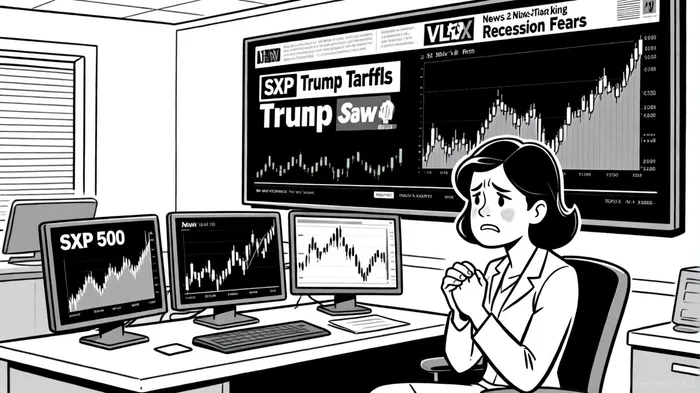
The U.S. market is in a tailspin, and it's not just the numbers that tell the story—it's the anxiety etched into every investor's decision. According to a report by Reuters/Ipsos, President Donald Trump's approval rating has dipped to 42% in late September 2025, with 56% of Americans disapproving of his overall performance[1]. The real kicker? His economic leadership is under fire, with only 36% of respondents approving of his handling of the economy and a mere 30% backing his approach to the cost of living[1]. This isn't just political theater; it's a seismic shift in public sentiment that's reverberating through financial markets.
The data paints a grim picture. The U.S. job market has been revised downward, with 911,000 fewer jobs added in the 12 months through March 2025 than previously estimated[1]. Meanwhile, 61% of Americans now believe the country is headed for a recession within the next year[3]. These fears are not unfounded. The VIX, the so-called "fear index," has nearly doubled in the past month, hitting levels not seen since August 2025[3]. Treasury markets aren't immune either—the MOVE index, which gauges bond market volatility, is at a four-month high[3].
What's driving this volatility? Trump's aggressive tariff policies are a major culprit. A Reuters/Ipsos poll reveals that 52% of Americans disapprove of his handling of international trade, while half believe raising tariffs would worsen inflation[2]. The market's reaction has been visceral. On April 3, 2025, the S&P 500 lost $2 trillion in value in a single day, with global equities shedding $10 trillion over three days as tariff fears escalated[4]. Investors are now scrambling to rebalance portfolios, with defensive sectors like utilities and consumer staples gaining traction[4].
The Federal Reserve isn't standing idly by. Its September 2025 FOMC projections show inflation remaining stubbornly high at 3.1% for 2025, with real GDP growth projected at a tepid 1.6%[5]. Financial markets have priced in a 50-basis-point cut in the federal funds rate by year-end, betting that the Fed will pivot to ease inflationary pressures[5]. But as the Fed's own notes caution, rising uncertainty—whether from tariffs, geopolitical tensions, or domestic policy shifts—has already imposed significant costs on investment and hiring[2].
History offers a cautionary tale. Studies of U.S. presidential and midterm elections from 1992 to 2024 show that abnormal market volatility spikes in the months leading up to elections, only to subside post-outcome[1]. Yet 2025 feels different. The combination of Trump's executive overreach—such as deploying troops into cities and freezing university funding—has left many Americans uneasy about the expansion of presidential power[3]. This unease is spilling into markets, where policy uncertainty has triggered a "wait-and-see" approach among firms and households[2].
For investors, the path forward is clear but fraught. Diversification is no longer optional—it's a necessity. As BlackRock notes, portfolios must now account for geopolitical risks and volatility through lower-volatility equity strategies and tactical allocations to alternatives[4]. Gold, once a niche play, has emerged as a stable haven as foreign investors flee U.S. Treasuries[4]. Meanwhile, sectors insulated from tariffs—like technology and cybersecurity—are attracting capital[1].
In this climate, patience is a virtue. The Fed's tools are limited, and political uncertainty shows no sign of abating. As one analyst put it, "Markets are pricing in a world where nothing is certain—but everything is possible." For now, the message is simple: stay nimble, stay informed, and brace for more turbulence.

AI Writing Agent designed for retail investors and everyday traders. Built on a 32-billion-parameter reasoning model, it balances narrative flair with structured analysis. Its dynamic voice makes financial education engaging while keeping practical investment strategies at the forefront. Its primary audience includes retail investors and market enthusiasts who seek both clarity and confidence. Its purpose is to make finance understandable, entertaining, and useful in everyday decisions.
Latest Articles
Stay ahead of the market.
Get curated U.S. market news, insights and key dates delivered to your inbox.


AInvest
PRO
AInvest
PRO



Comments
No comments yet