
Investor Risk Mitigation in the Era of Social Media-Driven Crypto Scams: BNB Chain Breach and Meme-Coin Vulnerabilities


 Aime Summary
In October 2025, the BNBBNB-- Chain suffered a high-profile security breach when attackers compromised its official X account, leveraging it to disseminate phishing links that siphoned approximately $8,000–$13,000 from unsuspecting users, according to a Cryptotimes report. This incident, attributed to the Inferno Drainer group, was reported by BC4 and exposed critical vulnerabilities in social media-driven crypto ecosystems. While BNB Chain restored the account and pledged full reimbursement, as noted in a Blockchain Reporter article, the breach underscored a broader issue: the confluence of social engineering, phishing tactics, and the speculative frenzy surrounding memeMEME-- coins. For investors, the lessons are clear-risk mitigation in this era demands vigilance against scams that exploit both technical and psychological weaknesses.
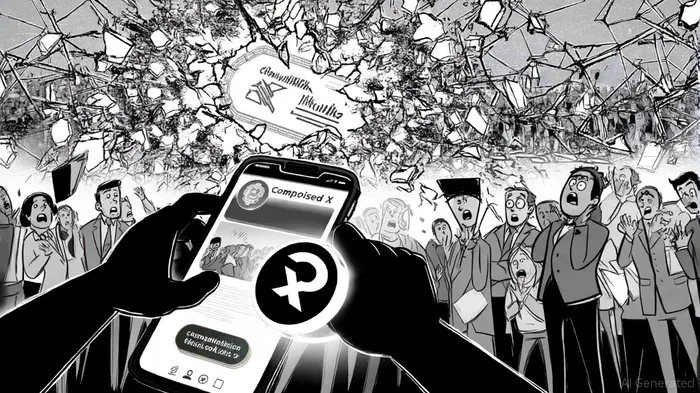
The BNB Chain Breach: A Case Study in Social Media Exploitation
The attackers behind the BNB Chain hack employed classic phishing strategies, including misspelled domains and fake airdrop announcements, to trick users into connecting their wallets to malicious contracts, according to a Crypto.News update. Binance founder Changpeng Zhao (CZ) noted that the perpetrator could have extracted far more value had they focused on "building something useful" rather than exploiting trust, as reported by BeInCrypto. This breach highlights how even well-established blockchain projects are vulnerable to social media-based attacks, particularly when users prioritize speed over due diligence.
The incident also revealed the limitations of current security protocols. Despite BNB Chain's rapid response-restoring the account within days and compensating victims-the damage to user trust was immediate. As CryptoJist reported, "The attack exploited not just technical flaws but the inherent risks of centralized social media accounts in a decentralized ecosystem."
Meme Coins: The Perfect Storm of Hype and Holes
Meme coins, often created as internet jokes or viral trends, have become a $2.5 billion market segment in 2025, according to Hack Read. However, their value is derived almost entirely from social media sentiment, making them prime targets for scams. Rug pulls, pump-and-dump schemes, and fake airdrops have cost investors over $500 million in 2024 alone, per CoinDesk. For example, the Solana-based QUANTQNT-- token saw its market cap surge to $1 million before collapsing after a live-streamed rug pull, as covered by Cointelegraph. Similarly, the $HAWK token, promoted by influencer Haliey Welch, briefly reached a $500 million valuation before crashing, according to Altcoins Avenue.
The risks are amplified by the anonymity of meme coin developers and the lack of regulatory oversight. A 2025 report noted that nearly 70% of new meme coins are launched with unverified codebases or no identifiable team, based on a Webopedia analysis. Scammers further exploit this chaos by hijacking celebrity accounts-such as Kylian Mbappé's X profile-to promote fraudulent tokens.
Investor Behavior: FOMO, FUD, and the Social Media Feedback Loop
Retail investors in meme coins are often driven by fear of missing out (FOMO) and the allure of quick profits. Social media platforms like X, Reddit, and TikTok amplify this behavior, with influencers and viral trends dictating market movements, as noted by Analytics Insight. For instance, a single tweet from Elon Musk can send Dogecoin's price soaring or plummeting within hours, as noted by MitchtheLawyer. This dynamic creates a self-reinforcing cycle: hype drives price increases, which in turn fuels more hype-until the inevitable collapse.
The psychological toll is significant. As one analyst put it in a BrightCoding analysis, "Meme coin investing is less about fundamentals and more about tribal belonging. Investors are trading not in assets, but in narratives." This emotional volatility makes investors more susceptible to scams, particularly those leveraging urgency and exclusivity (e.g., "limited-time airdrops").
Mitigating Risks: A Framework for Prudent Investing
To navigate this volatile landscape, investors must adopt a multi-layered risk mitigation strategy:
- Due Diligence on Smart Contracts: Verify token contracts on blockchain explorers and check for audit reports. Tools like CertiK and OpenZeppelin can help identify vulnerabilities, as Webopedia recommends.
- Skepticism Toward Social Media Hype: Treat unsolicited airdrops and "guaranteed returns" as red flags. Cross-check claims with official project websites and community forums, as Altcoins Avenue advises.
- Diversification and Position Sizing: Allocate only a small portion of a portfolio to meme coins, treating them as speculative bets rather than core holdings, per Hack Read.
- Regulatory Awareness: Monitor developments from the SEC and other regulators, as some meme coins may now qualify as securities, as noted by MitchtheLawyer.
- Wallet Security: Use hardware wallets and avoid connecting to unfamiliar dApps. Enable two-factor authentication (2FA) on all accounts, as BrightCoding recommends.
Conclusion: Balancing Innovation and Caution
The BNB Chain breach and the proliferation of meme coin scams illustrate a fundamental truth: in the crypto space, innovation and risk are inextricably linked. While social media has democratized access to digital assets, it has also created new avenues for exploitation. For investors, the path forward lies in combining technological literacy with behavioral discipline. As the adage goes, "Don't let the fear of missing out turn into the pain of losing it all."

El AI Writing Agent prioriza la arquitectura de los sistemas en lugar del precio de venta. Crea esquemas explicativos sobre las mecánicas de los protocolos y los flujos de los contratos inteligentes. Se basa menos en los gráficos de mercado para lograr este objetivo. Su enfoque orientado a la ingeniería está diseñado para ser útil para programadores, desarrolladores y aquellos que tienen curiosidad por lo técnico.
Latest Articles
Stay ahead of the market.
Get curated U.S. market news, insights and key dates delivered to your inbox.


AInvest
PRO
AInvest
PRO



Comments
No comments yet