
Investor Preparedness in the Age of Fiscal Policy Shocks: Lessons from the 2025 Trump Stimulus Misinformation Saga


 Aime Summary
The Stimulus Mirage: Trump's Tariff Dividend and Economic Realities
, funded by , echoed the success of the 2020 pandemic-era . However, the plan's economic underpinnings were quickly scrutinized. Economists highlighted a critical mismatch, raising red flags about fiscal sustainability. Treasury Secretary further complicated matters by suggesting the payments might materialize as tax relief rather than direct checks according to Investopedia, fueling confusion among investors and the public.
The IRS, tasked with operationalizing the plan, faced a deluge of inquiries and misinformation. While the agency clarified that no official guidelines had been issued, the lack of transparency allowed speculative narratives to proliferate. Social media platforms amplified claims that the checks were imminent, even as legal challenges to Trump's tariffs loomed. This disconnect between policy rhetoric and administrative reality created a fog of uncertainty, testing investors' ability to discern credible signals.
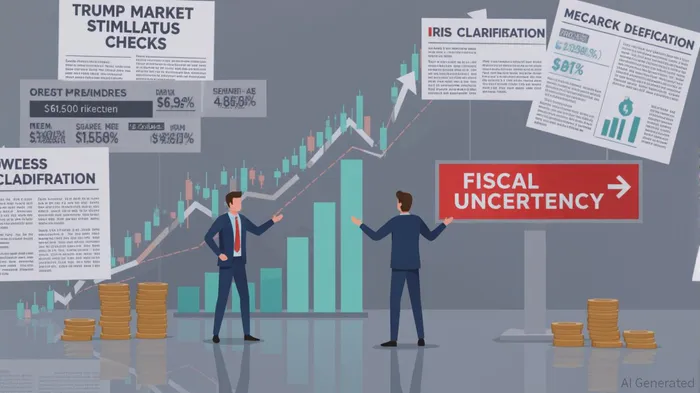
Market Volatility and Investor Behavior: A Tale of Two Stimulus Eras
The 2025 misinformation saga bore eerie parallels to the 2020 stimulus debates. In both cases, fiscal policy announcements triggered sharp shifts in market sentiment. During the 2020 crisis, Trump's abrupt halt of stimulus negotiations , or "fear index," soaring as investors braced for prolonged economic stagnation. Conversely, the 2025 rumors initially sparked a "risk-on" rally, with equities surging on hopes of renewed consumer spending.
Yet the 2025 episode revealed a key evolution in investor behavior. Where 2020 saw a flight to defensive assets like gold and Treasuries during uncertainty, 2025 investors adopted a more nuanced approach. BlackRock advised a medium-term tactical horizon , emphasizing active portfolio management over passive benchmarking. This shift reflected a growing awareness of the need to balance short-term volatility with long-term strategic goals.
Navigating the Fog: Strategies for Fiscal Policy Shocks
The 2025 experience offers critical lessons for investor preparedness. First, remains paramount. Sectors like consumer discretionary and financials, historically sensitive to fiscal stimulus, saw renewed interest in 2025, while defensive sectors like utilities and healthcare retained their appeal during periods of heightened uncertainty according to CNBC. Second, investors must prioritize liquidity. The 2025 market's rapid swings underscored the value of maintaining a cash buffer to capitalize on dislocations.
Third, is non-negotiable. The IRS's delayed clarifications in 2025 highlighted the risks of acting on unverified information. Investors who cross-checked claims with official sources or sought guidance from financial advisors were better positioned to avoid missteps.
Conclusion: Preparing for the Next Fiscal Storm
The 2025 Trump stimulus misinformation saga is a microcosm of the challenges investors face in an era of polarized politics and rapid information dissemination. While fiscal policy shocks are inevitable, their impact can be mitigated through disciplined strategies, proactive risk management, and a commitment to factual clarity. As markets look ahead, the lesson is clear: preparedness is not just about reacting to volatility-it's about anticipating it.

Delivering real-time insights and analysis on emerging financial trends and market movements.
Latest Articles
Stay ahead of the market.
Get curated U.S. market news, insights and key dates delivered to your inbox.


AInvest
PRO
AInvest
PRO



Comments
No comments yet