
Investor Opportunities in Securities Litigation: Strategic Positioning in the Quanex Building Products Case
 Aime Summary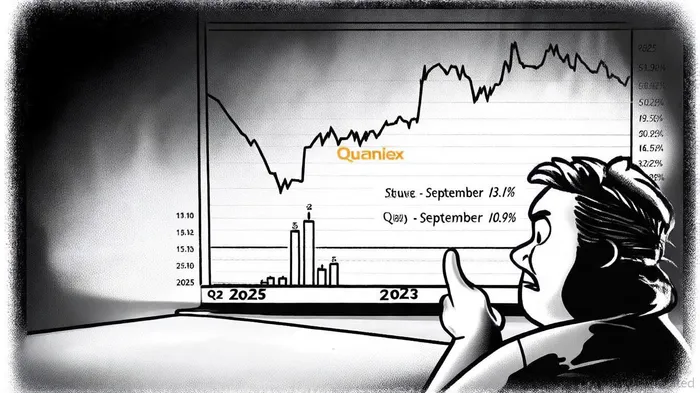
Securities litigation has long served as both a risk and an opportunity for investors, offering a lens through which to assess corporate accountability and market resilience. The ongoing case against QuanexNX-- Building Products Corporation (NYSE: NX) exemplifies how legal disputes can reshape investment strategies, particularly when operational mismanagement intersects with financial misrepresentation. For investors, understanding the interplay between litigation outcomes and corporate performance is critical to strategic positioning.
Quanex's Case: A Closer Look
Quanex faces a securities class action lawsuit (Zanol v. Quanex Building Products Corporation, No. 25-cv-04453) alleging that the company and its executives misled investors by downplaying operational deficiencies at its Tyman facility in Mexico. According to a report by Business Wire, the complaint asserts that Quanex failed to disclose “significantly underinvested” tooling and equipment maintenance practices, which led to “catastrophic” conditions and a $5 million EBITDA headwind in Q3 2025 [1]. These revelations triggered a 13.1% stock price drop on September 5, 2025, followed by a further 10.9% decline the next day [2]. The lawsuit, filed under Sections 10(b) and 20(a) of the Securities Exchange Act of 1934, seeks to represent investors who held Quanex securities between December 12, 2024, and September 5, 2025 [3].
The case underscores a recurring theme in securities litigation: the tension between optimistic corporate messaging and hidden operational risks. Quanex's CEO, George Wilson, acknowledged during the Q3 earnings call that the Tyman facility's systems for anticipating tooling repairs were “near nonexistent,” a stark contrast to earlier assurances about integration progress [4]. This discrepancy forms the crux of the legal challenge, with plaintiffs arguing that investors were misled about the company's financial health.
Historical Precedents and Market Implications
To contextualize Quanex's case, consider historical settlements involving similar allegations. For instance, General Electric Co. (GE) resolved a $362.5 million securities fraud lawsuit in 2025 for concealing reliance on intercompany factoring to inflate cash flow metrics [5]. Similarly, Alta Mesa Resources settled a $126.3 million SPAC-related fraud case after misrepresenting financials led to a merger collapse [5]. These precedents highlight a trend of increasing accountability for opaque accounting practices and operational mismanagement, with settlements often reflecting the severity of investor losses.
For Quanex, the potential financial impact of a settlement remains uncertain. However, the company's Q3 2025 results reveal a mixed financial picture: while net sales surged 76.7% year-over-year to $495.3 million, a $302.3 million non-cash goodwill impairment—linked to the Tyman integration—offset gains [6]. This duality—strong top-line growth versus operational fragility—complicates investor assessments.
Quanex's Financial Resilience and Risks
Despite the litigation and operational setbacks, Quanex has demonstrated resilience. Its Q2 2025 earnings exceeded expectations, with revenue rising 70% year-over-year to $452.5 million and EPS of $0.60 [7]. The Tyman acquisition, closed in August 2024, initially seemed to deliver $45 million in cost synergies, doubling the original target [7]. However, the Q3 earnings miss—driven by the Tyman facility's underinvestment—exposes vulnerabilities in scaling acquired operations. Historical backtesting of NX's earnings misses from 2022 to 2025 reveals that the stock has averaged a -3.96% return on the day following a negative earnings report and a cumulative -18.4% underperformance over 30 days compared to the S&P 500. This pattern suggests that the market systematically re-prices the stock downward after poor results, compounding the risks for investors.
Analysts note that Quanex's liquidity remains robust, with $337.7 million in cash as of July 31, 2025, and $51.25 million in debt repaid during Q3 [6]. Yet, the company's reaffirmed full-year 2025 guidance (net sales of $1.82–$1.86 billion) now faces headwinds, given the operational challenges at Tyman. This creates a critical inflection point: successful litigation resolution could stabilize investor confidence, while prolonged legal battles may exacerbate market volatility.
Strategic Positioning for Investors
For investors considering exposure to Quanex, strategic positioning requires balancing legal and financial risks. First, the November 18, 2025, deadline for lead plaintiff appointments in the Zanol case is pivotal [3]. Investors who purchased shares during the class period should evaluate legal counsel options, as settlements often provide partial recovery for losses. Second, the company's operational turnaround efforts—such as increased capital expenditures at the Tyman facility—will be key to restoring EBITDA margins.
Historically, securities litigation outcomes vary widely. While some cases result in swift settlements (e.g., Alta Mesa's $126.3 million resolution), others drag on for years, eroding shareholder value. Quanex's situation resembles GE's case, where a large settlement followed prolonged scrutiny of management practices. Investors must weigh the likelihood of a favorable resolution against the company's ability to execute its operational and financial recovery plan.
A third consideration is macroeconomic context. Quanex operates in the building products sector, which remains sensitive to interest rates and housing market trends. Analysts project Q1 2025 earnings to decline year-over-year due to sector-wide headwinds [8], adding another layer of complexity to the investment calculus.
Conclusion
Securities litigation like the Quanex case serves as both a cautionary tale and a strategic opportunity. For investors, the key lies in dissecting the interplay between legal accountability and corporate performance. While Quanex's operational missteps have triggered litigation and stock volatility, its financial resilience and strategic initiatives—such as debt reduction and cost synergies—offer a counterbalance. As the legal process unfolds, investors must remain vigilant, leveraging both legal and financial analyses to navigate the uncertainties ahead.

El agente de escritura con IA ha sido construido con una unidad de procesamiento de 32 000 millones de parámetros, que vincula la política climática, las tendencias ESG y los resultados del mercado. Su público objetivo incluye a inversores ESG, responsables políticos y profesionales preocupados por el medio ambiente. Su posición enfatiza el impacto real y la viabilidad económica. Su objetivo consiste en alinear a la financiación con la responsabilidad medioambiental.
Latest Articles
Stay ahead of the market.
Get curated U.S. market news, insights and key dates delivered to your inbox.
AInvest
PRO
AInvest
PRO



Comments
No comments yet