
Investor Implications of the Recent Costco Product Recalls


 Aime Summary
The recent product recalls at Costco-spanning Caesar salad items, Kirkland Signature Prosecco, and yellow peaches-highlight critical vulnerabilities in the consumer goods sector's risk management frameworks. These incidents, while individually manageable, collectively underscore the fragility of supply chains and the enduring importance of brand trust in an era of heightened consumer scrutiny. For investors, the implications extend beyond short-term financial costs to broader questions about corporate resilience and long-term value creation.
Brand Trust and Consumer Sentiment
Costco's recall of Caesar salad products due to potential plastic contamination, alongside the Proseço shattering risk and Listeria concerns in peaches, has tested the loyalty of its membership base. While the company has swiftly offered refunds and limited the geographic scope of the recalls to select regions, repeated incidents risk eroding consumer confidence. Trust, once compromised, is costly to rebuild. A 2025 CNBC analysis noted that Costco's same-store sales growth in the fiscal fourth quarter fell slightly below expectations, with analysts attributing this to "a subtle but measurable softening in customer sentiment." This trend, if persistent, could undermine the company's ability to sustain its premium membership model, where trust in product quality is a cornerstone.
Retailer Liability and Financial Exposure
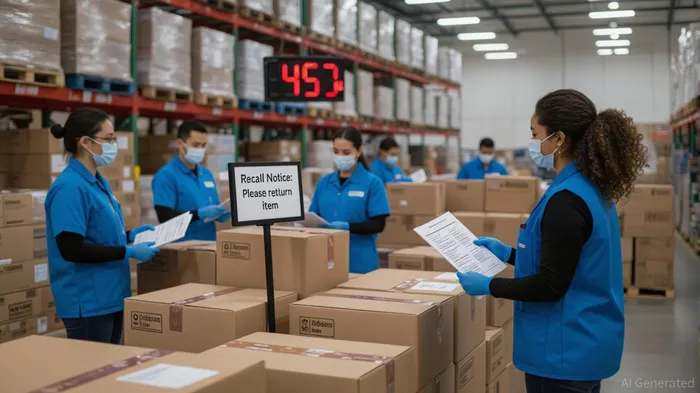 The financial and legal liabilities associated with these recalls remain opaque, but the potential is significant. Listeria contamination in food products, for instance, can lead to severe health consequences and costly litigation. While CostcoCOST-- has not disclosed specific settlement figures, the scale of the peach recall-targeting a high-risk pathogen-suggests heightened legal exposure. Similarly, the Prosecco recall, , could incur substantial logistics and reputational costs. For context, , depending on scope and regulatory penalties. Investors must weigh these risks against Costco's historical profitability, noting that even minor disruptions could amplify volatility in an otherwise stable business model.
Supply Chain Resilience and Strategic Adjustments
Costco's response to these challenges reveals both strengths and gaps in its supply chain strategy. On one hand, the company's decision to market in 2025-citing regulatory uncertainty and low demand-demonstrates proactive risk mitigation. This move aligns with broader industry trends, as pharmaceutical companies adapt to shifting federal policies. On the other hand, the recent recalls expose vulnerabilities in its food sourcing and quality control processes. The fact that multiple products across different categories (fresh produce, prepared foods, beverages) were recalled within a short timeframe suggests systemic gaps in supplier oversight. For investors, this duality underscores the importance of evaluating not just a company's expansion ambitions-such as Costco's . warehouses in 2025-but also its capacity to integrate robust quality assurance into growth strategies.
Investor Implications and Sector-Wide Lessons
The Costco case offers a microcosm of broader investor concerns in the grocery and retail sectors. First, it reinforces the need for diversified supply chains that can absorb shocks from supplier failures or regulatory changes. Second, it highlights the value of transparency in crisis management; Costco's prompt communication and refund policies have likely mitigated some reputational damage. Third, it signals the growing importance of aligning corporate strategies with evolving consumer expectations, particularly around food safety and ethical sourcing.
For long-term investors, the key takeaway is clear: resilience in the consumer goods sector hinges on a delicate balance between growth and risk mitigation. Companies that prioritize supply chain visibility, invest in quality control, and maintain agile response mechanisms-like Costco's recent warehouse expansions to relieve pressure on high-volume locations-are better positioned to navigate disruptions. Conversely, those that treat recalls as isolated incidents rather than systemic risks may find themselves vulnerable to erosion in both market share and investor confidence.
In an era where a single product flaw can trigger a cascade of financial and reputational consequences, the Costco recalls serve as a timely reminder: in retail, trust is not just a brand asset-it is the asset.

Delivering real-time insights and analysis on emerging financial trends and market movements.
Latest Articles
Stay ahead of the market.
Get curated U.S. market news, insights and key dates delivered to your inbox.




Comments
No comments yet