
The Investor's Guide to US Stock Market Christmas Holiday Schedules: Rules, History, and Trading Impact
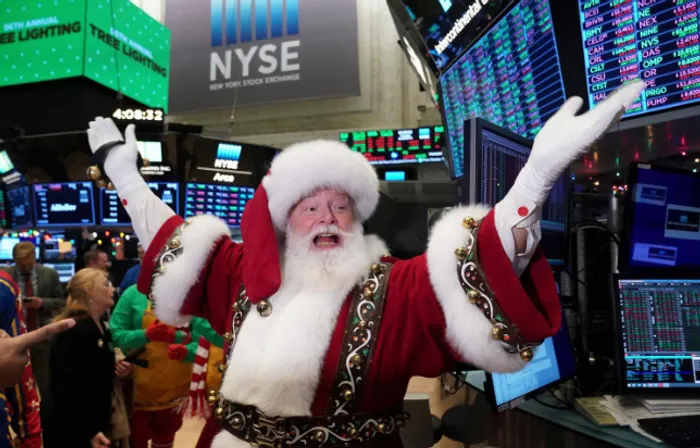
Complete Closure: The New York Stock Exchange (NYSE) and Nasdaq are closed for the entire day on December 25.
Early Close Protocol: On Christmas Eve (Dec. 24), U.S. equity markets typically close early at 1:00 p.m. ET, provided it falls on a weekday.
Bond Market Differences: The bond market (SIFMA) usually closes at 2:00 p.m. ET on Christmas Eve and remains closed on Christmas Day.
Settlement Impact: Holidays are not considered business days; therefore, trade settlement periods (T+1) are delayed by one calendar day.
Global Divergence: Unlike the US, many Commonwealth markets (UK, Canada, Australia) remain closed on December 26 for Boxing Day.
For investors and traders, the holiday season brings more than just festivities; it brings a shift in market liquidity, trading hours, and settlement schedules. While the stock market is generally a 24/7 conversation, the actual exchanges adhere to strict holiday traditions.
Here is a comprehensive look at how the Christmas holiday impacts US financial markets, the history behind these closures, and what traders need to know about liquidity during this period.
When Do US Markets Close for Christmas?
The schedule for the Christmas holiday is dictated by the New York Stock Exchange (NYSE) and Nasdaq holiday calendars.
Christmas Day (December 25):
The US stock markets observe a full market holiday. There is no pre-market or after-hours trading session. If December 25 falls on a Saturday, the market traditionally closes on the preceding Friday (December 24). If it falls on a Sunday, the market closes on the following Monday (December 26).
Christmas Eve (December 24):
Christmas Eve is not a federal holiday, but it is a distinct market event. Historically, when Christmas Eve falls on a weekday, the equity markets operate on a shortened schedule.
Equities (Stocks): Trading concludes at 1:00 p.m. Eastern Time.
Fixed Income (Bonds): The bond markets, guided by recommendations from the Securities Industry and Financial Markets Association (SIFMA), typically close at 2:00 p.m. Eastern Time.
According to Investopedia, this shortened session is designed to allow market participants time to travel and prepare for the holiday, resulting in significantly lower trading volumes.
Can You Trade During the Shutdown?
The short answer is no. When the NYSE and Nasdaq are closed, no transactions can be executed on these exchanges.
However, the financial ecosystem is vast. While equities are halted, electronic futures markets (such as those traded on the CME Group) often operate on a modified schedule. Traders looking for exposure during the holiday often look to futures contracts, though they should be aware of "thin markets"—a condition where low liquidity leads to erratic price swings.
As noted by Bloomberg, algorithmic trading systems and international desks may remain active in other asset classes (like Forex/Crypto), but the core US equity liquidity pools are inaccessible.
The History: A Tradition of Market Holidays
The tradition of closing financial markets for Christmas dates back to the inception of organized trading in the United States. The New York Stock Exchange, founded in 1792 under the Buttonwood Agreement, has observed Christmas as a holiday for over a century.
According to historical data from Wikipedia, the NYSE has consistently closed for major religious and civic holidays to align with the banking sector. The synchronization between banks and markets is crucial because trades require the movement of capital. If banks are closed for the holiday, the market cannot effectively settle trades.
Interestingly, the concept of the "Santa Claus Rally" is a phenomenon often discussed by MarketWatch during this period. This refers to the tendency of the stock market to increase in value during the last five trading days of December and the first two of January. While the markets are closed on the holiday itself, the sentiment surrounding the season often drives historical bullishness.
US vs. Global Markets: The Boxing Day Difference
A common point of confusion for international traders is December 26.
In the US: December 26 is a standard trading day (unless it falls on a weekend or acts as the observed day for a Sunday Christmas).
Internationally: Major markets in the UK (LSE), Canada (TSX), and Hong Kong (HKEX) observe Boxing Day and remain closed.
As reported by WSJ, this discrepancy often leads to lower-than-average volume in US markets on December 26, as European and Canadian institutional investors are offline.
Summary of Holiday Trading Hours
(Note: If the holiday falls on a weekend, "Observed" dates apply.)
Frequently Asked Questions (FAQ)
Q: How does the Christmas holiday affect trade settlement (T+1)?
A: Under the current T+1 (Trade plus one business day) settlement cycle, holidays are excluded from the count. If you sell a stock on the Friday before Christmas (and Christmas is a Monday), the trade will not settle until Tuesday. The Wall Street Journal frequently highlights that investors needing liquidity for year-end tax purposes must calculate these non-business days into their selling schedule.
Q: Why is liquidity often dangerous during the holiday shortened sessions?
A: During the half-day on December 24, institutional desks (big banks, hedge funds) are largely understaffed or operating on "skeleton crews."7 With fewer buyers and sellers, the "spread" (difference between bid and ask prices) can widen. TradingView data often shows that while volatility can be low, a sudden news event on a thin volume day can cause outsized price movements because there are fewer orders to absorb the shock.
Q: If I place a "Good 'Til Canceled" (GTC) order, does it expire on Christmas?
A: No. A GTC order remains active on the broker's books but will not trigger on Christmas Day because the exchange is closed. It will become active again when the market reopens on December 26.
Q: Do options expire early on Christmas Eve?
A: If the market closes at 1:00 p.m. ET, the trading of options also ceases at that time. However, the exercise cut-off time (the deadline to notify your broker to exercise an option) might differ. It is vital to check specific broker rules, though the Options Clearing Corporation generally aligns expiration processing with market closes.

The AInvest News Editorial Team consists of experienced financial journalists and editors who oversee all published content. While our newsroom leverages advanced AI tools to assist in data gathering and draft generation, every article is reviewed, fact-checked, and approved by human editors to ensure accuracy, clarity, and transparency.
Latest Articles
Stay ahead of the market.
Get curated U.S. market news, insights and key dates delivered to your inbox.


AInvest
PRO
AInvest
PRO



Comments
No comments yet