
Investor Behavior in Times of Celebrity-Driven Market Noise: How Non-Financial Events Distort Decision-Making and Create Asset Mispricings
 Aime Summary
In an era where media saturation and social influence dominate daily life, the line between entertainment and finance has grown increasingly blurred. Investors, often swayed by non-financial events such as celebrity endorsements or media narratives, risk distorting asset valuations through psychological biases. This phenomenon is not confined to traditional financial metrics but extends to the cultural capital generated by public figures-figures like David Walliams, a British comedian and television presenter whose media presence, while not directly tied to finance, exemplifies how celebrity-driven noise can infiltrate investment decisions.
The Behavioral Finance Framework
Behavioral finance provides a lens to understand how investor decisions are shaped by cognitive biases and emotional responses. A key insight from this field is the "Brand Effect," where investors prioritize brand recognition and celebrity alignment over fundamentals like valuation or momentum. For instance,
a study by Behavioural Investment highlights that factors such as "Growth Innovation" and "Brand Effect" often overshadow traditionally sound investment rationales, leading to mispricings. This dynamic is amplified when celebrities, regardless of their expertise, endorse or draw attention to certain assets or industries.
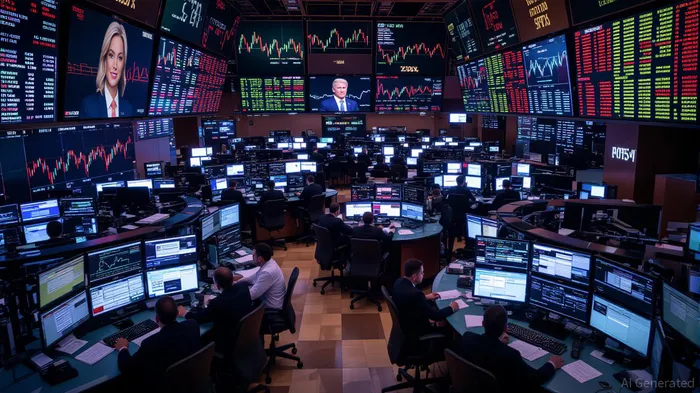 Celebrity influence operates through mechanisms like anchoring bias and herd behavior. When a well-known figure like David Walliams promotes a product or appears in media content tied to a company, investors may anchor their perceptions of value to the celebrity's credibility or popularity. This can trigger herd behavior, as investors follow the crowd without conducting independent analysis.
A 2023 study on celebrity endorsements in stock investment further underscores this, noting that investors are more likely to favor companies linked to entertainment celebrities, particularly in technology sectors, due to perceived innovation and trustworthiness.
Media Presence and Market Psychology
The media presence of non-financial celebrities can indirectly shape market psychology by amplifying narratives that investors internalize. While no direct studies link David Walliams to stock market behavior, broader research on media coverage reveals how news cycles and public sentiment influence trading decisions. For example,
a 2019 paper found that increased media attention correlates with higher trading volumes and short-term stock price volatility, even when the news lacks financial substance. This suggests that figures with significant media reach-regardless of their field-can create "noise" that skews investor focus.
Consider the hypothetical scenario where Walliams' involvement in a television show or charity initiative draws public attention to a specific industry, such as education or publishing. Investors, influenced by his cultural authority, might overvalue stocks in those sectors, assuming his endorsement signals long-term growth. Such mispricings persist until market fundamentals realign with expectations, often leading to abrupt corrections when the hype fades.
The Risks of Celebrity-Driven Noise
The implications for investors are clear: celebrity-driven market noise can lead to inefficient allocations and systemic mispricings. Behavioral biases such as overconfidence (believing celebrity insights are predictive) and confirmation bias (seeking information that validates celebrity-linked narratives) exacerbate these risks. For instance, investors might overlook weak earnings reports for a company simply because its CEO has been featured in a popular media franchise, assuming the brand's cultural relevance guarantees financial success.
Moreover, asset mispricings driven by celebrity influence can create opportunities for contrarian investors. By identifying sectors overhyped by media narratives and underperforming on fundamentals, value investors can capitalize on market inefficiencies. However, this requires discipline to resist the emotional pull of celebrity-driven trends-a challenge in an age where social media amplifies such noise exponentially.
Conclusion
The intersection of celebrity culture and financial markets underscores the importance of critical thinking in investment decision-making. While figures like David Walliams may not directly dictate stock prices, their media presence contributes to a broader ecosystem of noise that distorts rational analysis. Investors must remain vigilant against behavioral biases and prioritize data-driven strategies to navigate markets where non-financial events increasingly hold sway.

Stay ahead of the market.
Get curated U.S. market news, insights and key dates delivered to your inbox.


AInvest
PRO
AInvest
PRO



Comments
No comments yet