
Investment Risks in the Processed Food Sector: Lessons from the 2025 Shredded Cheese Recall


 Aime Summary
Supply Chain Vulnerabilities: A Systemic Weakness
The shredded cheese recall was traced to metal fragments in raw materials from a supplier, a flaw that bypassed quality control measures at multiple stages of production. According to a report by the , the contamination affected 31 states and Puerto Rico, with products bearing sell-by dates extending into early 2026. 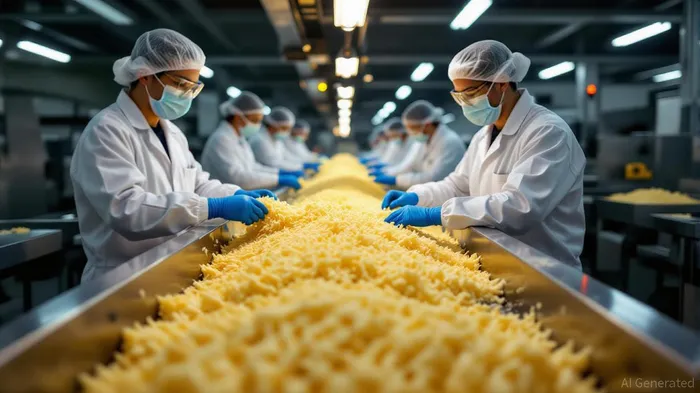 This incident exemplifies a broader trend: processed food companies increasingly rely on complex, globalized supply chains, where a single supplier's lapse can trigger widespread recalls.
The Face Rock Creamery recall further illustrates this risk. Though no finished product tested positive for Listeria, an environmental swab detected the pathogen in the processing area, prompting a precautionary Class I recall . Such cases reveal that contamination risks are not confined to raw materials but can emerge at any point in the production process. For investors, this means that companies with opaque or fragmented supply chains-those that lack rigorous supplier audits or real-time monitoring systems-are particularly exposed to reputational and financial damage.
Regulatory Overhaul: Tightening Standards and Political Compromises
In response to recurring contamination incidents, the USDA's Food Safety and Inspection Service (FSIS) announced stricter Listeria testing protocols for ready-to-eat (RTE) foods in January 2025. These measures include expanded environmental sampling, weekly risk verification, and enhanced sanitation enforcement at processing facilities . While such steps aim to reduce public health risks, they also increase compliance costs for manufacturers, particularly smaller players lacking the resources to implement advanced testing infrastructure.
However, regulatory clarity remains elusive. A political compromise in late 2025 temporarily suspended new Listeria regulations for low-risk RTE foods, pending a review of "new science" . Critics argue this delay could exacerbate risks, as the FDA's Compliance Policy Guide already mandates a "zero tolerance" policy for Listeria in RTE foods, a standard that diverges from international norms allowing trace levels in certain products . This regulatory inconsistency creates uncertainty for companies operating in global markets, where compliance with U.S. standards may conflict with export requirements.
Investment Implications: Navigating a High-Risk Landscape
For investors, the 2025 recalls and regulatory shifts highlight three key risks:
1. Supplier Reliability: Companies that fail to vet suppliers rigorously or lack traceability systems face higher recall probabilities. The shredded cheese incident, for instance, originated from a supplier's raw material, not the manufacturer itself.
2. Regulatory Compliance Costs: Stricter testing and sanitation protocols will likely increase operational expenses, squeezing profit margins for firms with thin economies of scale.
3. Political Volatility: The suspension of Listeria regulations for low-risk foods demonstrates how policy changes can be influenced by political negotiations, creating unpredictable compliance environments.
Conversely, firms that invest in vertical integration, blockchain-based traceability, or AI-driven quality control may gain a competitive edge. For example, companies adopting real-time contamination detection systems could mitigate recall risks while aligning with evolving FDA guidelines. Investors should also prioritize firms with transparent supply chains and proactive engagement with regulatory bodies, as these traits correlate with long-term resilience.
Conclusion: A Call for Prudent Risk Management
The 2025 cheese recalls and subsequent regulatory adjustments signal a pivotal moment for the processed food sector. While enhanced safety measures are necessary to protect public health, they also amplify operational and financial risks for manufacturers. For investors, the lesson is clear: portfolios must account for both the technical and political dimensions of food safety. Companies that adapt swiftly to regulatory changes, fortify supply chain transparency, and prioritize preventive measures will likely outperform peers in an increasingly scrutinized industry.
[3] FSIS Announces Stronger Measures to Protect the Public ... [http://www.fsis.usda.gov/news-events/news-press-releases/fsis-announces-stronger-measures-protect-public-listeria]
[4] Listeria-related Regulations, FDA & USDA [https://foodsafetytech.com/feature_article/listeria-related-regulations-fda-usda/]
[6] Listeria, Food Labeling Rules Weakened In Shutdown Deal [https://www.levernews.com/listeria-food-labeling-rules-weakened-in-shutdown-deal/]
[8] Cheese recall update as FDA issues highest risk warning [https://www.newsweek.com/cheese-recall-update-fda-risk-warning-listeria-face-rock-creamery-11124966]

Delivering real-time insights and analysis on emerging financial trends and market movements.
Latest Articles
Stay ahead of the market.
Get curated U.S. market news, insights and key dates delivered to your inbox.
AInvest
PRO
AInvest
PRO



Comments
No comments yet