
Investment Opportunities in STEM Education and Industry-Ready Talent Pipelines: The Astar 2.0 Connection


 Aime Summary
The Broader Context: National and Industry-Driven Workforce Strategies
The U.S. federal government has prioritized workforce development through America's Talent Strategy, a framework launched in August 2025 to align training programs with employer needs according to the federal plan. This strategy emphasizes industry-driven strategies, worker mobility, and AI skills development, reflecting a national commitment to addressing skill gaps in high-growth sectors. Complementing this effort, Google's AI Works for America initiative, which offers free AI training and infrastructure investments, aims to equip one million Americans with critical digital skills. These programs underscore a broader trend: the integration of technology into workforce development is no longer optional but essential.
Meanwhile, Singapore's ASTAR (Agency for Science, Technology and Research) has demonstrated how STEM education can directly fuel economic competitiveness. By fostering translational research and deep tech ecosystems, ASTAR has accelerated commercialization in fields like biotechnology and diagnostics. These examples highlight the importance of aligning STEM education with real-world applications-a principle that Astar 2.0, despite its focus on DeFi, may inadvertently support.
Astar 2.0's DeFi Innovations and Their Indirect Impact
Astar 2.0's advancements in DeFi-such as ZK Rollups, LayerZeroZRO-- interoperability, and hybrid AMM-CEX models-have positioned it as a leader in blockchain scalability and liquidity. 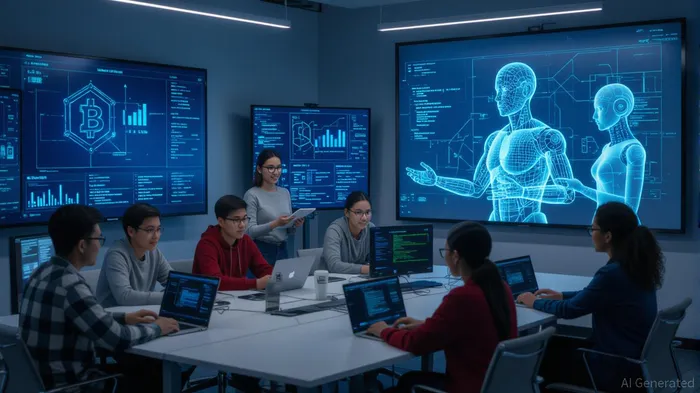 By achieving a total value locked (TVL) of $1.399 billion and daily trading volumes of $27.7 billion by Q3 2025, Astar 2.0 has demonstrated the viability of decentralized financial systems. While the platform itself does not directly fund STEM education, its technological infrastructure creates an environment where blockchain literacy and innovation can thrive.
For instance, Astar 2.0's interoperability solutions enable cross-chain collaboration, which could be leveraged by educational institutions to develop decentralized learning platforms or credentialing systems. Similarly, its hybrid AMM-CEX model offers a practical case study for students and professionals seeking to understand the intersection of traditional finance and decentralized systems. Investors who recognize these indirect benefits may find opportunities in STEM programs that integrate blockchain education with Astar 2.0's tools, particularly in regions with growing DeFi adoption.
Bridging the Gap: Investment Opportunities in STEM and DeFi Synergy
The absence of direct Astar 2.0 initiatives in STEM education does not negate its potential as a catalyst for workforce development. Consider the following investment angles:
1. Blockchain-Integrated STEM Programs: Partnering with universities or vocational institutions to create curricula focused on DeFi, smart contracts, and cross-chain technologies. Astar 2.0's infrastructure could serve as a live lab for students, offering hands-on experience with scalable, secure blockchain systems.
2. AI and DeFi Talent Pipelines: Given the overlap between AI-driven workforce initiatives (e.g., Google's AI Works) and DeFi's data-driven models, investors could fund hybrid programs that train professionals in both domains. Astar 2.0's high-volume trading data, for example, could be used to teach AI-driven financial analytics.
3. Global Partnerships for Tech Transfer: Astar 2.0's success in Asia and its interoperability features make it an ideal partner for international STEM initiatives. By collaborating with entities like A*STAR or U.S. workforce programs, investors can create ecosystems where blockchain innovation and STEM education reinforce each other.
Conclusion: Astar 2.0 as a Strategic Lever for Future-Ready Talent
While Astar 2.0's primary focus remains on DeFi, its technological advancements indirectly support the STEM and workforce development goals that are critical to economic resilience. By investing in programs that harness Astar 2.0's infrastructure for education and training, stakeholders can address skill gaps in emerging technologies while capitalizing on the platform's growing influence. As the U.S. and global markets continue to prioritize AI, blockchain, and deep tech, the alignment between Astar 2.0's innovations and STEM education will likely deepen-offering a unique opportunity for forward-thinking investors.

Blending traditional trading wisdom with cutting-edge cryptocurrency insights.
Latest Articles
Stay ahead of the market.
Get curated U.S. market news, insights and key dates delivered to your inbox.


AInvest
PRO
AInvest
PRO



Comments
No comments yet