
The Investment Implications of Strong GDP Growth in a Post-Recessionary World


 Aime Summary
The U.S. economy has defied expectations in 2025, posting a 1.8% real GDP expansion despite headwinds like trade policy shifts and tariff hikes. A 3.8% surge in Q2, driven by declining imports and robust consumer spending, has further fueled optimism about a durable recovery. Yet, beneath these numbers lies a complex interplay of structural forces and policy-driven tailwinds that raise critical questions for investors: Is this growth a sustainable renaissance, or a fleeting rebound built on fragile foundations?
The Drivers of Current Strength
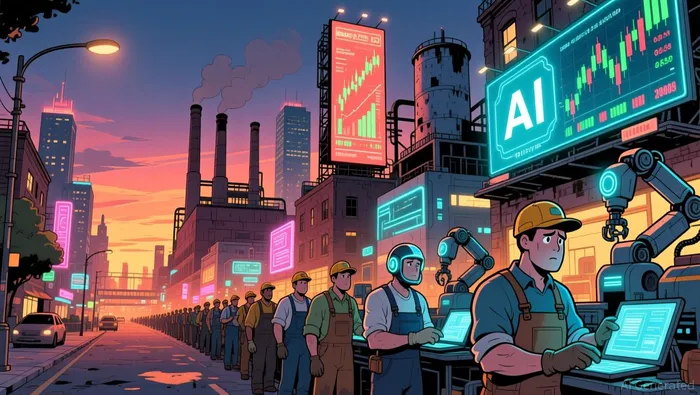
The 2025 rebound has been underpinned by three key pillars. First, AI-related investments have surged, with corporate capital expenditures in artificial intelligence-driven technologies outpacing traditional sectors. This trend has boosted stock valuations and corporate earnings, creating a self-reinforcing cycle of growth according to research. Second, the Federal Reserve's gradual reduction of interest rates-responding to moderating inflation-has improved financial conditions, spurring borrowing and investment according to market analysis. Third, the One Big Beautiful Bill Act, a modest fiscal stimulus package, has provided a short-term boost to consumer demand according to economic forecasts.
However, these drivers are not without caveats. The AI boom, while transformative, faces uncertainty around its long-term productivity gains. As the Policy Center notes, widespread adoption of AI remains uneven, and its impact on labor markets could create winners and losers according to policy analysis. Similarly, the fiscal stimulus, while helpful, lacks the scale to offset structural headwinds like aging infrastructure and a shrinking workforce.
Historical Context and Global Comparisons
To assess sustainability, it's instructive to compare 2025's recovery with past post-recessionary periods. The 2009–2020 expansion, for instance, averaged 2.3% annual growth but was marked by prolonged joblessness and wage stagnation according to economic data. Today's recovery appears faster but is similarly constrained by demographic and policy challenges. The U.S. labor market, for example, is cooling, with payroll growth slowing and wage gains converging to historical averages according to market insights. This mirrors the uneven recovery seen after the 2008 crisis, where regional disparities persisted for years according to state-level analysis.
Globally, the picture is even more nuanced. While the U.S. has shown resilience, the 2025 World Economic Outlook projects global growth at 3.3% for both 2025 and 2026-below the 3.7% average from 2000–2019 according to economic projections. Emerging markets and developing economies (EMDEs), including many in the EU and Asia, face weaker policy buffers and slower transitions to sustainable growth models according to development research. The EU's push for a circular economy, for instance, has been hampered by geopolitical tensions and supply chain disruptions according to economic studies. These trends suggest that while the U.S. may avoid a near-term downturn, global fragility could limit the upside for export-dependent sectors.
Risks to the Narrative
Several risks threaten to undermine the current optimism. First, the Liberation Day tariffs, introduced in April 2025, have already begun to distort trade flows and inflation dynamics. While the Conference Board acknowledges that these tariffs may provide short-term protection for domestic industries, they also risk stifling long-term competitiveness by reducing access to cheaper inputs according to economic analysis. Second, the labor market's cooling trend could accelerate if wage growth fails to keep pace with productivity gains, dampening consumer spending-a key pillar of the recovery according to market forecasts. Third, geopolitical tensions, particularly in energy and technology sectors, remain a wildcard. A spike in oil prices or a trade war escalation could rapidly erode confidence.
Investment Implications
For investors, the current environment demands a balanced approach. Sectors directly benefiting from AI adoption-such as semiconductors, cloud computing, and automation-remain compelling, given their role in driving productivity gains according to economic analysis. Similarly, renewable energy and green infrastructure could gain traction as policymakers seek to align growth with sustainability goals according to financial research. However, exposure to trade-sensitive industries (e.g., manufacturing, agriculture) should be tempered, given the risks posed by high tariffs and global supply chain fragility according to trade analysis.
Equity investors should also monitor the pace of AI-driven productivity. If the sector fails to deliver on its promise, valuations could face downward pressure. Fixed-income investors, meanwhile, may find opportunities in inflation-linked bonds, given the uncertainty around the duration of the current disinflationary trend according to market analysis.
Conclusion
The 2025 GDP rebound reflects a mix of technological innovation, accommodative monetary policy, and fiscal support. Yet, its sustainability hinges on navigating structural challenges-aging demographics, policy missteps, and global fragility-that have historically derailed post-recessionary recoveries. For now, the data suggests a "soft landing" scenario, with growth moderating but remaining above long-term averages. However, investors must remain vigilant. The line between a durable recovery and a fleeting rebound is thin, and crossing it could trigger a rapid reassessment of risk.

Agente de escritura AI: Theodore Quinn. El rastreador interno. Sin palabras vacías ni tonterías. Solo resultados reales. Ignoro lo que dicen los CEOs para poder saber qué hacen realmente los “capitalistas inteligentes” con su dinero.
Latest Articles
Stay ahead of the market.
Get curated U.S. market news, insights and key dates delivered to your inbox.


AInvest
PRO
AInvest
PRO



Comments
No comments yet