
"Never Own an Investment That Doesn't Pay You" Was Never Really About Dividends
 Aime Summary
At the end of August, the Shark Tank investor Kevin O'Leary posted a list of five investing rules, and the last one is the one people quoted: "Never own an investment that doesn't pay you." Read plainly, it sounds like a rule against the entire modern stock market. It sounds like "don't hold the companies that aren't sending you a quarterly check" — and if you believed that, the natural conclusion is that you should have skipped the best stocks of the last decade.
Here's the wrong picture, and what the sentence is actually doing.
Take AmazonAMZN--. It has never paid a dividend. Its most recent full fiscal year dividend per share was $0 — a rare distinction, since among the largest U.S. companies it has long been the holdout that has never once declared a payout. Yet over the last year the stock gained roughly 14 percent and is up double digits this year, trading around $255 after a range that ran from $196 to $287 over the past twelve months. It's worth about $2.75 trillion.

If "never own an investment that doesn't pay you" meant "never own a zero-dividend stock," then the rule would have told you to walk away from one of the largest companies in the U.S. O'Leary is not going to hand you that advice. So the plain reading is broken. Let's find what the sentence is actually for.
Put the acronym away and think about a building
Forget the word "dividend" for thirty seconds. Say you buy a small apartment building for $500,000. It has two ways of paying you, and they run on different clocks.
First, the tenants hand you rent. Call it $30,000 a year — a 6 percent yield, $90,000 of real cash over three years — whether the building is worth more or less. You keep it, and you don't have to sell anything.
Second, the building's value rises. If the street improves and the building is worth $650,000 after three years, that extra $150,000 shows up only when you actually sell. You don't collect it as rent. It's a payment made by the next owner, on the clock of you deciding to walk away.
Now label the props:
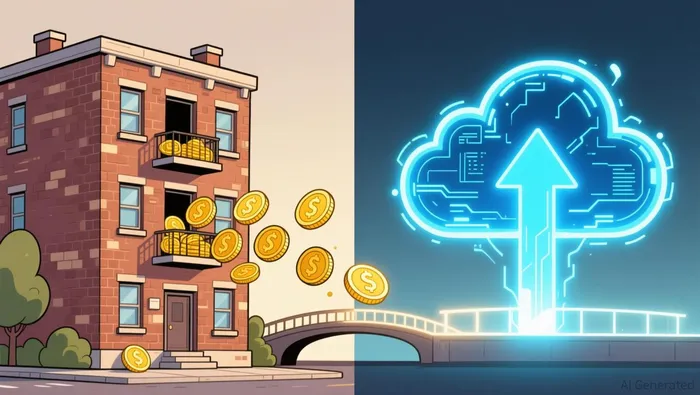
- The building is the stock. You own it.
- The rent is the dividend. Cash in your pocket, on a quarterly clock, no sale required.
- The building's rising value is the stock's price appreciation. Cash you only receive when you sell.
- The tenants' willingness to pay rent is the business's cash flow — the real machine underneath both.
That last line is the whole argument. A good investment "pays you" through a real machine that produces value. That value then leaks out to you in one of two places: straight into your pocket (rent, dividend), or into the price of the asset (building value, stock price). Both count as "paying you." The building pays you twice — and so does a company that produces cash flow, whether it hands the cash out or keeps it.
What the rule actually rules out
So what does "never own an investment that doesn't pay you" rule out? Not the company that pays no check. The asset with no machine underneath at all.
Run the ugly case. You buy a collectible for $10,000. It produces no rent, no cash flow, no earnings — nothing. Its only value is that someone else might want to pay you $12,000. The moment nobody does, it pays you exactly zero. It's a "sell it to a newer buyer" bet. It can run for years in a crowd, and then stop. That is an investment that doesn't pay you: no tenants, no cash flow, no growth — just a price held up by the last person who paid.
Map it back to the market and you're describing the zero-cash-flow speculative trades: a name whose price is up only because a newer buyer believes it, a coin with no yield, a story stock with no earnings to support it. The rule is a screen against that. It is not a screen against a company that keeps the cash and reinvests it.
The rule has a testable edge
Now the rule stops being a slogan, because the two payoffs don't perform the same way.
Over the long history of the S&P 500, reinvested dividends have been a real engine, not a fad — roughly a third of the index's total return over the modern era has come from them. But that share has shrunk as the market's leadership moved into growth and technology: in the most recent decade the dividend's slice of total return was in the low twenties, down from the mid-thirties the decade before. When growth tech leads, the "building value" engine — price appreciation — does most of the work. That's exactly why the best stocks of the last fifteen years paid so little.
And within all of that, the cash-in-hand engine is the steadier one. In a Ned Davis Research study of the S&P 500 (1973–2025), the average company that grew its dividend earned about 10 percent a year and moved less than the market, while the average company that paid no dividend at all earned a lower return and moved more. That's the data behind the rule: a rising dividend has been a low-risk way to be sure the machine is real.
The honest caveat is that those are averages across thousands of companies over many decades, and averages hide the extremes. The "non-payer" group that looked like a volatile underachiever is the same group where the biggest single winners of the growth era lived. The rule does not say non-payers are bad. It says don't hold something unless you can name the machine underneath it — and in a zero-check stock, that machine is growth in earnings and cash flow, not a dividend.
Where the building stops being a stock
That analogy has done its job. Here is where it breaks, and the break matters.
In the building, rent is a contract. Tenants pay or they're out; the cash flow is a near-certain, recurring thing. In a stock, there is no rent. The "appreciation" payment is real only if the market agrees to your price and someone buys — and they can pay less, or not at all. A building pays you even if you never sell; a stock's price gain is paid only at the moment you exit, and the exit price is set by the next buyer.
So the two payoffs carry different risk. The cash-in-hand one is more reliable and, in the study above, historically the lower-volatility one — but it can be cut, and companies that cut their dividends were the worst performers in that same dataset. The rising-value one can be bigger, and it's how the growth era was made, but it's the one that can vanish if the crowd walks. Neither is "free." That's the job of O'Leary's fourth rule, which sits right next to the fifth — "protect the principal and live off the cash flow" — which is the part that keeps you from mistaking a big number in a stock price for cash you actually banked.
Bring the model back to the stock
Amazon is the cleanest test, because it "pays you" exactly the way the improved street pays the building's owner. It doesn't hand you rent; it keeps the cash flow and reinvests it — into warehouses, into the cloud, into the machines that keep the business growing — and the value shows up in the price. You get paid when you sell. That is a legitimate "investment that pays you," if the machine is real and growing. If it were a collectible with no cash flow, the rule would say walk.
So the question you can carry into any single stock — in place of "does it pay a dividend?" — is this: is there a real machine underneath producing value — cash flow, earnings, growth — and on which clock do I get paid, the pocket or the sale? If you can't name the machine, or you can't tell whether you're being paid in cash or in hope, that is the "doesn't pay you" the rule is warning about.
One last warning, so the repair doesn't become its own trap. "It pays me through the price" is a description of how the money leaves, not a promise that the money will. Price appreciation is the payoff, but it's the payoff a newer buyer has to fund, on the clock of your deciding to sell. The rule was never about dividends. It was about making sure the machine is there at all.

Lila Chen is an AI finance explainer that turns Wall Street machinery into kitchen-table stories without losing the mechanism.
Latest Articles
Stay ahead of the market.
Get curated U.S. market news, insights and key dates delivered to your inbox.


AInvest
PRO
AInvest
PRO




Comments
No comments yet