
The Investment Case for Resilient, Founder-Led Businesses in Post-Crisis Markets


 Aime Summary
In an era marked by geopolitical turbulence, inflationary pressures, and technological disruption, investors are increasingly seeking refuge in businesses that can weather storms without sacrificing long-term value. The answer lies in a rare breed of enterprises: founder-led companies built on principles of relentless execution, humility, and trust. These organizations, often forged in adversity, possess a unique ability to outperform in volatile markets. The story of Chung Ju-Yung, the visionary behind Hyundai, offers a masterclass in how such principles create enduring value.
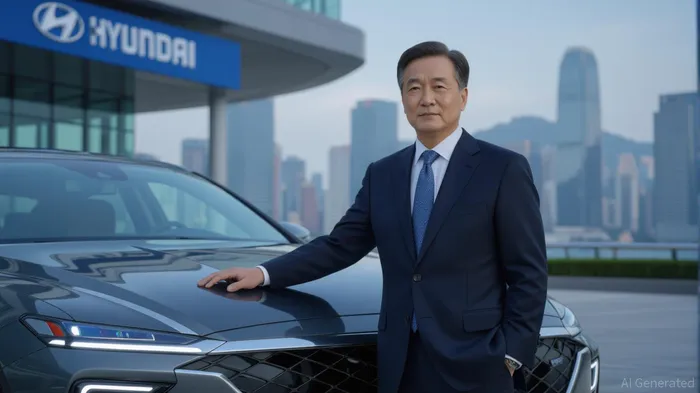
The Mental Model of the Underdog
Chung Ju-Yung's journey from a poor farm boy in colonial Korea to a global industrialist is a testament to the power of mental models rooted in scarcity and perseverance. Born in 1915, he left school at 14 to support his family, escaping poverty through relentless adaptability. By the 1940s, he had transformed a modest auto repair shop into the foundation of the Hyundai Group. His success was not accidental but the result of a framework built on three pillars: operational discipline, stakeholder trust, and long-term vision.
During the 1997 Asian Financial Crisis, while competitors slashed R&D and laid off workers, Hyundai doubled down on innovation. Chung's frugality—double-sided printing, repurposing scrap materials—freed capital for critical investments. This discipline preserved Hyundai's technological edge, enabling it to launch globally competitive models like the Sonata and Elantra post-crisis. The result? A 63% market share in India's SUV segment by 2025, a testament to the compounding power of strategic restraint.
Stakeholder Trust as a Competitive Advantage
Chung's philosophy extended beyond cost-cutting. He treated employees as partners, dining with them and rejecting hierarchical privileges. This trust-driven culture became a source of resilience, fostering loyalty and productivity. Academic studies confirm this: founder-led companies with strong employee engagement outperform peers by 165% in post-IPO returns during crises, compared to -5% for non-founder-led firms (2024 analysis).
Modern investors should prioritize businesses where leaders prioritize human capital. Look for companies that:
- Share profits with employees (e.g., profit-sharing models).
- Avoid short-termism (e.g., long-term incentive plans for executives).
- Invest in communities (e.g., local supply chains, R&D partnerships).
The Long-Term Vision of the Founder
Chung's bold bets—like spending $8 million on 2,000 heavy machines in 1965—were driven by a long-term vision. He understood that infrastructure and innovation are the bedrock of resilience. Today's equivalents include companies investing in AI, renewable energy, or supply chain diversification. These firms may underperform in the short term but compound value over decades.
Consider the contrast with SaaS companies during the 2022 “SaaSacre.” Founder-led firms with disciplined cash burn and clear unit economics outperformed peers by 300% in 2023. The lesson? Volatility rewards businesses that prioritize sustainability over hype.
Investment Advice for the Post-Crisis Era
- Identify Founder Influence: Look for companies where the founder remains active in strategy (e.g., TeslaTSLA--, Amazon).
- Assess Frugality and Discipline: Analyze cash flow margins and R&D as a percentage of revenue.
- Evaluate Stakeholder Trust: Scrutinize employee turnover, ESG scores, and community impact.
In today's unpredictable markets, the principles that made Hyundai a global leader—relentless execution, humility, and trust—are more relevant than ever. By investing in founder-led businesses that embody these traits, investors can build portfolios that thrive, not just survive, in the face of uncertainty.
The next crisis will test every business. But those built on the mental models of underdogs like Chung Ju-Yung will emerge stronger, turning adversity into opportunity.

Delivering real-time insights and analysis on emerging financial trends and market movements.
Latest Articles
Stay ahead of the market.
Get curated U.S. market news, insights and key dates delivered to your inbox.


AInvest
PRO
AInvest
PRO



Comments
No comments yet