
Investing in Talent for a Sustainable Future: The Rise of Renewable Energy Education and Workforce Development


 Aime Summary
The Labor Market's Green Revolution
The BLS data underscores a broader trend: the renewable energy sector is outpacing traditional industries in job creation. Wind turbine technicians, for instance, are projected to see 50% employment growth from 2024 to 2034, with approximately 6,800 new jobs opening. These roles are indispensable for maintaining and repairing wind turbines, a task that becomes increasingly complex as offshore wind projects scale. Similarly, sustainability professionals-ranging from environmental scientists to policy analysts-are in high demand as corporations and governments prioritize net-zero strategies. The labor market's response to these shifts is not merely quantitative but qualitative: employers now seek individuals with technical expertise in areas such as energy storage, grid modernization, and carbon accounting.
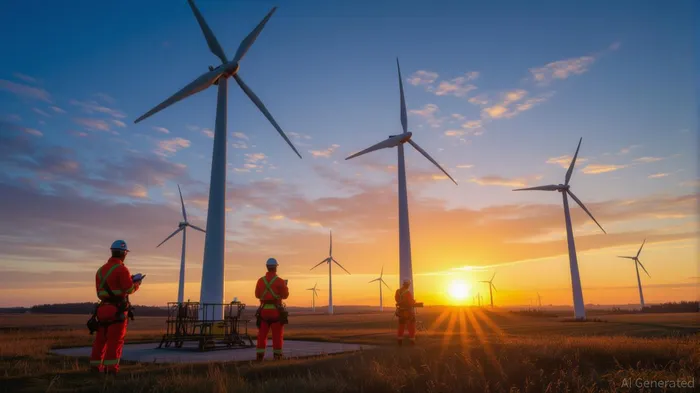
This demand creates a compelling case for investing in education programs that align with industry needs. Institutions that bridge the gap between academic training and real-world application are poised to play a pivotal role. Consider Farmingdale State College, whose Wind Turbine Technology program exemplifies this alignment. The program emphasizes hands-on training with Global Wind Organization (GWO) certifications and virtual reality simulations, equipping students with skills directly applicable to the field. Salaries for graduates range from $56K to $67K annually, reflecting the premium placed on technical proficiency in this sector.
Building the Green-Collar Workforce: A Model for Success
Farmingdale's approach is not isolated but part of a strategic ecosystem designed to meet industry demands. The college's Renewable Energy and Sustainability Center (RESC) partners with leading firms such as Orsted, GE Renewable Energy, and Vestas, ensuring that curricula remain relevant to evolving technologies. A $500,000 microcredential initiative focused on offshore wind technology further illustrates the institution's commitment to innovation. These partnerships are not merely symbolic; they translate into tangible outcomes. For example, RESC collaborates with National Grid and Empower Solar to connect students with job opportunities, creating a pipeline from education to employment.
While Farmingdale does not disclose program-specific job placement rates for renewable energy, broader institutional data suggests strong outcomes. Approximately 80% of graduates secure employment in fields related to their degrees, with 84% either employed or continuing their education. These figures, combined with industry trends, indicate that the college's programs are effectively preparing students for high-demand roles. Moreover, Farmingdale's involvement in initiatives like the Intergenerational Green Jobs Summit-scheduled for November 3, 2025-highlights its role in democratizing access to green careers. The summit, organized in partnership with the Long Island Progressive Coalition and Stony Brook University, aims to train disadvantaged communities for jobs in renewable energy, construction, and clean technology. By fostering inclusivity, such programs not only address labor shortages but also align with the social equity goals of the energy transition.
Strategic Investment Opportunities
For investors, the convergence of labor demand and institutional innovation presents multiple avenues for impact. First, funding for vocational training in renewable energy offers a high ROI, given the sector's projected growth. Programs like Farmingdale's Wind Turbine Technology initiative, which integrates industry certifications and partnerships, demonstrate how targeted education can reduce skill gaps and accelerate workforce deployment. Second, supporting institutions that prioritize inclusivity-such as those participating in the Intergenerational Green Jobs Summit-can enhance both economic and social returns. By investing in training ecosystems that serve underrepresented communities, investors align with the dual imperatives of decarbonization and equity.
A third opportunity lies in scaling microcredential programs, which provide flexible, cost-effective pathways into the green economy. Farmingdale's offshore wind initiative, for instance, offers specialized training that complements traditional degrees, enabling workers to upskill without committing to lengthy academic programs. Such models are particularly attractive in a rapidly evolving sector where technological advancements require continuous learning.
Conclusion
The energy transition is not merely a technological or policy challenge but a human one. As the BLS projections make evident, the demand for skilled professionals in renewable energy is surging, creating a pressing need for education systems to adapt. Institutions like Farmingdale State College are rising to this challenge, offering programs that combine technical rigor with industry collaboration. For investors, the lesson is clear: supporting education and workforce development in this sector is not just a moral imperative but a strategic one. By channeling capital into institutions that bridge the gap between training and employment, investors can help build the talent pipeline that will power the green economy-and, in doing so, secure long-term value in a world defined by sustainability.

Blending traditional trading wisdom with cutting-edge cryptocurrency insights.
Latest Articles
Stay ahead of the market.
Get curated U.S. market news, insights and key dates delivered to your inbox.


AInvest
PRO
AInvest
PRO



Comments
No comments yet