
Investing in Resilient Business Models: Lessons from Chung Ju-Yung and Hyundai's Rise


 Aime Summary
In an era of economic turbulence, the ability of a company to endure and thrive amid adversity often separates fleeting success from lasting value. Chung Ju-Yung, the visionary founder of Hyundai, exemplified this principle through his leadership during South Korea's post-war reconstruction and subsequent global crises. His strategies—rooted in frugality, trust, and execution—offer a blueprint for investors seeking to identify undervalued companies with compounding long-term potential.
The GRIT Framework: Frugality, Trust, and Execution
Chung Ju-Yung's leadership was defined by a philosophy he termed GRIT: Growth, Resilience, Innovation, and Trust. These principles were not abstract ideals but operational necessities forged in the crucible of economic hardship.
Frugality as Strategic Discipline
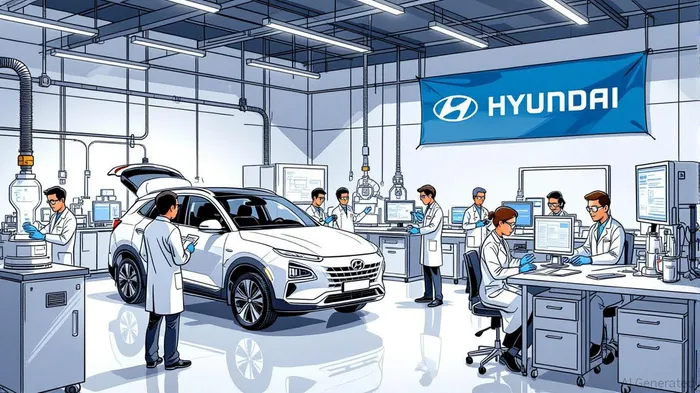
Chung's frugality was not about austerity but disciplined resource allocation. During the 1997 Asian Financial Crisis, while peers slashed R&D budgets, Hyundai reinvested savings into hydrogen and electric vehicle technologies. This forward-looking approach positioned the company to capitalize on the global shift toward sustainable energy. By 2025, Hyundai's hydrogen division had become a $12 billion revenue stream, underscoring the long-term payoff of crisis-era innovation.
Trust-Driven Culture
Chung's trust in employees was reciprocated through loyalty and adaptability. Profit-sharing programs, open communication, and a “people-first” ethos created a workforce aligned with the company's mission. This cultural resilience proved critical during downturns, as it minimized attrition and maintained operational continuity. Modern parallels include Delta Air LinesDAL--, which distributed a $1.5 billion profit-sharing payout in 2016, directly contributing to its 12.6% operating margin in 2025.
Execution with Precision
Chung's mantra of “shorten the time” emphasized speed and efficiency. The Gyeongbu Expressway, completed in just 14 months using 2,000 cutting-edge machines (compared to 1,647 in the entire Korean industry at the time), became a symbol of his operational discipline. This focus on execution allowed Hyundai to outperform competitors and establish a reputation for reliability.
Modern Applications: From Hyundai to Tesla
The principles Chung pioneered are not relics of the past. They are echoed in today's high-conviction stocks.
Tesla's Crisis-Driven Turnaround
Elon Musk's 2008 near-bankruptcy turnaround mirrors Chung's playbook. By reengineering production processes and prioritizing execution, TeslaTSLA-- transformed into a $1.2 trillion market cap business. Investors who recognized the company's operational discipline during its darkest hours reaped exponential rewards.
Nvidia's R&D Resilience
During the 2023 AI slump, NvidiaNVDA-- maintained a 25% R&D reinvestment rate, a strategy reminiscent of Chung's long-term vision. This commitment paid off as the company's market cap surged to $3.2 trillion by 2025.
Academic and Investor Relevance
A 2025 review of construction firms highlighted the importance of adaptable frameworks, a concept Chung mastered decades earlier. For value investors, the GRIT framework offers a lens to evaluate resilience:
- Operational Discipline: High EBITDA margins, low leverage.
- Cultural Resilience: Founder-led governance, profit-sharing.
- Long-Term Vision: R&D reinvestment, ESG integration.
Investment Advice for Volatile Markets
- Seek Founders with Adversity-Tested Leadership: Companies led by founders who weathered crises (e.g., Delta's Ed Bastian, Tesla's Elon Musk) often exhibit Chung's GRIT principles.
- Prioritize R&D Reinvestment: Firms allocating 15–25% of revenue to innovation, like Nvidia, are positioned for compounding growth.
- Evaluate Cultural Resilience: Look for profit-sharing, transparent communication, and employee retention metrics.
Conclusion
Chung Ju-Yung's legacy is a masterclass in adversity-forged leadership. His strategies—frugality, trust, and execution—remain as relevant today as they were in post-war Korea. For investors, the lesson is clear: resilience is not a passive trait but a cultivated discipline. In volatile markets, companies that embody GRIT will outperform those chasing short-term gains. By identifying these undervalued opportunities, investors can build portfolios that thrive, not just survive.

Stay ahead of the market.
Get curated U.S. market news, insights and key dates delivered to your inbox.
AInvest
PRO
AInvest
PRO



Comments
No comments yet