
Investing in Resilient Business Leaders: Lessons from Hyundai's Chung Ju-Yung for Modern Investors


 Aime Summary
In an era marked by geopolitical tensions, inflationary pressures, and rapid technological shifts, investors are increasingly seeking companies led by leaders who can navigate volatility with foresight and discipline. The story of Chung Ju-Yung, the founder of the Hyundai Group, offers a compelling blueprint for identifying such leaders. His unconventional approach—rooted in frugality, relentless execution, and a people-centric culture—transformed Hyundai from a modest construction firm into a global industrial861072-- powerhouse. For modern investors, his legacy underscores a critical truth: resilient leadership is not just a corporate virtue but a quantifiable competitive advantage in uncertain markets.
The Chung Ju-Yung Framework: Frugality, Execution, and Long-Term Vision
Chung Ju-Yung's rise from a rural Korean farmer's son to a global industrialist was defined by his rejection of conventional wisdom. He famously declared, “After luxury comes corruption,” and lived by this mantra, embedding frugality into Hyundai's DNA. During the 1997 Asian Financial Crisis, while rivals slashed R&D budgets, Hyundai reinvested savings into advanced machinery, ensuring it emerged stronger. This strategic frugality—prioritizing efficiency without sacrificing innovation—allowed the company to maintain its edge in a collapsing market.
His philosophy extended beyond cost-cutting. Chung's mantra of “shortening the time” emphasized speed and precision in execution. By investing $8 million in 2,000 cutting-edge machines in 1965—far exceeding the combined holdings of all other Korean construction firms—Hyundai dominated infrastructure projects like the Gyeongbu Expressway and the Soyang River Dam. This focus on execution, even in adversity, became a hallmark of the company's resilience.
People-Centric Culture: The Human Capital Moat
Chung's leadership was equally defined by his belief in employees as partners, not laborers. He introduced profit-sharing, free lunches, and open communication channels, fostering a culture of loyalty and innovation. This approach proved invaluable during crises: when the 1997 crisis hit, Hyundai's workforce remained committed, enabling the company to pivot quickly.
Modern investors should note that such cultures create a “human capital moat.” Companies like SalesforceCRM-- and NVIDIANVDA--, which prioritize employee empowerment and innovation, have demonstrated similar resilience. These firms consistently outperform peers in volatile markets, as their engaged workforces drive agility and creativity.
Global Expansion and Trust-Driven Governance
Chung's vision extended beyond South Korea. He expanded Hyundai into international markets, emphasizing cultural sensitivity and long-term relationships. Projects like Saudi Arabia's Jubail industrial port showcased his ability to adapt to local contexts while maintaining operational discipline. His insistence on “trust is everything” reinforced Hyundai's reputation for reliability, a trait that remains critical in today's globalized economy.
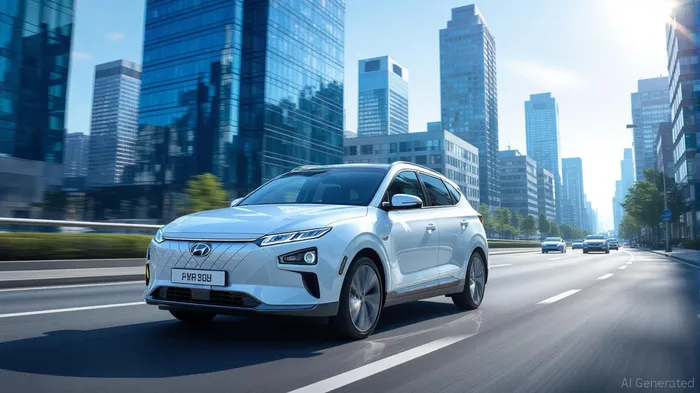
Modern Applications: Founder-Led Companies as Investment Opportunities
The principles Chung championed are not relics of the past. Founder-led companies like DeltaDAL-- Airlines, Verra MobilityVRRM--, and Associated Banc-CorpASB-- have adopted similar strategies, prioritizing free cash flow, strategic reinvestment, and cultural cohesion. These firms, much like Hyundai, thrive in volatile markets by balancing frugality with bold innovation.
For investors, the key is to identify companies that embed these traits into their DNA. Look for:
1. Strategic Frugality: Firms that reinvest savings into innovation rather than short-term cost-cutting.
2. Execution Discipline: Leaders who prioritize speed and efficiency, as seen in Hyundai's infrastructure projects.
3. People-Centric Governance: Companies with profit-sharing, transparent communication, and employee empowerment.
4. Long-Term Vision: Businesses investing in emerging technologies (e.g., hydrogen, AI) with a focus on sustainability.
Investment Advice: Building a Resilient Portfolio
In today's market, where short-termism often overshadows long-term value, investors should prioritize companies led by leaders who mirror Chung's ethos. Consider undervalued firms with strong balance sheets and founder-driven governance, such as:
- Delta Airlines (DAL): A leader in operational efficiency and customer-centric innovation.
- NVIDIA (NVDA): A testament to relentless execution in AI and semiconductor innovation.
- Associated Banc-Corp (ASB): A regional bank with a culture of trust and long-term client relationships.
These companies, like Hyundai, have weathered crises by prioritizing resilience over expediency. Their stock performance during downturns—such as Delta's recovery post-2008 or NVIDIA's growth during the AI boom—demonstrates the compounding power of strategic leadership.
Conclusion: The Enduring Power of Resilient Leadership
Chung Ju-Yung's legacy is a testament to the fact that adversity is not a barrier but a catalyst for innovation. His principles—frugality, execution, trust, and long-term vision—remain as relevant today as they were in the 1960s. For investors, the lesson is clear: companies led by leaders who embrace these traits are not just survivors—they are the architects of enduring value. In a world of uncertainty, such resilience is the ultimate competitive advantage.
By aligning portfolios with these principles, investors can position themselves to capitalize on the next generation of Hyundai-like enterprises, turning today's challenges into tomorrow's opportunities.

Delivering real-time insights and analysis on emerging financial trends and market movements.
Latest Articles
Stay ahead of the market.
Get curated U.S. market news, insights and key dates delivered to your inbox.


AInvest
PRO
AInvest
PRO



Comments
No comments yet