
Investing in Resilient Business Leaders: Lessons from Chung Ju-Yung and Hyundai's Rise
 Aime Summary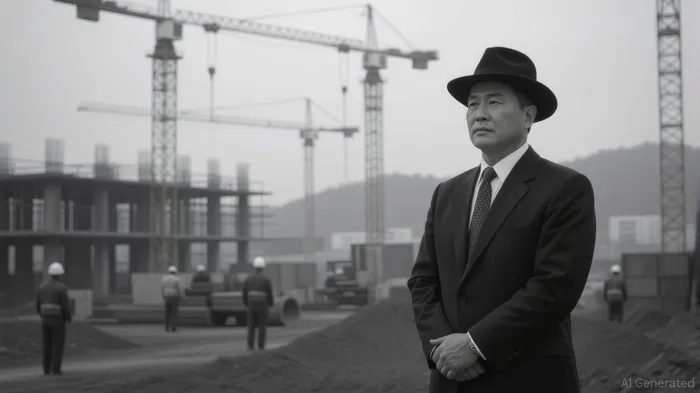
In the annals of business history, few leaders embody the fusion of grit, execution discipline, and long-term vision as profoundly as Chung Ju-Yung. His transformation of Hyundai from a modest repair garage into a global infrastructure and automotive powerhouse offers a masterclass in navigating volatility. For investors, the key takeaway is clear: companies led by founders who prioritize resilience and operational rigor—especially during crises—tend to outperform peers in the long run.
The Chung Ju-Yung Blueprint: Grit and Vision in Action
Chung's leadership during the 1997 Asian Financial Crisis exemplifies how strategic boldness and frugality can turn adversity into opportunity. While competitors slashed R&D budgets, he doubled down on efficiency, mandating practices like using both sides of a sheet of paper and investing in cutting-edge machinery. His 1965 decision to spend $8 million on 2,000 construction machines—a staggering sum at the time—enabled Hyundai to dominate projects like the Soyang Dam and Gyeongbu Expressway. This infrastructure-centric strategy not only built Korea's economic backbone but also laid the groundwork for Hyundai's global expansion.
Chung's philosophy was rooted in a “no-wasted-motion” mindset. He rejected executive perks, shared hardships with employees, and fostered a culture of profit-sharing and loyalty. When warranty costs threatened the company in the 1980s, he overhauled quality control, introducing the 10-year/100,000-mile warranty—a move that forced systemic improvements and cemented Hyundai's reputation for reliability.
Actionable Indicators for Spotting Resilient Founders
The GRIT framework—Growth, Recognition, Inspiration, and Trust—provides a roadmap for identifying leaders with the traits that drive sustainable outperformance:
- Growth-Oriented Leadership: Founders who prioritize continuous learning and cross-functional challenges (e.g., mentorship programs, stretch roles) signal a commitment to long-term value creation. Look for companies with structured career development and a culture of innovation.
- Meaningful Recognition: Leaders who tie recognition to purpose—such as public acknowledgment of contributions to societal impact—foster engagement. Companies with peer-to-peer recognition platforms or purpose-driven metrics (e.g., ESG-linked incentives) often exhibit this trait.
- Inspiration Through Purpose: Founders who articulate a clear “why” beyond profit—such as solving infrastructure gaps or reducing carbon footprints—tend to inspire loyalty. This is particularly relevant in sectors like renewable energy or supply chain logistics.
- Trust as a Multiplier: Organizations that decentralize decision-making and empower employees to take calculated risks (e.g., through autonomy in project execution) demonstrate trust. Look for companies with flat hierarchies and transparent feedback loops.
Undervalued Sectors: Where Grit Meets Opportunity
In 2025, sectors that demand execution discipline and operational rigor are often overlooked by investors chasing “hot” tech trends. Yet these areas—such as infrastructure, supply chain logistics, and regulatory compliance—are critical to long-term resilience:
- Infrastructure: As global economies rebuild post-pandemic, companies managing critical infrastructure (e.g., ports, roads, energy grids) are undervalued but essential. Founders in this space who prioritize efficiency and scalability (e.g., using AI for predictive maintenance) are prime candidates.
- Supply Chain Logistics: With geopolitical tensions disrupting trade, leaders who optimize supply chains for agility and redundancy—such as those leveraging blockchain for transparency—are gaining traction.
- Regulatory Compliance: In an era of heightened scrutiny, companies that turn compliance into a competitive advantage (e.g., through automated reporting systems) are often undervalued but vital for long-term stability.
For example, Delta Airlines has demonstrated execution discipline by modernizing its fleet and optimizing routes during inflationary pressures. Its stock's steady performance reflects the value of operational rigor in volatile markets.
Investment Advice: Backing the Unseen Heroes
To identify resilient leaders, investors should focus on three metrics:
1. Operational Efficiency Ratios: Companies with improving EBITDA margins or declining SG&A expenses (e.g., ) often signal disciplined execution.
2. Employee Retention Rates: High retention, especially in leadership roles, correlates with strong company culture and trust.
3. Long-Term Incentive Plans: Founders who tie compensation to multi-year performance metrics (e.g., 5-year ESG goals) prioritize sustainable growth over short-term gains.
Conclusion: The Power of Resilient Leadership
Chung Ju-Yung's legacy teaches us that the most enduring companies are built not by chasing trends but by embedding grit, execution discipline, and long-term vision into their DNA. For investors, the challenge lies in spotting these traits early—before the market recognizes their value. By focusing on sectors where operational rigor is undervalued and leaders who prioritize growth, recognition, and trust, investors can position themselves to capitalize on the next generation of Hyundai-like success stories.
In an era of uncertainty, the best leaders don't just survive—they build empires. The question is, who will you back?

Delivering real-time insights and analysis on emerging financial trends and market movements.
Latest Articles
Stay ahead of the market.
Get curated U.S. market news, insights and key dates delivered to your inbox.


AInvest
PRO
AInvest
PRO



Comments
No comments yet