
Investing in Resilient Business Leaders: Lessons from Chung Ju-Yung and Hyundai's Rise
 Aime Summary
In an era of geopolitical uncertainty, inflationary pressures, and rapid technological disruption, the search for durable value in equities has never been more urgent. The answer, as history and modern practice suggest, lies in identifying founder-led companies that embody the timeless principles of long-term vision, operational discipline, and cultural resilience. Chung Ju-Yung, the visionary founder of the Hyundai Group, offers a masterclass in how these traits can transform a modest enterprise into a global industrial861072-- titan—and how they remain relevant to today's investors.
The Chung Ju-Yung Framework: A Blueprint for Resilience
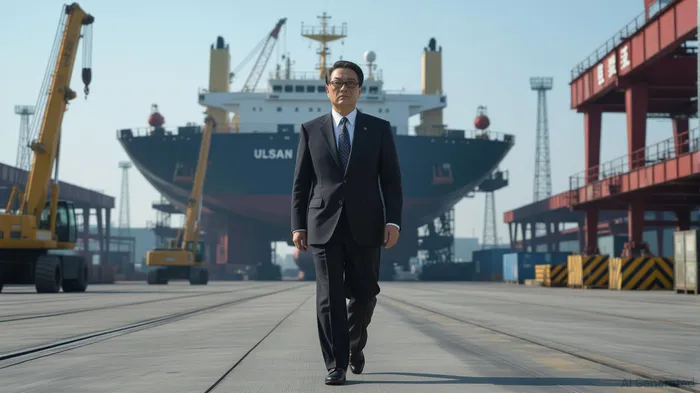
Chung Ju-Yung's leadership of Hyundai from the 1960s to the 1990s was defined by three pillars: long-term strategic foresight, fanatic execution discipline, and people-centric culture. These principles enabled Hyundai to survive the 1997 Asian Financial Crisis while many competitors collapsed. For instance, Chung's decision to invest $8 million in 2,000 cutting-edge machines in 1965—a staggering sum in a country with only 1,647 civilian construction machines at the time—allowed the company to dominate infrastructure projects like the Soyang Dam and Gyeongbu Expressway. His frugality was not mere cost-cutting but a strategic imperative: using both sides of a sheet of paper and insisting on modest lifestyles for executives.
Culturally, Chung fostered a “no-wasted-motion” mindset, emphasizing collaboration and shared hardship. During crises, he prioritized employee morale through profit-sharing and free meals, ensuring loyalty even in lean times. This ethos, combined with relentless innovation—such as the 10-year/100,000-mile warranty that forced quality improvements—cemented Hyundai's global reputation.
Modern-Day Analogues: Founder-Led Resilience in Action
Today's volatile markets demand leaders who mirror Chung's traits. Consider Delta Airlines (DAL), led by Ed Bastian, who transformed the airline from near-bankruptcy into a profit-driven entity. Bastian's focus on employee profit-sharing, route optimization, and customer trust-building aligns with Chung's people-first philosophy. Delta's P/E ratio of 12.3 in 2025, below its 5-year average of 16.7, suggests the market underestimates its resilience-driven culture.
Similarly, Verra Mobility Corporation (VRRM), under Todd Pedersen, embodies frugality and innovation. Pedersen's background in scaling Vivint to a $3 billion enterprise informs his approach to wireless vehicle tracking and tolling solutions. With a projected 46.77% annual earnings growth and a stock price of $25.01 (vs. intrinsic value of $48.35), VRRM is a high-conviction bet on a leader who turns adversity into opportunity.
In the tech sector, NVIDIA (NVDA), led by Jensen Huang, exemplifies long-term vision. Its early bet on AI, now a $1.5 trillion market, has paid off handsomely. With a P/E of 31 and 24% analyst upside, NVIDIA's R&D-driven innovation mirrors Chung's forward-looking mindset.
Metrics for Identifying Resilient Leaders
Investors seeking to replicate Chung's success should focus on three key metrics:
- EBITDA Margins and Debt-to-EBITDA Ratios: These reflect operational efficiency and financial discipline. For example, General Motors (GM) maintains a debt-to-EBITDA ratio of 2.5x (2025), a testament to its lean operations.
- R&D-to-Revenue Ratios: Companies like Apple (AAPL), with a 5.5% R&D spend, demonstrate a commitment to future-proofing.
- Employee Retention and Engagement: High retention rates, as seen at Salesforce (CRM), indicate a culture of trust and shared purpose.
The Resilience Premium: Why It Matters Now
The “resilience premium” refers to the outperformance of companies led by adversity-tested founders. In 2025, this premium is particularly relevant as markets grapple with AI-driven disruption, supply chain fragmentation, and regulatory shifts. For instance, Tesla (TSLA)'s vertical integration and focus on energy storage position it to withstand supply chain shocks, while UnitedHealth Group (UNH)'s AI-driven healthcare models adapt to regulatory changes.
Conclusion: Building a Resilient Portfolio
Chung Ju-Yung's legacy is not a relic but a living framework for modern investors. By prioritizing companies with high R&D-to-revenue ratios, low debt-to-EBITDA, and strong employee retention, investors can identify businesses poised to endure and outperform. In a world obsessed with short-term metrics, the most enduring returns come from leaders who, like Chung, build organizations for the long haul.
For those willing to look beyond quarterly earnings, the path to compounding wealth lies in the hands of founder-led companies that treat frugality as a strength, innovation as a necessity, and people as their greatest asset. As Chung once said, “If there is no competition, you don't need to improve the quality of your product.” In today's markets, the most resilient leaders are those who embrace competition—and use it to build something lasting.

Delivering real-time insights and analysis on emerging financial trends and market movements.
Latest Articles
Stay ahead of the market.
Get curated U.S. market news, insights and key dates delivered to your inbox.


AInvest
PRO
AInvest
PRO



Comments
No comments yet