
Investing in Resilient Business Leaders: The Case for Companies Built on Foundational Principles


 Aime Summary
In the annals of corporate history, few figures embody the intersection of vision, grit, and ethical leadership as profoundly as Chung Ju-Yung, the founder of Hyundai. His story is not merely one of industrial triumph but a masterclass in how foundational principles—rooted in resilience, frugality, and a people-centric ethos—can transform a company into a global titan. For investors, the lesson is clear: businesses built on such enduring values often outperform in the long term, even when markets misprice their potential.
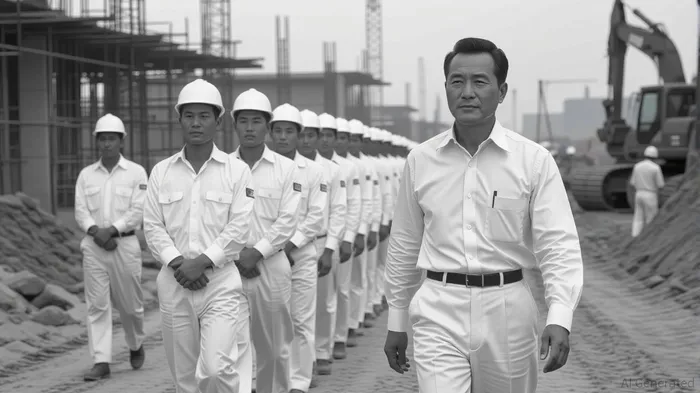
The Power of Foundational Principles
Chung Ju-Yung's approach to business was anchored in four pillars that remain relevant in today's volatile markets. First, relentless execution—his mantra of “shorten the time” prioritized speed and decisiveness. In 1965, he bet $8 million on 2,000 advanced construction machines, a move that outpaced competitors and secured Hyundai's dominance in post-war infrastructure. This principle of aggressive, calculated action is a hallmark of resilient companies, enabling them to seize opportunities before rivals can react.
Second, strategic frugality. Chung's insistence on using both sides of paper and sharing meals with workers wasn't mere cost-cutting—it was a cultural lever to align employees with the company's mission. This ethos allowed Hyundai to maintain financial discipline during downturns while reinvesting in innovation. His personal frugality, despite immense wealth, reinforced a working-class identity that permeated the organization.
Third, a people-centric culture. By treating employees as partners—through profit-sharing, open communication, and guaranteed wages—Chung fostered loyalty and productivity. This model reduced turnover and created a flywheel effect: motivated workers drove innovation, which in turn fueled profitability.
Finally, resilience as a strategic advantage. During the 1997 Asian Financial Crisis and the 2008 global recession, Hyundai not only survived but thrived. While peers cut production, Hyundai increased sales and revenues. This resilience stemmed from a culture of adaptability and a long-term mindset that prioritized stability over short-term gains.
The Investor's Lens: Valuation vs. Value
Hyundai's current financials tell a compelling story for investors. Despite a debt-to-equity ratio of 1.44, which might deter risk-averse investors, the company's R&D-to-revenue ratio of 6% and a price-to-earnings (P/E) ratio of 1.33 suggest it is undervalued. These metrics highlight a business that reinvests in innovation while maintaining disciplined cost management—a rare combination in today's market.
For investors, the key takeaway is that companies with strong founder-led cultures often defy traditional valuation metrics. Chung's governance model—prioritizing long-term goals over quarterly earnings—has created a durable competitive advantage. This is particularly relevant in industries like automotive and manufacturing, where innovation cycles are long and capital expenditures are high.
Lessons for Modern Investors
The Hyundai case underscores a broader truth: foundational principles are the bedrock of corporate resilience. Founders who embed values like frugality, employee empowerment, and strategic patience into their organizations create companies that weather storms and outperform in bull markets. For investors, this means seeking out businesses with:
1. High R&D investment as a proxy for innovation.
2. Low employee turnover as a sign of a people-centric culture.
3. A history of navigating crises without sacrificing core values.
Consider the contrast with companies that prioritize short-term gains. When leadership shifts focus to quarterly earnings, innovation stalls, and employee morale declines. The result? A hollowed-out business that falters when volatility strikes.
Conclusion: Building a Portfolio of Resilience
In an era of AI-driven disruption and geopolitical uncertainty, the need for resilient business leaders has never been greater. Chung Ju-Yung's legacy offers a blueprint for identifying such leaders: look for companies where the founder's values are woven into the DNA of the organization. These are the businesses that will not only survive but redefine their industries.
For investors, the challenge is to recognize undervalued companies with the same kind of foundational strength that propelled Hyundai to greatness. The market may not always reward patience, but history has shown that it always does in the end.

Stay ahead of the market.
Get curated U.S. market news, insights and key dates delivered to your inbox.


AInvest
PRO
AInvest
PRO



Comments
No comments yet