
Investing in Resilient Air Transport Assets Amid Climate-Driven Disruptions


 Aime Summary
Climate Volatility and Financial Risks to Airport Infrastructure
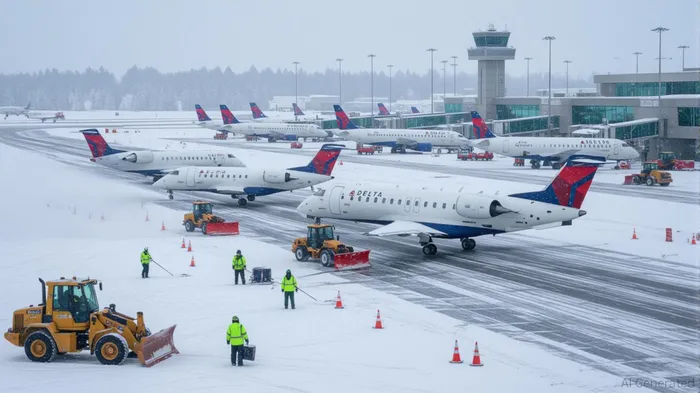
Climate change is amplifying the frequency and intensity of extreme weather events, directly threatening airport operations and infrastructure. Rising temperatures, heavy precipitation, and more frequent storms are increasing operational costs, from de-icing expenses to infrastructure repairs. For example, , conditions that overwhelmed existing runway maintenance protocols. Such events are not isolated: a 2020 study by ACI found that 12% of global airports, including major hubs like JFK and Heathrow, are at risk of flooding due to rising sea levels.
The financial implications are profound. Airlines and airports face higher insurance premiums as insurers factor in the growing likelihood of weather-related disruptions. For instance, Iowa's insurance costs have already risen due to climate-related risks, a trend expected to spread nationwide. Additionally, operational delays and cancellations translate to lost revenue and reputational damage. The DSM incident, occurring during a busy post-Thanksgiving travel period, caused thousands of flight delays and cancellations across the Midwest, illustrating how localized events can have systemic economic impacts.
Investment Opportunities in Weather-Adaptive Aviation Technology
The crisis at DSM and similar incidents globally are accelerating investments in climate-resilient infrastructure and technology. The global Airport Weather Equipment market, , is expanding rapidly, driven by demand for real-time weather monitoring systems and predictive analytics. Key innovations include:
- Integrated Weather Observation Systems: Advanced sensors and Doppler radar are enabling airports to collect granular data on wind, temperature, and visibility, allowing for proactive decision-making.
- AI and Digital Twins: Artificial intelligence is optimizing flight paths and rerouting aircraft in real time, while digital twin technology simulates airport operations to test emergency responses and improve efficiency.
- Runway Safety Upgrades: The FAA is promoting cost-effective solutions like runway traffic light systems to enhance safety at busy airports, a measure that could be adopted at DSM and other regional hubs.
These technologies are not merely defensive-they represent opportunities for long-term value creation. For example, the WEF advocates for integrating climate risks into strategic planning, emphasizing that airports that adopt resilient infrastructure will outperform peers in volatile markets. Des Moines' recent runway upgrades, including new de-icing pads, exemplify this trend, though their effectiveness during the 2025 incident remains under scrutiny.
Policy and Strategic Priorities for Investors
Investors must also consider regulatory and policy shifts. The FAA's ongoing investigations into the DSM incident and its broader runway safety initiatives signal a regulatory push for modernization. Meanwhile, the WEF's five-point strategy for climate resilience-ranging from scenario modeling to green financing-provides a roadmap for airports to align with global sustainability goals.
However, challenges persist. due to the U.S. Postal Service's contract shift with FedEx highlights how non-climate factors can compound vulnerabilities. This underscores the need for diversified investments that address both climate resilience and operational flexibility.
Conclusion: A Call for Proactive Investment
The DSM incident is a microcosm of a larger challenge: climate change is reshaping the aviation landscape, and traditional infrastructure is ill-equipped to handle the scale of disruptions ahead. For investors, the path forward lies in supporting airports and airlines that prioritize resilience. From AI-driven weather systems to climate-adaptive runway designs, the technologies and strategies emerging in response to events like the 2025 DSM incident offer not only risk mitigation but also substantial returns. As the aviation sector contributes , the urgency to innovate is clear. Those who act now will be best positioned to navigate the turbulence ahead.

Delivering real-time insights and analysis on emerging financial trends and market movements.
Latest Articles
Stay ahead of the market.
Get curated U.S. market news, insights and key dates delivered to your inbox.
AInvest
PRO
AInvest
PRO



Comments
No comments yet