
Investing in Resilience: Grid Modernization as a Strategic Play in Post-Outage Markets


 Aime Summary
The recent December 2025 PG&E outage in San Francisco, which left 130,000 customers without power, underscores a critical inflection point for utility infrastructure resilience in the United States. As climate risks intensify and electrification demands surge, the crisis has accelerated a shift toward grid modernization-a sector poised for robust investment returns. For investors, the interplay of regulatory urgency, technological innovation, and capital inflows creates a compelling case for immediate action in regional grid resilience plays.
The Catalyst: A Systemic Wake-Up Call
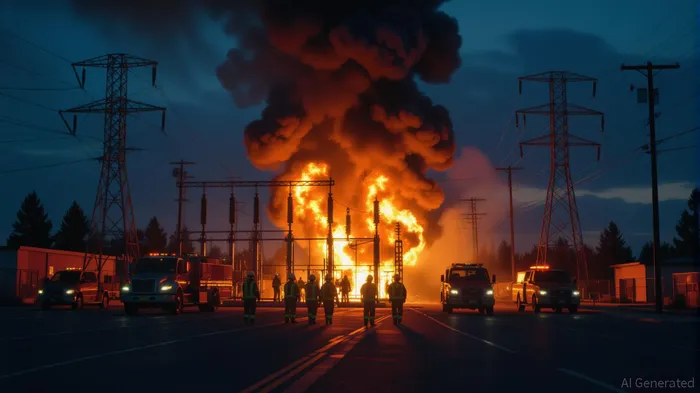
The outage, triggered by a fire at a PG&E substation in San Francisco's Mission District, exposed vulnerabilities in aging infrastructure. While PG&E stabilized the grid by 4 p.m. on December 21, the incident highlighted the fragility of systems strained by rising demand, particularly from data centers and electric vehicles.
According to a report, the outage disrupted transit, traffic signals, and critical services, amplifying calls for systemic upgrades.
PG&E's immediate response included financial relief programs like the Match My Payment Program, which matches customer contributions to prevent disconnections, and the REACH initiative,
offering bill credits for past-due accounts. However, these measures address symptoms, not root causes. The true solution lies in modernizing the grid to withstand-and adapt to-such disruptions.
The Investment Opportunity: Grid Modernization in Motion
PG&E's $73-billion capital expenditure plan (2024–2028) exemplifies the scale of investment required. A key component is Project Polaris, a $15 billion loan-backed initiative from the U.S. Department of Energy to expand hydropower, battery storage, and transmission infrastructure. This project,
coupled with Smart Wires' SmartValve technology deployed in San Jose, aims to increase grid capacity by over 100 MW, ensuring reliable power delivery to data centers and residential areas.
California's policy environment further strengthens this opportunity. The California Independent System Operator (CAISO) recently approved 31 infrastructure projects, including new transmission lines and reconductoring efforts, to address load growth in the Bay Area.
These upgrades are critical as the region faces a projected 2.14% annual load increase driven by electrification and AI-driven data centers. Meanwhile,
the California Public Utilities Commission has mandated clean energy procurement targets, adding 7,000 MW of renewable capacity in 2024 alone.
Policy and Market Synergies
Legislative action in 2025 has created a favorable ecosystem for grid resilience investments.
California's newly passed energy affordability bills authorize independent governance of western energy markets and public financing for long-range transmission projects. These measures aim to reduce costs, enhance regional coordination, and accelerate clean energy integration.
Financial incentives are equally compelling. The updated Demand-Side Grid Support (DSGS) program now offers expanded performance caps and incentives for storage and virtual power plants,
encouraging decentralized resilience solutions. For investors, this signals a shift from centralized, capital-intensive upgrades to hybrid models that blend infrastructure and technology.
Risks and Mitigations
While the outlook is optimistic, risks persist. Cybersecurity threats, regulatory delays, and the high upfront costs of grid modernization could hinder progress. However, PG&E's proactive approach-undergrounding power lines, deploying advanced grid technologies, and securing federal loans-
demonstrates a blueprint for mitigating these challenges. Additionally, the growing emphasis on public-private partnerships, as seen in CAISO's transmission plan, reduces financial burdens on individual utilities.
Conclusion: A Resilience-Driven Future
The San Francisco outage is not an anomaly but a harbinger of systemic stressors facing grids nationwide. For investors, the convergence of regulatory momentum, technological innovation, and capital availability in post-outage markets presents a unique window to capitalize on grid modernization. PG&E's initiatives, paired with California's policy leadership, offer a replicable model for regions grappling with similar challenges.
As the energy transition accelerates, resilience is no longer a luxury-it is a necessity. The question for investors is not whether to act, but how swiftly they can align with the grid of the future.

Stay ahead of the market.
Get curated U.S. market news, insights and key dates delivered to your inbox.


AInvest
PRO
AInvest
PRO



Comments
No comments yet