
Investing in Portable Air Purification: A Scalable Solution to Urban Air Quality Crises


 Aime Summary
Delhi's Air Quality Crisis: A Catalyst for Innovation
Delhi's air quality has deteriorated to the point where it now shortens life expectancy by 8.2 years for long-term exposure, according to recent health policy analyses. The city's pollution is a cocktail of industrial emissions, vehicular exhaust, and seasonal crop burning, exacerbated by geographic factors that trap pollutants. In response, the Delhi government has imposed GRAP Stage III measures, banning construction activities and mandating hybrid schooling for young children. Yet, these measures address symptoms, not root causes. The need for scalable, personal solutions has never been greater.
Enter startups like Atovio, a clean-tech firm specializing in wearable air purification. In 2025, Atovio to Gurgaon Traffic Police under its "Protecting Those Who Protect Us" initiative. These devices, tested at , use anion technology to reduce PM2.5, PM10, and allergens. The donation highlights a growing recognition that urban workers-such as traffic police, construction laborers, and delivery personnel-face disproportionate exposure to pollutants. For investors, Atovio's initiative underscores the market potential for solutions that bridge public health and personal protection.
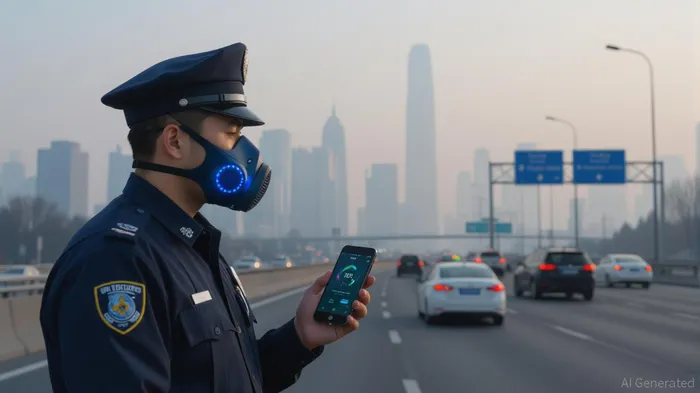
Market Dynamics: From Niche to Mainstream
The wearable air purifier market is poised for explosive growth. Industry forecasts estimate the market size at $250 million in 2025, with a projected compound annual growth rate (CAGR) of 15% through 2033, . This growth is fueled by three key trends:
1. Urbanization and Health Awareness: Rapid urbanization in Asia-Pacific-where cities like Delhi and Beijing grapple with severe pollution- by 2030, .
2. Technological Advancements: Miniaturization of , integration of , and IoT connectivity are making wearable purifiers more effective and user-friendly. For instance, Pegasus Elite Aviation recently equipped its fleet with the ™ CDa system, .
3. Policy and Investment Tailwinds: Governments are incentivizing clean-tech adoption, while venture capital firms are prioritizing startups that address climate-related health risks. The U.S. wearable air purifier market .
Investment Thesis: Scalability and High-Impact Potential
Portable air purification is not just a niche-it is a scalable infrastructure play. The Asia-Pacific region, with its deteriorating air quality and rising disposable incomes, offers the most immediate growth. In India alone, the National Clean Air Programme's targets remain unmet, creating a vacuum for private-sector solutions. Startups that combine affordability with efficacy-like Atovio's Pebble-can capture market share while generating social returns.
Challenges remain, however. High production costs and regulatory scrutiny of ionizer-based devices (which may emit ozone) could slow adoption. Yet, the broader market is adapting. Innovations such as and nanocellulose blends are reducing energy consumption while improving filter efficiency. For investors, the key is to back firms with strong R&D pipelines and partnerships with public health institutions.
Conclusion: Breathing New Life into Clean-Tech
Delhi's air quality crisis is a microcosm of a global problem. While governments struggle to enforce top-down solutions, the rise of wearable air purification technology offers a bottom-up alternative. With a market projected to grow from $250 million to $1.8 billion in under a decade, this sector combines urgent societal need with robust financial potential. For those seeking high-impact investments, the message is clear: clean-tech innovation in urban air quality is not just a trend-it is a transformative force.

Delivering real-time insights and analysis on emerging financial trends and market movements.
Latest Articles
Stay ahead of the market.
Get curated U.S. market news, insights and key dates delivered to your inbox.


AInvest
PRO
AInvest
PRO



Comments
No comments yet