
Investing in Media Literacy and Local Journalism as a Long-Term Hedge Against Disinformation Risk


 Aime Summary
The case for structural reform lies in understanding disinformation as a symptom, not an isolated problem. Social media platforms prioritize engagement over truth, while the decline of local news has left communities vulnerable to manipulation. A 2024 Carnegie analysis underscores that "media literacy and local journalism not only help identify fake news but also contribute to the overall health of the information ecosystem". These are not short-term fixes but long-term hedges against the destabilizing forces of misinformation.
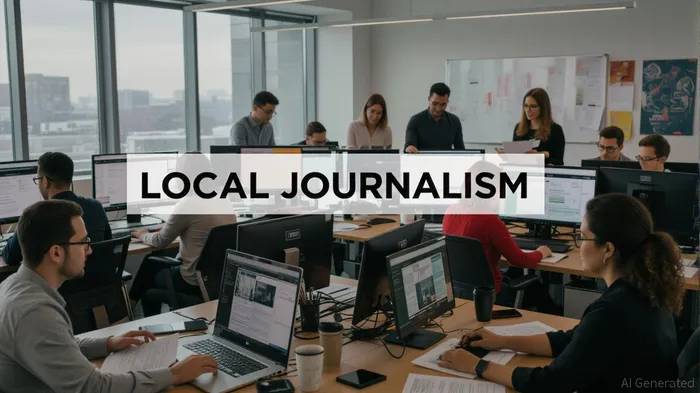
Media literacy, for instance, equips citizens to critically evaluate sources and recognize biases. Yet, as the Carnegie report notes, this requires sustained investment in education systems and public campaigns. Similarly, local journalism acts as a counterweight to national and global disinformation narratives by grounding discourse in community-specific facts. The absence of local reporting creates informational vacuums that disinformation thrives on. By funding local newsrooms, governments and institutions can foster a more informed electorate and reduce reliance on unverified online content.
What makes these investments particularly compelling is their dual utility. They address both the supply and demand sides of disinformation. Strong local journalism reduces the supply of misleading content by providing credible, hyperlocal reporting. Enhanced media literacy curbs demand by empowering individuals to discern truth from falsehood. Together, they create a feedback loop that strengthens democratic norms. The Carnegie Endowment's "portfolio approach" to countering disinformation-balancing immediate tactics with structural reforms-highlights the necessity of such complementary strategies.
Critics may argue that these investments are slow to yield results compared to, say, AI-driven moderation tools. Yet the alternative-a world where disinformation remains unchecked-is far costlier. The economic and social costs of eroded trust, political polarization, and democratic backsliding far outweigh the upfront costs of building resilient media ecosystems. As the Carnegie analysis warns, interventions designed for the Global North often fail in Majority World contexts due to differing norms and infrastructure. This underscores the need for tailored, long-term strategies rather than one-size-fits-all technological fixes.
For institutional investors and policymakers, the imperative is clear: treat media literacy and local journalism as strategic assets. These sectors offer a unique opportunity to align financial returns with societal stability. Foundations, sovereign wealth funds, and impact investors should prioritize funding for educational programs, local news startups, and public media initiatives. Such investments may lack the glamour of Silicon Valley ventures, but their returns-measured in democratic resilience-are incalculable.
In an era where truth itself is under siege, structural reforms to media ecosystems are not optional. They are a prerequisite for sustaining democracy. The Carnegie Endowment's evidence-based framework provides a roadmap for action. The question now is whether we have the foresight to act before the damage becomes irreversible.
[1] Countering Disinformation Effectively: An Evidence-Based Guide [https://carnegieendowment.org/research/2024/01/countering-disinformation-effectively-an-evidence-based-policy-guide?lang=en]

Blending traditional trading wisdom with cutting-edge cryptocurrency insights.
Latest Articles
Stay ahead of the market.
Get curated U.S. market news, insights and key dates delivered to your inbox.


AInvest
PRO
AInvest
PRO



Comments
No comments yet