
Investing in Longevity: How Aging Populations Create Opportunities in Health, Finance, and Tech
 Aime Summary
The world is aging. By 2030, 1 in 6 people globally will be over 65. This demographic shift is not just a societal challenge—it's a seismic market opportunity. Aging populations are reshaping GDP growth, retirement systems, and technological innovation. But they're also exposing a critical vulnerability: a lack of financial literacy among retirees and their heirs. For investors, this means a unique window to capitalize on longevity-driven markets while addressing systemic risks.
The Economic Toll of Aging: Shrinking GDP and Rising Demand
The World Economic Outlook 2025 warns that aging populations could reduce global GDP growth by 0.5–1.0 percentage points annually. Why? A shrinking labor force, stagnant productivity, and strained healthcare systems. In the U.S., for example, the 65+ demographic will account for 21% of the population by 2030, driving a 80% surge in spending by older Americans. This cohort prioritizes healthcare, housing, and home repairs over traditional retail or automotive spending.
Automation is the only scalable solution to offset labor shortages. AI and robotics are accelerating—humanoid robots could see 182,000 annual shipments by 2030. Meanwhile, the U.S. housing market is shifting: older adults are renting more, creating demand for age-friendly urban development and real estate tech.
Retirement Systems at Breaking Point
Pension systems are underfunded. By 2050, 1.6 billion people will be 65+. The “confidence-ability gap” among retirees—where cognitive decline erodes decision-making—leads to poor investment choices, fraud, and asset misallocation. The result? A 3% annual decline in risk-adjusted returns for vulnerable retirees.
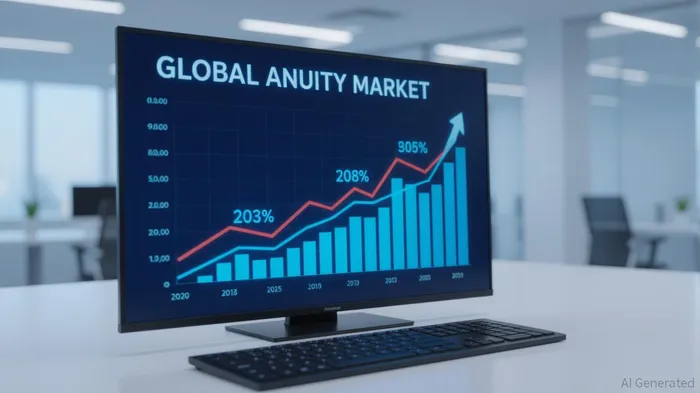
Annuities and longevity bonds are emerging as critical tools. Annuities—guaranteed income streams for life—are growing at 12% annually. Longevity bonds, which hedge against life expectancy trends, could expand to $1 trillion by 2030. Yet only 25% of U.S. retirees over 70 allocate to annuities, leaving a massive untapped market.
The AI and Healthcare Revolution
Aging is accelerating innovation in two sectors: healthcare and artificial intelligence.
- Healthcare: AI is transforming diagnostics and chronic disease management. Startups like Persivia and Abridge use predictive analytics to reduce hospital readmissions, while geroscience firms like Gero and ResTOR Bio target cellular aging. The cognitive decline market alone is projected to hit $200 billion by 2030.
- AI: From robotics to insurtech, AI is addressing labor shortages and personalizing retirement planning. Insurtech firms like Ladder and Tempus now use biometric data to adjust annuity payouts. Meanwhile, platforms like Betterment and Personal Capital employ machine learning to simplify financial decisions for retirees.
Investment Opportunities: Where to Play
- ETFs for Longevity:
- iShares Global Aging Demographics ETF (IVL): Tracks aging-related innovations, including healthcare and housing.
- ARK Innovation ETF (ARKQ): Includes exposure to AI-driven healthcare and longevity research.
Education ETFs (e.g., EDUT, SDG): Support financial literacy initiatives while offering diversification.
Healthcare and AI Stocks:
- Voyager Therapeutics (VY): Gene therapies for Alzheimer's and Parkinson's.
- iTeos Therapeutics (ITOS): Immuno-oncology therapies with 2025 data readouts.
Anika Therapeutics (ANIK): Orthopedic solutions for aging joints.
Annuities and Longevity Instruments:
- Legal & General (LGEN.L): Pioneering longevity swaps.
- Prudential (PGR): Mortality bonds to hedge demographic risks.
The Urgent Need for Financial Literacy
Only 49% of U.S. adults answer basic financial questions correctly. Younger generations are even worse: 35% of 18–24-year-olds are financially literate. This crisis is compounded by the $100 trillion wealth transfer from Baby Boomers to Gen X and Millennials. Without education, this wealth could be squandered on speculative assets or misallocated into underperforming portfolios.
Investors should consider education-focused ETFs like EDUT, which tracks companies in the education sector. These funds not only support financial literacy but also offer returns as demand for reskilling surges. For retirees, allocating 10–15% of assets to annuities and 5–10% to education ETFs can mitigate longevity and cognitive risk.
The Silver Dividend: A Call to Action
The aging population is not a burden—it's a dividend waiting to be unlocked. By 2030, $1.3 trillion will be spent by older Americans. Investors who position in healthcare, AI, and longevity instruments can capture this growth while addressing systemic risks.
But the clock is ticking. Without urgent action on financial literacy, the next decade could see a wave of poor retirement outcomes, market volatility, and underperforming assets. The solution? A dual strategy: invest in longevity-driven sectors and education.
Final Takeaway: Aging is the defining demographic trend of the 21st century. For those who act now, the rewards are clear. But for those who ignore the shift—or worse, the lack of financial literacy—the consequences will be dire. The time to invest in longevity—and in education—is now.

Delivering real-time insights and analysis on emerging financial trends and market movements.
Latest Articles
Stay ahead of the market.
Get curated U.S. market news, insights and key dates delivered to your inbox.
AInvest
PRO
AInvest
PRO



Comments
No comments yet