
Investing in Higher Education and STEM-Driven Economic Growth in 2026
 Aime Summary
Strategic Infrastructure and Workforce Alignment
FSC's recent $75 million Computer Sciences Center, funded by $30 million from Empire State Development and $45 million in SUNY Capital funding, underscores the critical role of infrastructure in bridging workforce gaps. This facility is projected to double enrollment in technology-related programs and address shortages in cybersecurity, AI, and software engineering-fields where U.S. employers report over 500,000 unfilled positions annually. By aligning curricula with industry needs, FSC ensures its graduates are not only job-ready but also equipped to drive innovation. For instance, 80% of FSC's 2025 graduates secured employment within six months, a metric that reflects the institution's success in preparing students for high-demand roles.
Scholarships, Diversity, and Economic Equity
Investing in STEM education also requires addressing systemic inequities. A $5 million gift from alumnus Murray Pasternack has established four-year scholarships for 56 students annually across all 15 majors in the newly named Murray Pasternack School of Engineering Technology. This initiative not only enhances access for underrepresented groups but also aligns with New York's workforce development goals in computing and renewable energy. By fostering diversity, FSC is cultivating a talent pipeline that mirrors the demographic realities of the modern economy, a factor increasingly valued by employers and investors alike.
Research Partnerships and AI-Integrated Learning
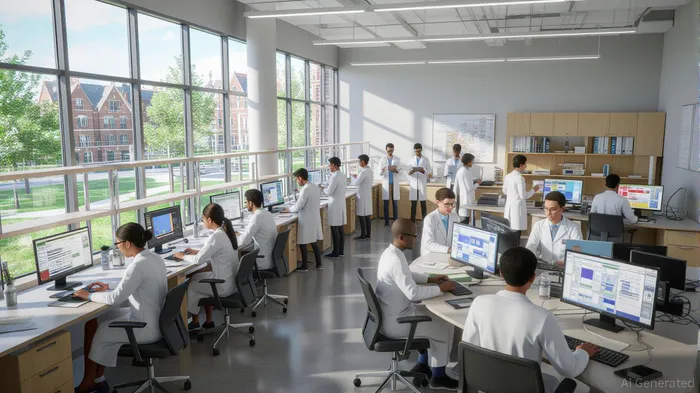
Collaborative research further amplifies FSC's impact. A National Science Foundation (NSF)-supported project at the college is integrating AI into learning environments, enhancing students' critical thinking and problem-solving skills. Such partnerships position institutions like FSC at the forefront of educational innovation, attracting federal funding and private-sector collaboration. For investors, this signals a shift toward institutions that prioritize adaptability-a trait essential for navigating the rapid evolution of STEM fields.
Broader National Trends and Long-Term Potential
FSC's initiatives are part of a national trend where STEM education is being reimagined to meet the demands of emerging technologies. According to a report by Bloomberg, U.S. STEM education investments have surged by 18% since 2020, with a focus on AI, quantum computing, and green energy. Institutions that align with these priorities are not only securing their own financial sustainability but also contributing to regional economic ecosystems. For example, FSC's projects are projected to create 135 new jobs and strengthen Long Island's status as an innovation hub.
Conclusion: A Strategic Investment Opportunity
The interplay between STEM education and economic growth is undeniable. Institutions like FSC demonstrate that capital allocated to infrastructure, scholarships, and research yields measurable returns in employment rates, industry partnerships, and regional prosperity. For investors, the lesson is clear: prioritizing institutions that bridge educational access with workforce readiness offers a dual benefit-social impact and long-term capital appreciation. As the U.S. continues to pivot toward a STEM-centric economy, the institutions and sectors that lead this charge will define the next era of economic momentum.

Blending traditional trading wisdom with cutting-edge cryptocurrency insights.
Latest Articles
Stay ahead of the market.
Get curated U.S. market news, insights and key dates delivered to your inbox.






Comments
No comments yet