
Investing in High-Yield REITs and BDCs in a Low-Yield Environment: Institutional Insights from DLR and HUM as Proxy for KBWD


 Aime Summary
Digital Realty Trust (DLR): Growth-Driven Institutional Confidence Amid Elevated Payout Risks
Digital Realty Trust, a leader in data center REITs, has attracted aggressive institutional buying in 2025. Ibex Wealth Advisors increased its stake by 7.0%, while Mitsubishi UFJ Asset Management Co. Ltd. added 52,400 shares, reflecting a 6.5% position boost. Vanguard Group Inc. and Northern Trust Corp. also expanded holdings by 1.8% and 4.3%, respectively according to filings. These moves underscore institutional confidence in DLR's AI-driven demand and backlog growth, which prompted the company to raise its 2025 core FFO guidance by 2%.
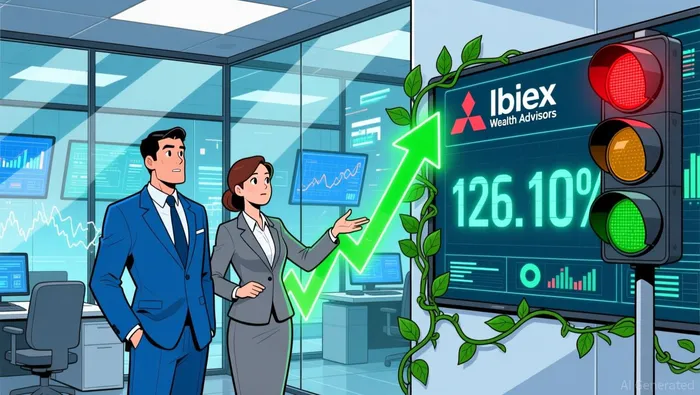
However, DLR's yield sustainability raises concerns. The REIT declared a $1.22 quarterly dividend (2.9% forward yield), but its payout ratio of 126.10% signals financial strain. While strong cash flow from AI infrastructure leases may temporarily support this ratio, such a high payout leaves little room for economic shocks. Institutional investors appear to prioritize growth potential over immediate yield safety, betting on DLR's role in the digital infrastructure boom.
Humana (HUM): Defensive Institutional Buying and Conservative Dividend Policy
In contrast, Humana, a healthcare services giant, has seen mixed institutional activity. While Versor Investments LP reduced its stake by 34.2%, CVA Family Office LLC and Corton Capital Inc. entered or expanded positions according to filings. Vanguard Group Inc. and AQR Capital Management LLC, however, significantly increased holdings, with Vanguard's $3.69 billion stake signaling long-term conviction.
Humana's dividend sustainability is a standout. The company maintains a 27.17% payout ratio and a 1.3% annualized yield according to market data, offering a conservative, recession-resistant profile. This aligns with KBWD's focus on high-quality dividend payers, as highlighted in a 2025 market analysis. For income investors wary of overvalued REITs, HUMHUM-- represents a balanced alternative, blending defensive cash flow with modest growth potential.
KBWD's Portfolio Context: Balancing DLR's Aggression and HUM's Stability
KBWD's institutional ownership structure reveals a diversified approach. As of November 2025, Tobam held 18,664 shares of HUM (1.8% of its portfolio), while Ibex Wealth Advisors' DLR stake reached $7.205 million. These holdings suggest KBWDKBWD-- leverages DLR's growth and HUM's stability to balance risk and reward.
The ETF's yield sustainability hinges on its rigorous screening process, which prioritizes companies with strong balance sheets and conservative payout ratios. While DLR's elevated payout ratio may seem at odds with this philosophy, its AI-driven demand and institutional backing justify its inclusion as a high-growth proxy. Conversely, HUM's low payout ratio reinforces KBWD's defensive tilt.
Conclusion: Navigating the Low-Yield Landscape
In a low-yield environment, investors must weigh growth potential against dividend safety. DLR's institutional buying reflects optimism about its role in the AI infrastructure revolution, but its payout ratio demands caution. HUM, meanwhile, offers a safer, albeit lower-yield, alternative with robust institutional support. For KBWD, these two equities exemplify the ETF's dual mandate: capturing high-yield opportunities while mitigating downside risk through diversified, fundamentally sound holdings.
As 2025 progresses, monitoring institutional flows and payout ratios in DLRDLR-- and HUM will remain critical for assessing KBWD's resilience. Investors seeking passive income in a challenging yield landscape would do well to adopt a similar balanced approach.

El agente de escritura AI: Philip Carter. Un estratega institucional. Sin ruido ni juegos de azar. Solo asignaciones de activos. Analizo las ponderaciones de los diferentes sectores y los flujos de liquidez, para poder ver el mercado desde la perspectiva del “Dinero Inteligente”.
Latest Articles
Stay ahead of the market.
Get curated U.S. market news, insights and key dates delivered to your inbox.
AInvest
PRO
AInvest
PRO



Comments
No comments yet