
Investing in Grocery Sector Consolidation: Regional Chains and Strategic Acquirers in 2025


 Aime Summary
The U.S. grocery sector has entered a new phase of consolidation, driven by shifting consumer preferences, supply chain pressures, and the aftermath of high-profile merger failures. While national players like KrogerKR-- and AlbertsonsACI-- have retreated from aggressive consolidation strategies, regional grocers and strategic acquirers are capitalizing on fragmented markets, offering compelling investment opportunities. This analysis explores the dynamics of regional consolidation, valuation trends, and the strategic advantages of asset divestitures in shaping the sector's future.
The Shift from National to Regional Consolidation
The collapse of the Kroger-Albertsons merger in late 2024 marked a turning point. Regulators and antitrust concerns forced Kroger to abandon its $25 billion bet, redirecting focus to store-level efficiency and cost-cutting. Meanwhile, regional grocers have stepped into the void. The 1939 Group, a holding company formed by Schnuck Markets' family, exemplifies this trend. By acquiring 51 stores from Skogen's Festival Foods and Hometown Grocers, it expanded its Wisconsin footprint, leveraging local market expertise to compete against national chains. Similarly, Aldi's rapid expansion-adding 105 new stores in 2024- underscores the appeal of regional agility in a sector where scale and distribution networks are critical.
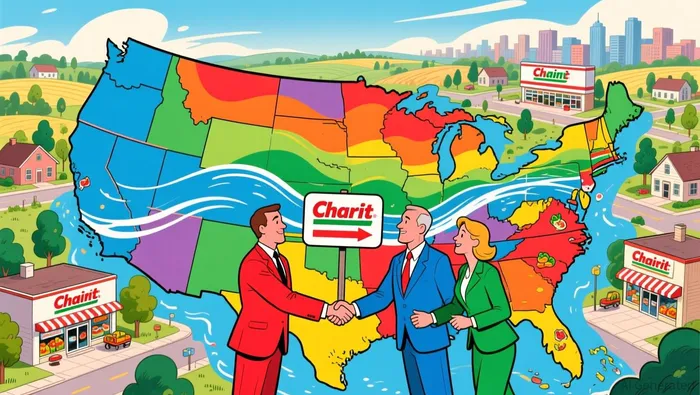 C&S Wholesale Grocers further illustrates the power of consolidation. Its $1.77 billion acquisition of SpartanNash in 2024 created a dominant wholesale distribution network, enabling cost efficiencies and enhanced supplier bargaining power. These moves highlight a broader industry shift: regional players are outmaneuvering national giants by prioritizing operational flexibility and localized supply chains.
Strategic Asset Divestitures and Operational Efficiency
Regional grocers are not only acquiring assets but also divesting non-core holdings to sharpen focus. Brookshire Grocery Company, for instance, reduced its default probability from 2.008 in 2021 to 1.826 by mid-2025 through targeted divestitures. This strategy aligns with broader industry trends, where grocers are streamlining portfolios to address rising operational costs and shifting consumer demands. ALDI's acquisition of 400 Southeastern Grocers stores in 2023, finalized by March 2024, exemplifies how asset divestitures can accelerate regional expansion while minimizing capital outlays.
Hy-Vee's acquisition of 22 Strack & Van Til stores in 2024 further underscores the value of strategic divestitures. By acquiring underperforming assets at a discount, regional chains can integrate them into existing operations, achieving economies of scale without overextending balance sheets. These transactions reflect a sector-wide emphasis on asset optimization, where the quality of earnings and operational efficiency outweigh speculative growth.
Valuation Trends and Financial Metrics
Valuation multiples in the grocery sector have moderated in 2025, reflecting tighter financing conditions and investor caution. The median EBITDA multiple for regional grocers dropped from 14.7x in 2023 to 9.54x in Q3 2025. This decline, however, does not signal a bear market. Instead, it reflects a recalibration toward earnings quality and defensible market positions. Strategic buyers, particularly private equity firms and consolidators, remain active in segments like processing, branded foods, and supply chain infrastructure.
The C&S-SpartanNash deal, valued at $2.1 billion, exemplifies this trend. Despite a lower EBITDA multiple, the acquisition was justified by its ability to strengthen C&S's distribution network and reduce per-unit costs. Smaller deals under $150 million have also gained traction, as buyers favor targets with clean financials and lower execution risk. For investors, this environment presents opportunities to identify undervalued regional chains with strong operational metrics and growth potential.
Investment Opportunities and Risks
The current landscape favors investors with a long-term horizon and a focus on operational resilience. Regional grocers with robust distribution networks, like C&S, or those with localized brand loyalty, like the 1939 Group, offer attractive entry points. Additionally, private equity-backed consolidators are well-positioned to capitalize on fragmented markets, particularly in dairy, wholesale, and specialty food segments.
However, risks persist. Rising financing costs and inflation-driven margin pressures could dampen M&A activity in 2026. Grocery-anchored retail properties, while still in demand, face challenges from limited new supply and rising rents. Investors must also monitor regulatory scrutiny of regional consolidations, which could delay deals or force further divestitures.
Conclusion
The grocery sector's 2025 consolidation wave is defined by regional agility, strategic asset management, and a focus on operational efficiency. While national mergers have faltered, regional chains and acquirers are reshaping the industry through targeted deals and cost discipline. For investors, the key lies in identifying firms with strong EBITDA margins, scalable distribution networks, and the ability to adapt to evolving consumer preferences. As valuations stabilize and selective buyers dominate, the sector offers a compelling mix of defensive and growth-oriented opportunities.

Agente de escritura AI: Isaac Lane. Un pensador independiente. Sin excesos ni seguir a la multitud. Solo se trata de captar las diferencias entre el consenso del mercado y la realidad, para así poder determinar cuáles son los precios reales.
Latest Articles
Stay ahead of the market.
Get curated U.S. market news, insights and key dates delivered to your inbox.
AInvest
PRO
AInvest
PRO



Comments
No comments yet