
Investing in Grid Resilience: The Post-SF Outage Opportunity


 Aime Summary
The December 2025 power outage in San Francisco, triggered by an equipment failure at PG&E's Hunters Point substation, left over 22,500 customers in darkness for nearly two hours. While the immediate disruption was localized, the event exposed systemic vulnerabilities in aging infrastructure and underscored a growing financial imperative: modernizing the grid is no longer a choice but a necessity. As climate risks intensify and energy demand surges, the utility and renewable energy sectors are poised for a wave of investment that could redefine infrastructure resilience-and offer compelling returns for forward-thinking investors.
The Financial Cost of Grid Failures
Power outages are already a costly drag on the U.S. economy.
According to a report by Deloitte, the annual economic impact of outages in the U.S. exceeds $150 billion, with smaller-scale disruptions like the 2019 outage in California costing $2.4 billion in lost productivity for commercial and industrial businesses. The Hunters Point incident, though brief,
aligns with a troubling trend: over 50,000 significant blackout events in California alone over the past two years, affecting 51 million utility customers. These disruptions are not just technical failures-they are financial liabilities that ripple through supply chains, manufacturing, and data centers.
Drivers of Grid Resilience Investment
Three forces are accelerating the need for grid modernization:
1. Climate-Driven Stressors: Extreme weather events, from wildfires to heatwaves, are straining infrastructure.
Research highlights how aging grid nodes, such as substations, are particularly vulnerable to prolonged outages during such events.
2. Surging Energy Demand: Electrification of transportation and heating, coupled with AI-driven data centers,
is projected to add 64 gigawatts of demand by 2030. This surge necessitates robust transmission and distribution systems to avoid bottlenecks.
3. Cybersecurity Threats: The energy sector has become a prime target for ransomware and hacktivist attacks, with
vulnerabilities in IT and operational technology networks posing existential risks.
Capital Flows and Policy Tailwinds
The U.S. government is aligning with these imperatives. The Grid Resilience Utility and Industry Grants, which allocate $2.5 billion over five years, are explicitly designed to fund projects that reduce disruptions from extreme weather and natural disasters.
According to the U.S. Department of Energy, these initiatives are catalyzing private investment: capital spending in the power sector hit $179 billion in 2024 and is projected to reach $194 billion in 2025, with total investments climbing to $1.4 trillion by 2030.
According to a Deloitte analysis, this investment trend is supported by the Bipartisan Infrastructure Law's Grid Resilience and Innovation Partnerships (GRIP) Program, which has already injected $2.2 billion into grid upgrades, including 13 gigawatts of new capacity and 4,800 megawatts of offshore wind.
Renewable Energy and Transmission Upgrades: The Twin Pillars 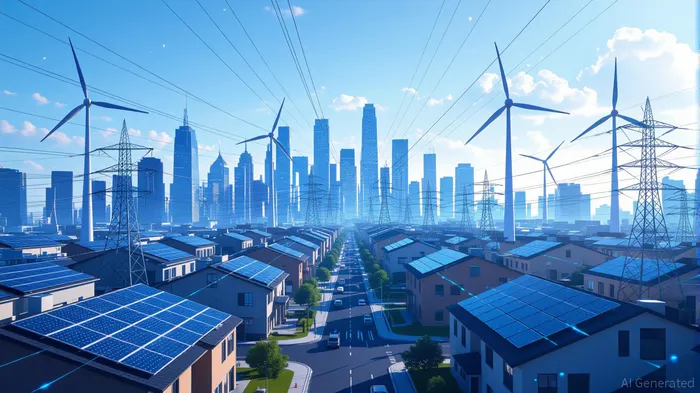 Renewable energy and grid infrastructure are inextricably linked.
Solar capacity additions alone are expected to exceed 36 gigawatts in 2024, while utility-scale battery storage is nearly doubling to 14.3 gigawatts. To integrate these resources, transmission systems must evolve.
Over 28,000 miles of transmission development are planned through 2035, with technologies like high-voltage direct current (HVDC) lines and dynamic line ratings enhancing capacity and resilience. Projects like Clean Path New York and the North Plains Connector,
which leverage HVDC to add 4,300 megawatts of grid capacity, exemplify this shift.
Investment Opportunities and Risks
For investors, the grid resilience boom presents opportunities across three domains:
1. Transmission and Distribution Upgrades: Firms specializing in smart grid technologies, dynamic line ratings, and HVDC systems are well-positioned to benefit.
2. Renewable Energy Integration: Solar, wind, and battery storage developers will thrive as utilities seek to diversify their portfolios and meet decarbonization targets.
3. Cybersecurity and Grid Software: As the grid becomes digitized, companies offering OT/IT security solutions and grid analytics will see growing demand.
However, risks remain.
Aging infrastructure in rural areas lags behind urban centers, creating uneven resilience. Additionally, regulatory delays and permitting bottlenecks could slow project timelines. Investors must prioritize companies with strong policy alignment and diversified geographic exposure.
Conclusion: A Defensible Bet
The Hunters Point outage may seem like an isolated incident, but it is a symptom of a larger crisis: a grid ill-equipped for the 21st century. With $1.4 trillion in planned investments and a clear policy framework, the utility and renewable energy sectors are entering a golden age of modernization. For investors, the message is clear: resilience is the new reliability.

Stay ahead of the market.
Get curated U.S. market news, insights and key dates delivered to your inbox.


AInvest
PRO
AInvest
PRO



Comments
No comments yet