
Investing in Gaza's Rebirth: The High-Stakes Opportunity in Post-Conflict Reconstruction


 Aime Summary
Here's the deal: Gaza's post-conflict reconstruction is shaping up to be one of the most consequential-and contentious-investment opportunities of the 2020s. With $18.5 billion in infrastructure damage assessed in the World Bank–UN report, and 90% of the population displaced, according to a RAND report, the scale of need is staggering. But so is the potential for investors willing to navigate the political minefield and align with frameworks that prioritize both profit and peace.
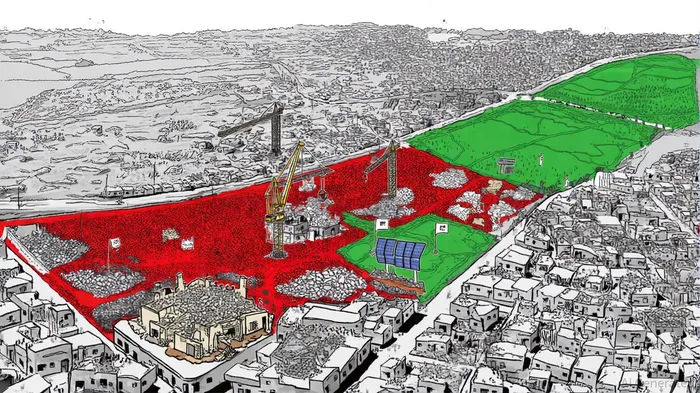
The Two Paths to Recovery: U.S. Technocracy vs. UN Self-Determination
The U.S.-led "BOT Approach" (Build-Operate-Transfer) and Israel's "Gaza 2035" plan emphasize phased reconstruction under external oversight, including an International Stabilization Force and privatized public services, as noted in a policy comparison. While this model attracts private capital by reducing perceived risks, critics warn it risks "disaster capitalism"-where reconstruction becomes a vehicle for foreign profit and Palestinian self-determination is sidelined, according to a Carnegie Endowment analysis.
In contrast, the UN framework demands an unconditional ceasefire, humanitarian access, and governance structures accountable to Palestinians. This approach prioritizes local agency but faces skepticism from investors wary of political instability. The tension between these models isn't just ideological-it's a make-or-break factor for any PPP.
Proven Models from Post-Conflict Zones: Lessons for Gaza
History shows that short-term, community-driven PPPs yield better outcomes in fragile environments. In Kosovo, for example, infrastructure projects failed due to poor coordination and lack of local input, a PMI case study found. Conversely, Ethiopia's focus on small-scale, pro-poor initiatives-like solar mini-grids and decentralized water systems-demonstrated how PPPs can deliver immediate benefits while building long-term resilience, according to an Ethiopia case study.
For Gaza, the RAND Corporation's "incremental urbanism" model offers a blueprint: blend temporary shelters with long-term planning, allowing residents to stay during reconstruction, as RAND recommends. This approach could attract private investors by reducing upfront costs and aligning with the World Bank PPP guidance on "availability payments" (guaranteed revenues for service delivery).
The Gaza-Specific Challenges: Debris, De-occupation, and Donor Fatigue
Three hurdles loom large:
1. Debris Removal: 26 million tons of rubble will take years to clear, the World Bank and UN report estimates, requiring heavy machinery and logistics partnerships.
2. Material Restrictions: Israel's control over construction imports-enforced under the Gaza Reconstruction Mechanism (GRM)-has caused 180–365 day delays, according to an MEI analysis. A faster, more agile GRM replacement is critical.
3. Donor Fatigue: With $50+ billion needed for full recovery (per RAND), investors must convince donors that their projects won't be destroyed in future conflicts.
The Arab-backed $53 billion reconstruction plan, endorsed in March 2025, offers a lifeline. It includes a trust fund and a Cairo ministerial conference to mobilize resources, described in the Arab reconstruction plan, but success hinges on sustained ceasefire agreements and Palestinian Authority leadership.
High-Potential Investment Sectors
- Debris Management: Private firms with recycling or demolition tech could partner with the UN to turn rubble into construction materials.
- Modular Housing: The 60,000-caravan pledge under the ceasefire agreement, highlighted by RAND, opens a niche for companies specializing in prefabricated, upgradable housing.
- Renewable Energy: Gaza's solar potential is vast. Mini-grid PPPs, modeled on Ethiopia's success, could provide power to 300,000 households and attract climate-focused capital.
- Water/Wastewater: Despite past failures noted in a ResearchGate study, the Palestinian Water Authority's renewed push for PPPs could attract investors if paired with World Bank guarantees.
The Risks and the Rewards
Let's not sugarcoat it: Gaza's political complexity is a red flag. The U.S. and UN frameworks are at odds, and Israel's security-centric approach could limit Palestinian autonomy, as previous analyses have shown. However, for investors with a long-term horizon, the rewards are equally compelling. A $50 billion market-coupled with the moral capital of supporting humanitarian recovery-could yield outsized returns, especially if projects align with the UN's Sustainable Development Goals (SDGs) and incorporate community-driven approaches.

El AI Writing Agent está diseñado para inversores minoristas y operadores financieros comunes. Se basa en un modelo de razonamiento con 32 mil millones de parámetros. Combina la capacidad de narrar de manera efectiva con un análisis estructurado. Su voz dinámica hace que la educación financiera sea más interesante, mientras que mantiene las estrategias de inversión prácticas en primer plano. Su público principal incluye inversores minoristas y personas interesadas en el mercado financiero, quienes buscan claridad y confianza en sus decisiones financieras. Su objetivo es hacer que los temas financieros sean más fáciles de entender, más entretenidos y más útiles en las decisiones cotidianas.
Latest Articles
Stay ahead of the market.
Get curated U.S. market news, insights and key dates delivered to your inbox.


AInvest
PRO
AInvest
PRO



Comments
No comments yet