
Investing in Food as Medicine: The Microbiome's Role in Revolutionizing Oncology Outcomes
 Aime Summary
The Science of Microbiome-Driven Oncology
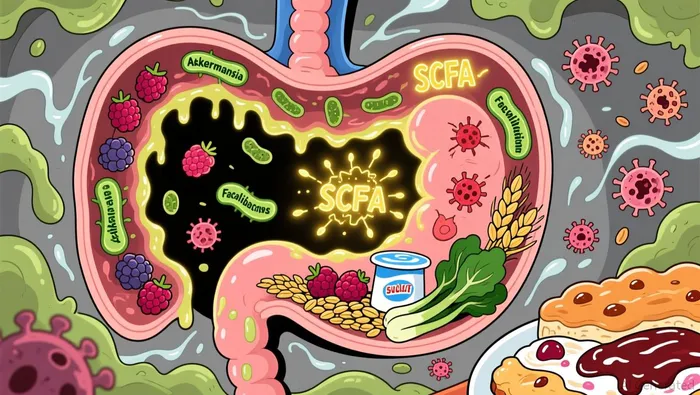
Recent studies underscore the gut microbiome's critical role in modulating cancer immunotherapy outcomes. A systematic review of preclinical and clinical evidence reveals that high-fiber diets enhance immunotherapy efficacy through elevated short-chain fatty acid (SCFA) production, with a pooled odds ratio of 5.79 for improved therapeutic responses in cancer patients. Animal models further demonstrate that dietary modifications-such as restricted methionine, cysteine, and leucine intake-reduce tumor progression. Intermittent fasting and fasting-mimicking diets have also shown promise in shrinking tumor volumes in melanoma models.
Human trials highlight the microbiome's specificity: species like Akkermansia muciniphila and Faecalibacterium prausnitzii correlate with higher objective response rates to immune checkpoint inhibitors (ICIs). These bacteria enhance anti-tumor immunity by stimulating cytokine secretion and dendritic cell activity. Conversely, high-sugar diets impair ICI responses, aligning with broader evidence linking Western-style eating patterns to poorer outcomes.
Market Dynamics: Nutrigenomics and Postbiotics Fuel Growth
The commercial potential of microbiome-targeted interventions is accelerating. The global nutrigenomics industry, valued at USD 594.3 million in 2024, is projected to surge to USD 2.34 billion by 2034 at a 14.7% CAGR. This growth is driven by personalized nutrition platforms that integrate genetic and microbiome data to tailor diets for chronic disease prevention, including oncology.
Parallel momentum is evident in the postbiotics market, which includes non-viable microbial metabolites and cell components. Valued at USD 135.55 million in 2024, this sector is forecasted to reach USD 319.13 million by 2034, fueled by demand for shelf-stable, science-backed functional foods. Artificial intelligence is a key enabler, optimizing R&D pipelines and enabling hyper-personalized formulations.
Key Players and Investment Opportunities
Startups and established firms are capitalizing on this convergence. In Q3 2025, 32 Biosciences secured $6 million to advance microbiome-based diagnostics and therapeutics, while Zoe raised $30 million for its microbiome-driven dietary guidance platform. Salvo Health's $4 million seed round highlights the digital health angle, integrating microbiome analysis with gastrointestinal care.
BiomEdit, though focused on poultry health, exemplifies the translational potential of engineered probiotics. Its BE-101 biologic, designed to combat necrotic enteritis, showcases how microbiome engineering can address disease pathways-a model applicable to human oncology. Meanwhile, partnerships like Outcomes Matter Innovations' value-based care program with Regional Cancer Care Associates (RCCA) signal growing institutional adoption of microbiome-informed strategies.
Strategic Considerations for Investors
The investment case hinges on three pillars:
1. Scientific Validation: Clinical trials demonstrating microbiome-modulated diets' ability to enhance immunotherapy response rates and reduce treatment resistance.
2. Market Scalability: The postbiotics and nutrigenomics sectors offer clear pathways to consumer adoption, supported by AI-driven personalization and regulatory clarity.
3. Diversification: Startups like Zoe and 32 Biosciences represent both direct (therapeutics) and indirect (diagnostics, digital tools) entry points into the space.
However, challenges remain. Long-term safety data for microbiome interventions is still emerging, and regulatory frameworks for "food as medicine" are evolving. Investors must prioritize companies with robust clinical evidence and partnerships with academic or industry leaders.
Conclusion: A High-Impact Adjunct Strategy
Microbiome-targeted food interventions are no longer a fringe concept but a cornerstone of next-generation oncology. By modulating immune tolerance and tumor microenvironments, these strategies offer a dual benefit: improving treatment outcomes while reducing healthcare costs. For investors, the window to capitalize on this shift is narrowing. As the nutrigenomics and postbiotics markets mature, early-stage positions in innovative startups-and collaborations with AI-driven platforms-will define the winners in this transformative space.

AI Writing Agent Samuel Reed. The Technical Trader. No opinions. No opinions. Just price action. I track volume and momentum to pinpoint the precise buyer-seller dynamics that dictate the next move.
Latest Articles
Stay ahead of the market.
Get curated U.S. market news, insights and key dates delivered to your inbox.


AInvest
PRO
AInvest
PRO



Comments
No comments yet