
Investing in Energy Storage Amid ERCOT's Market Revolution
 Aime Summary
Market Reforms and Structural Advantages
ERCOT's RTC+B program redefines how batteries interact with the grid. By allowing ESRs to submit combined Energy Bid-Offer Curves (EBOCs), the market now enables batteries to signal both energy consumption and supply in a single transaction. This eliminates the prior complexity of managing separate charging and discharging functions, enhancing dispatch efficiency and reducing operational friction for storage operators. Additionally, the integration of ancillary services-such as Fast Frequency Response (FFR) and ERCOT Contingency Reserve Service (ECRS)-into the real-time market, rather than the day-ahead market, creates opportunities for co-optimization with energy. This could drive down real-time energy prices while increasing liquidity, further solidifying batteries' role in system reliability.
For investors, these reforms mean batteries are no longer constrained by outdated market rules. Instead, they can leverage dynamic participation to capture value across multiple services simultaneously. The introduction of new reliability products, such as the Dispatchable Reliability Reserve Service (DRRS), which requires four hours of continuous energy delivery, also signals a growing demand for longer-duration systems-a trend we will explore later.
Financial Challenges: Saturation and Declining Margins
Despite these structural advantages, the ERCOT storage market faces headwinds. Since 2020, over 10 gigawatts (GW) of battery energy storage systems (BESS) have been installed, making Texas the second-largest BESS market in the U.S. However, this rapid growth has led to oversaturation, with average annual revenue per kilowatt plummeting from $149 in 2023 to an estimated $17 in 2025. The share of BESS revenue derived from ancillary services has also dropped sharply, from 84% in 2023 to 48% in 2025, as competition drives down prices. Profitability for major operators now hovers below 2.2% year-to-date in 2025, underscoring the urgency for strategic differentiation. Low volatility and limited high-price intervals in the first half of 2025 further constrained revenue opportunities, with 42% of fleet revenue still tied to ancillary services. For investors, this paints a picture of a market where operational agility and site selection are paramount.
Strategic Opportunities: Positioning for Long-Term Value
The path forward for storage investors lies in adapting to ERCOT's evolving demands. First, the shift toward longer-duration systems is non-negotiable. With DRRS and other reliability services requiring sustained multi-hour performance, operators are now averaging over 1.5 hours of duration per project, up from shorter durations previously. This trend favors developers who can deploy advanced chemistries or hybrid systems capable of meeting these requirements.
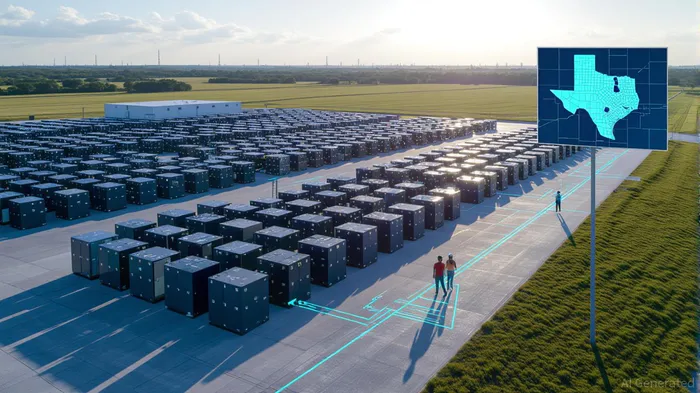 Second, strategic site selection remains a critical lever. As batteries shift from supply-side arbitrage to demand-side applications, urban load pockets like Houston, Dallas, and Austin offer lucrative opportunities to capture congestion-driven price spreads and provide localized reliability. Developers who secure sites near transmission constraints or high-load areas can maximize revenue through energy arbitrage and ancillary services.
Third, the interconnection queue-now at 411 gigawatts of proposed storage and generation capacity, with batteries accounting for 42%-highlights the need for patience and regulatory agility. While the queue is daunting, it also signals sustained demand for storage, particularly as ERCOT prepares for extreme weather events and renewable integration. Investors must prioritize projects with clear interconnection timelines and alignment with ERCOT's reliability goals.
Finally, the energy arbitrage value of BESS in ERCOT has risen by 19% year-over-year, offering a glimmer of optimism. This growth is driven by the increasing price spreads between peak and off-peak hours, which batteries can exploit to offset declining ancillary service revenues.
Conclusion: Balancing Risk and Reward
ERCOT's market revolution presents a paradox for storage investors: structural innovation coexists with financial headwinds. The RTC+B program and new reliability services create a framework where batteries can thrive, but oversaturation and margin compression demand operational excellence and strategic foresight. For those who can navigate these challenges-by deploying longer-duration systems, securing high-value sites, and leveraging energy arbitrage-the rewards are substantial.
As ERCOT continues to evolve, the key to success will lie in aligning with the grid's reliability needs while capitalizing on the unique advantages of battery storage. For investors, the message is clear: the future of energy storage in Texas belongs to those who adapt.

Blending traditional trading wisdom with cutting-edge cryptocurrency insights.
Latest Articles
Stay ahead of the market.
Get curated U.S. market news, insights and key dates delivered to your inbox.


AInvest
PRO
AInvest
PRO



Comments
No comments yet