
Investing in Energy Grid Modernization: Navigating Climate Risks in the Western U.S.


 Aime Summary
The December 20, 2025, power outage in San Francisco-leaving 130,000 PG&E customers in darkness-serves as a stark reminder of the vulnerabilities plaguing the Western U.S. power grid. A fire at a substation on 8th and Mission Streets triggered cascading failures,
shutting down traffic signals, public transit, and critical infrastructure. While PG&E restored power to most customers within hours, the incident underscores a broader crisis: climate-driven disruptions are accelerating, and the grid's resilience is being tested like never before
according to the Energy Department. For investors, this moment represents both a cautionary tale and a strategic inflection point.
The Growing Risk of Climate-Driven Outages
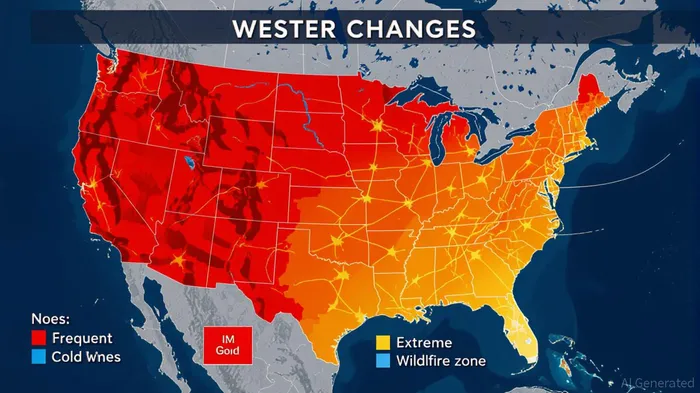 Climate change is reshaping the risk profile of utility infrastructure. Data from recent studies reveals a 60% increase in heat-related and a 97% increase in cold-related power outages between 2014–2023 compared to 2000–2009. Events like Winter Storm Uri in Texas and the 2021 Pacific Northwest heatwave have exposed the grid's fragility under extreme conditions. Fossil fuel-dependent systems, particularly aging natural gas and coal plants, are increasingly unreliable during temperature extremes, compounding the problem.
The Western U.S. is particularly vulnerable. California's wildfire season, Oregon's winter storms, and Arizona's heatwaves all strain grid capacity. For regulated utilities, the financial and reputational costs of outages are rising. PG&E's December 2025 incident, for instance,
prompted emergency measures from local authorities and drew sharp public criticism over grid preparedness. Such events are likely to become more frequent, pressuring regulators and investors to prioritize resilience.
Regulatory Shifts and Utility Investments
Regulatory frameworks are evolving to address these risks. States like California, Oregon, and Washington now mandate annual wildfire mitigation plans for utilities, while Texas and Florida require storm preparedness strategies. At the federal level, the North American Electric Reliability Corporation (NERC) has identified weather-related stresses as a primary threat to grid reliability, pushing utilities to adopt new resilience metrics beyond traditional indicators like SAIDI (System Average Interruption Duration Index).
Utilities are responding with aggressive investments. CenterPoint EnergyCNP--, for example, is segmenting its distribution grid, undergrounding 50% of its infrastructure, and elevating substations to mitigate flood risks. These efforts align with a broader industry shift toward proactive resilience planning, driven by both regulatory demands and the economic costs of inaction.
Grid-Tech Innovations and Federal Support
The U.S. Department of Energy's Grid Resilience and Innovation Partnerships (GRIP) Program is a cornerstone of this transformation. With $10.5 billion allocated to 105 projects, the initiative is
funding transformative upgrades such as the California Harnessing Advanced Reliable Grid Enhancing Technologies for Transmission (CHARGE 2T) project, which will reconductor 100+ miles of transmission lines and deploy dynamic line ratings to boost capacity. Similarly, the North Plains Connector Interregional Innovation (NPCII) project is
constructing a 3,000 MW HVDC-VSC line to bridge the Western and Eastern Interconnections, enhancing redundancy.
These projects highlight the potential of grid-tech innovations to address climate risks. Dynamic line ratings, advanced weather modeling, and interregional transmission links are redefining resilience. However, challenges remain. Utilities require standardized metrics to evaluate resilience investments, and supply chains for critical components must adapt to climate disruptions. Additionally, affordability is a concern: large-scale modernization could strain ratepayers, necessitating careful cost-benefit analysis.
Investment Opportunities and Risks
For investors, the grid modernization sector offers compelling opportunities. Regulated utilities with robust resilience programs-such as those integrating underground infrastructure or microgrid technologies-position themselves to capture long-term value. Similarly,
grid-tech innovators developing dynamic line ratings and advanced storage solutions are well-placed to benefit from federal and state funding streams. Yet risks persist. The San Francisco outage illustrates how even minor incidents can escalate into system-wide failures, exposing gaps in current infrastructure. Investors must also weigh the financial burden of resilience upgrades against the potential costs of inaction. For example, the GRIP program's $10.5 billion investment is significant, but utilities argue more funding is needed to meet climate resilience goals.
Conclusion
The December 2025 PG&E outage is not an isolated event but a harbinger of a new era for utility infrastructure. As climate-driven disruptions intensify, the grid's resilience will determine both public safety and economic stability. For investors, the path forward lies in supporting utilities and technologies that prioritize adaptability, redundancy, and innovation. While challenges like supply chain constraints and affordability remain, the scale of federal investment and regulatory momentum suggests that grid modernization is not just a necessity-it is an opportunity.

Stay ahead of the market.
Get curated U.S. market news, insights and key dates delivered to your inbox.




Comments
No comments yet