
Investing in Education Technology and Vocational Training to Fuel the Future Workforce


 Aime Summary
AI and Edtech: Reshaping Learning for the Future
Artificial intelligence is no longer a futuristic concept in education-it is a foundational tool. AI-powered platforms now analyze student performance data to deliver personalized learning paths, significantly improving engagement and outcomes. For instance, adaptive learning systems can identify knowledge gaps in real time and adjust curricula to address them, a strategy shown to enhance retention rates in STEM disciplines. Simultaneously, immersive technologies like virtual reality (VR) and augmented reality (AR) are expanding access to hands-on training. Medical students, for example, can practice complex procedures in virtual operating rooms, while engineering students can simulate infrastructure projects without physical constraints according to a report.
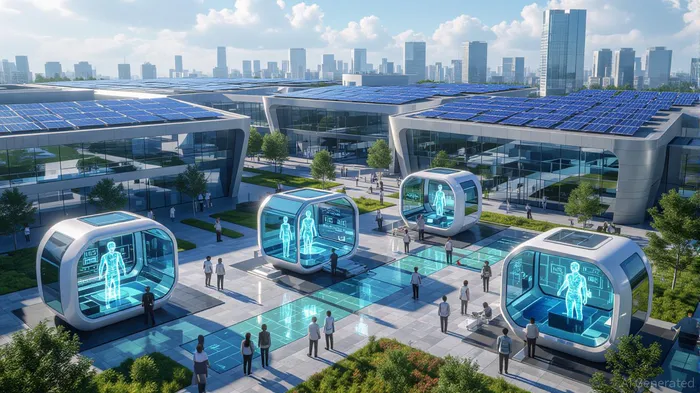 The scalability of these tools is attracting substantial investment. In 2024, 36% of total edtech funding was directed toward workforce-oriented solutions, reflecting a market prioritizing practical skill development over traditional academic models. This trend underscores a critical insight for investors: edtech platforms that integrate AI and immersive technologies with industry-specific training are well-positioned to dominate the next decade of STEM education.
Vocational Training and Industry Partnerships: Closing the Skills Gap
The projected shortage of two million STEM professionals by 2025 has spurred a global push for vocational training and work-integrated learning models. Countries like India have mandated internships and apprenticeships for undergraduate STEM degrees, while U.S. initiatives such as the Energy Careers for All (EC4A) program are expanding access to clean energy careers through mentorship and curriculum development according to program data. These programs are not just theoretical-they are creating direct pipelines between academia and industries in high-growth sectors.
Partnerships between universities and corporations are further accelerating this alignment. For example, InnovATEBIO, a National Science Foundation-funded network, connects biotechnology students with local employers to ensure training aligns with industry needs. Similarly, the Inflation Reduction Act (IRA) has catalyzed demand for skilled workers in renewable energy, with solar and wind sectors alone supporting over 7.1 million jobs globally by 2025.
Microcredentials and Digital Badges: A New Currency for Skills
As the workforce becomes increasingly dynamic, traditional degrees are being supplemented by microcredentials and digital badges. These stackable credentials allow learners to demonstrate mastery of niche skills-such as AI ethics, green hydrogen engineering, or biomanufacturing-without committing to lengthy degree programs according to industry analysis. For investors, this trend highlights an opportunity in platforms that validate and market these credentials.
The market for microcredentials is expanding rapidly. A 2024 report noted that 36% of edtech funding was allocated to upskilling and career-oriented solutions, with digital badges emerging as a preferred format for employers seeking to verify competencies. This shift is particularly relevant in sectors like biotechnology, where interdisciplinary skills in data science and AI are becoming essential according to market research.
Sustainability and Green Skills: A Growing Imperative
Sustainability is no longer a niche concern-it is a core component of STEM education. Curricula are increasingly emphasizing green skills such as energy management, sustainable design, and environmental stewardship, driven by policy frameworks like the EU's Green Deal and the U.S. IRA. For instance, energy storage innovations and green hydrogen projects are creating new roles that require specialized training, from battery engineering to hydrogen production according to industry trends.
Investors can capitalize on this demand by supporting edtech platforms that integrate sustainability into STEM programs or vocational training focused on clean energy. The global clean energy workforce is projected to exceed 16.2 million by 2025, with solar energy alone supporting 7.1 million jobs. This growth is not just a response to environmental goals-it is a strategic imperative for industries seeking to meet regulatory and consumer demands.
Conclusion: Strategic Investments for a Resilient Workforce
The convergence of AI, vocational training, and sustainability in STEM education is reshaping the future of work. For investors, the key lies in identifying platforms and programs that address the most pressing workforce challenges: scalability, industry alignment, and flexibility. Edtech startups leveraging AI for personalized learning, vocational training networks fostering industry partnerships, and platforms issuing microcredentials for green skills represent high-conviction opportunities.
As the demand for skilled workers in AI, renewable energy, and biotechnology accelerates, the education sector will remain a critical enabler of economic growth. By investing in solutions that bridge the gap between academia and industry, investors can not only generate returns but also contribute to a workforce equipped to navigate the complexities of the 21st-century economy.

Blending traditional trading wisdom with cutting-edge cryptocurrency insights.
Latest Articles
Stay ahead of the market.
Get curated U.S. market news, insights and key dates delivered to your inbox.






Comments
No comments yet