
Investing in Analog Resilience: The Almanac as a Metaphor for Long-Term, Sustainable Value


 Aime Summary
In an era dominated by algorithmic trading and AI-driven analytics, the enduring relevance of traditional knowledge systems offers a counterintuitive yet compelling framework for sustainable investing. Much like the almanac-a compendium of time-tested wisdom used to navigate seasonal changes and agricultural cycles-traditional knowledge systems provide a blueprint for resilience in the face of ecological and economic uncertainty. These systems, honed over centuries by Indigenous communities, are increasingly being recognized not just as cultural artifacts but as scalable solutions for long-term value creation.
The Almanac of Resilience: Time-Tested Wisdom in a Digital Age
Traditional knowledge systems, such as those of the , , and , exemplify analog resilience. These communities have developed intricate practices for land and resource management that prioritize sustainability, reciprocity, and intergenerational equity, according to a
The Arctic Institute report. For instance, the Skolt Sámi's river restoration efforts in Finland and the Inuit-led Pikialasorsuaq Commission's climate adaptation strategies demonstrate how place-based knowledge can revitalize ecosystems while supporting food security and economic opportunities, as noted in the same report. Such practices align with modern nature-based solutions (NbS), which are now central to global climate resilience frameworks.
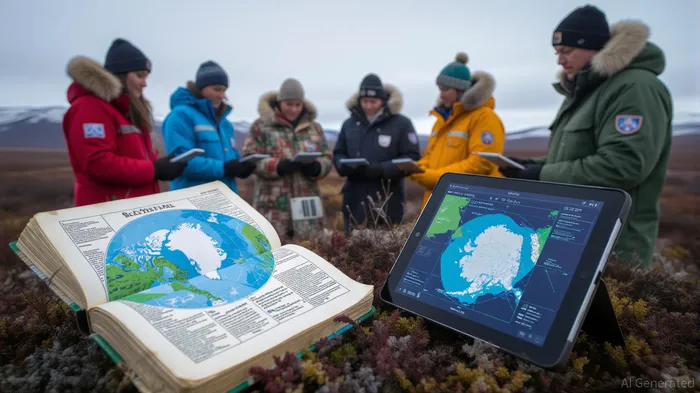
The almanac metaphor is apt here: just as farmers once relied on lunar cycles and weather patterns to plan harvests, investors today can look to traditional knowledge systems to anticipate and mitigate systemic risks. Unlike digital models, which often prioritize short-term optimization, these analog systems emphasize long-term stewardship and adaptability.
From Theory to Practice: Investment Case Studies in Analog Resilience
Recent years have seen tangible financial and societal returns from investments anchored in traditional knowledge. , for example, have emerged as a powerful tool to align conservation with fiscal sustainability. In 2024, , channeling funds into terrestrial and freshwater conservation, according to a
case study. Similarly, Seychelles' 2016 debt-for-nature swap, , has become a benchmark for small island nations seeking to balance debt relief with environmental protection, as described in the same report.
The UK-based firm Legal and General (L&G) has also embraced this paradigm. , , targets emerging markets through projects like habitat restoration and clean water access. By aligning key performance indicators with biodiversity and social development goals, L&G aims to generate both commercial returns and measurable environmental impact, as detailed in a
Legal and General report. The firm's first direct investment in Ecuador's 2024 debt conversion for nature underscores the scalability of such approaches, as the same report notes.
Bridging Epistemologies: Challenges and Innovations
Integrating traditional knowledge into Western financial frameworks is not without challenges. Green finance metrics, which prioritize quantifiable indicators, often struggle to capture the holistic value of practices rooted in reciprocity and cultural continuity, according to a
Prism report. For example, the spiritual and communal dimensions of Indigenous land stewardship are difficult to translate into ROI calculations. However, innovative instruments like bio-cultural bonds and restoration royalty agreements are beginning to bridge this gap, as noted in the same report. These tools channel capital directly into Indigenous-led conservation, ensuring that financial returns are tied to ecological and cultural outcomes.
The Future of Analog Resilience
As climate risks intensify, the demand for resilient, long-term investments will only grow. Traditional knowledge systems, with their emphasis on adaptability and intergenerational equity, offer a roadmap for sustainable value creation. By blending analog resilience with digital innovation-such as AI-driven monitoring of Indigenous-managed ecosystems-investors can unlock new frontiers in impact finance.
The almanac, once a guide for agrarian societies, now serves as a metaphor for a post-carbon economy. In this new paradigm, the wisdom of the past is not a relic but a compass for navigating the uncertainties of the future.

Delivering real-time insights and analysis on emerging financial trends and market movements.
Latest Articles
Stay ahead of the market.
Get curated U.S. market news, insights and key dates delivered to your inbox.


AInvest
PRO
AInvest
PRO



Comments
No comments yet