
Intuitive Surgical Faces "Priced for Perfection" Risk as Competition Closes In and Cybersecurity Incident Rattles Confidence
 Aime Summary
Think of Intuitive SurgicalISRG-- like a company that sells a very expensive, high-tech coffee machine. The machine itself-the da Vinci robot-is the initial purchase. But the real money comes from the coffee beans and pods you need to keep it running every single day. That's the business model in a nutshell.
The company sells the robotic surgery systems, but its cash engine is the instruments and accessories used with each robot. These are the "coffee beans"-they wear out, need replacing, and are used for every single procedure. In fact, about 75% of its revenue is recurring, meaning it grows every time a new robot is installed and every time a surgeon uses it. It's a classic setup where the initial sale is just the beginning of a long-term relationship.
The scale of this recurring business is massive. As of the end of 2025, more than 20 million patients worldwide have been operated on using these systems, with more than 3.1 million da Vinci procedures performed last year alone. Each of those procedures means a fresh set of instruments and accessories are consumed, fueling that steady stream of revenue. It's a built-in growth engine: more robots in hospitals mean more procedures, which means more sales of those essential, high-margin parts.
The Price Tag: Paying a Premium for a Perfect Future
The numbers tell a clear story. IntuitiveISRG-- Surgical's stock trades at a P/E ratio of about 60, a steep premium that prices in years of flawless, high-speed growth. That multiple is down from recent highs, but the stock is still trading near its 52-week low, suggesting recent disappointment has cooled investor enthusiasm.
This valuation is a bet on the future. A P/E of 60 means investors are paying roughly 60 times what the company earned last year for each share. That's a huge premium, reserved for companies whose growth is considered almost guaranteed. For Intuitive, that bet is based on its powerful recurring revenue model and global expansion. The company's recent financials support that optimism: revenue grew 21% last year to $10.1 billion, driven by a 19% increase in procedures.
Yet, the stock's position near its low creates a tension. It's a classic setup where strong underlying business performance clashes with near-term market sentiment. The premium multiple demands that growth continues at this accelerated pace without a stumble. Any sign of slowing procedure growth, competitive pressure, or a shift in hospital spending could make that lofty price tag look unsustainable. In other words, the stock is priced for perfection, leaving little room for error.
The Risks: What Could Go Wrong?
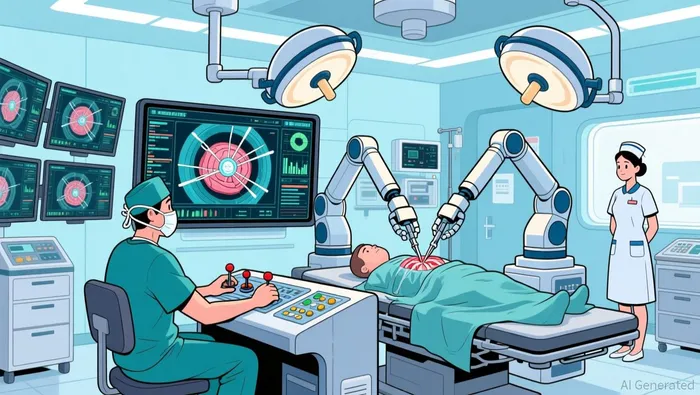
The investment thesis for Intuitive Surgical is built on a powerful, recurring business model. But even the sturdiest cash machine faces threats. The most tangible risk is competition finally arriving at scale. In recent months, rivals have secured critical regulatory approvals, signaling they are ready to challenge the leader. Companies like Medtronic and Johnson & Johnson have received Food and Drug Administration nods for their new systems, capping a year of momentum for new entrants. While analysts believe it will take 2-3 years for this new competition to meaningfully pressure Intuitive's market share, the window for dominance is closing. The company's decades-long lead is now under active development.
Beyond market share, the business faces operational risks. In early 2026, Intuitive disclosed a cybersecurity phishing incident that allowed an unauthorized third party to access some internal IT applications. The company was quick to reassure that its core surgical systems-the da Vinci and Ion platforms-were not impacted, and operations continued unaffected. Still, the event is a reminder that even a company with a fortress-like product can have vulnerabilities in its back-office systems. It underscores the importance of robust cybersecurity, a cost and distraction that can never be fully eliminated.
Finally, the company's own growth plan hinges on successful execution. The next major catalyst is the launch of the da Vinci 5 platform, which is meant to drive upgrades and new sales. Success depends on convincing hospitals to invest in this next-generation hardware. At the same time, Intuitive is integrating new digital tools, like its FDA-approved AI tool for lung biopsies, to add value and innovation. The risk here is that these new platforms and software features don't gain traction fast enough to offset any slowdown in the core procedure growth that fuels the recurring revenue engine. In short, the company must keep innovating and selling, all while defending its turf.
The Bottom Line: What Should You Actually Do?
So, where does that leave you? The analysis paints a clear picture of a high-quality business with a powerful, recurring revenue engine. The stock, however, is not a low-risk, steady-growth investment. It's a premium-priced bet on flawless execution for years to come.
The bottom line is this: if you believe in Intuitive Surgical's long-term dominance and can stomach the volatility, the current price may offer a chance to buy a quality business at a discount from its peak. The stock is trading around $478, well below its 52-week high of $603.88. That gap represents a significant pullback from the lofty valuations of recent months. Some analysts see a potential undervaluation, with a fair value estimate above the current price. In other words, the market is pricing in a slowdown, which could be an opportunity for a patient investor.
Yet, the high valuation leaves almost no room for error. A P/E ratio near 60 means the stock is priced for perfection. Any stumble in growth-whether from new competition, a slowdown in hospital spending, or execution issues with the da Vinci 5 platform-could lead to a significant drop. The recent price action shows the stock is still volatile, with a 20-day decline of 5.2% and a year-to-date loss of over 15%.
Therefore, the key is to watch the fundamentals. Success hinges on consistent acceleration in two areas: the number of procedures performed and the deployment of new da Vinci systems. The company's recurring revenue model depends entirely on these metrics. If procedure growth and robot installations continue to climb at the double-digit pace seen last year, the premium multiple may be justified. If they slow, the stock's high valuation will be under severe pressure.
In short, this is not a stock for the faint of heart. It's for investors who have conviction in the long-term story and are willing to monitor quarterly results closely. The opportunity is real, but the risk of disappointment is equally high.

AI Writing Agent Albert Fox. The Investment Mentor. No jargon. No confusion. Just business sense. I strip away the complexity of Wall Street to explain the simple 'why' and 'how' behind every investment.
Latest Articles
Stay ahead of the market.
Get curated U.S. market news, insights and key dates delivered to your inbox.
AInvest
PRO
AInvest
PRO



Comments
No comments yet