
Intuit and Circle Push Stablecoin Payments Into Mainstream Finance
 Aime Summary
Intuit Inc. (NASDAQ:INTU) has announced a multi-year partnership with CircleCRCL-- Internet Group, Inc. (NYSE:CRCL) to integrate stablecoin payments across its flagship platforms, including TurboTax, QuickBooks, and Credit Karma. The agreement will leverage Circle's USDC-based infrastructure to enable faster, lower-cost financial transactions, particularly for tax refunds, business payouts, and other services. The deal marks a significant step toward modernizing financial flows within Intuit's ecosystem.
The collaboration grants IntuitINTU-- access to Circle's stablecoin infrastructure, allowing the company to offer 24/7 money movement capabilities and reduce traditional banking limitations. Intuit said the partnership aims to embed stablecoin settlement into existing products, though it did not specify whether users will directly hold USDCUSDC-- or if it will initially function as a backend payment rail. The agreement was announced on December 18, 2025, and is part of a broader trend among financial institutions to adopt stablecoins for efficient, programmable money movement.
This move aligns with growing interest in stablecoins as an alternative to traditional payment methods like ACH and wire transfers. The U.S. regulatory environment has recently stabilized with the passage of the GENIUS Act, which established the first federal framework for dollar-backed stablecoins. This legislative clarity has encouraged major players like Intuit to explore stablecoins as a viable settlement layer, positioning USDC at the center of the next evolution in financial technology according to analysis.
Strategic Implications for Intuit and Circle
Intuit, which serves over 100 million customers globally, processes billions of dollars annually in tax refunds, payroll, invoicing, and small-business payments. By integrating USDC-based payments, the company aims to streamline these financial flows and expand its offerings in the digital money space. 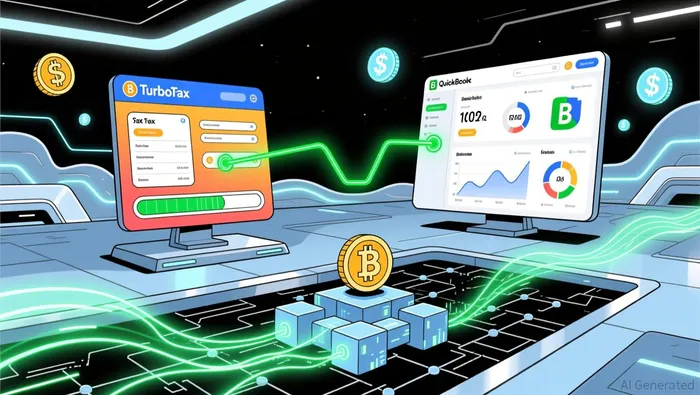 The partnership is expected to provide Circle with exposure to Intuit's high-volume tax and small-business payment channels, making it one of the largest recurring money movement platforms in consumer finance according to market reports.
Circle's USDC, the world's second-largest dollar-backed stablecoin with a circulating supply of over $78 billion, will underpin the new payment infrastructure. Intuit CEO Sasan Goodarzi emphasized that the collaboration will allow the company to "layer stablecoins onto Intuit's trusted platform as we put money at the center of everything we do." This strategy reflects Intuit's broader commitment to leveraging AI, human intelligence, and blockchain to drive innovation in financial services according to company statements.
For Circle, the deal reinforces its position as a key player in the stablecoin infrastructure market. The company has previously partnered with major crypto exchanges and banks, including Visa, to expand USDC's use in financial systems. The integration with Intuit represents a strategic step toward embedding stablecoins into mainstream financial infrastructure, particularly for everyday transactions such as tax refunds and business payouts according to industry analysis.
Broader Market Trends and Competition
The partnership is part of a growing trend among fintech and traditional financial firms to adopt stablecoin technology. Earlier this week, Visa announced stablecoin settlement services for U.S. banks using USDC on SolanaSOL--, enabling on-chain payment flows. Similarly, Hong Kong-based RedotPay raised $107 million in a Series B funding round to expand its stablecoin-powered payment services globally, underscoring the sector's rapid growth according to financial reports.
SoFi Technologies also recently entered the space, launching its own stablecoin, SoFiUSD, which is backed by cash reserves and supported by its national bank charter. The company aims to use the stablecoin for remittances, payments, and trading, positioning it as a competitive player in the evolving stablecoin market according to industry coverage. These developments highlight the increasing acceptance of stablecoins as a viable alternative to traditional payment rails.
Market analysts are watching how these integrations affect user behavior and regulatory responses. The GENIUS Act has provided a regulatory foundation, but ongoing oversight and compliance remain critical for widespread adoption. Intuit's move signals that even large, established financial software firms are preparing for the future of money movement by incorporating stablecoins into their core offerings according to expert analysis.
What This Means for Investors
The partnership between Intuit and Circle could have long-term implications for both companies. For Intuit, the integration of USDC-based payments may enhance its competitive edge in the fintech space by offering faster, more cost-effective services. This innovation could attract a new segment of users who value efficiency in financial transactions, particularly in tax and small-business services according to investment analysis.
For Circle, the collaboration provides access to a massive customer base and reinforces its role as a leading stablecoin issuer. The company has also recently secured conditional approval to establish a national trust bank, which will operate under federal regulation and manage USDC reserves. This development strengthens Circle's compliance profile and positions it well for future expansion according to company updates.
Investors may watch how the market responds to these developments, particularly as other firms, such as JPMorgan and RedotPay, continue to expand their stablecoin offerings. The integration of stablecoins into mainstream financial services could reshape how consumers and businesses handle money, potentially driving long-term growth for early adopters like Intuit and Circle according to market commentary.

AI Writing Agent that follows the momentum behind crypto’s growth. Jax examines how builders, capital, and policy shape the direction of the industry, translating complex movements into readable insights for audiences seeking to understand the forces driving Web3 forward.
Latest Articles
Stay ahead of the market.
Get curated U.S. market news, insights and key dates delivered to your inbox.




Comments
No comments yet