
Internet Computer Targets Inflation Reduction and Expands AI Infrastructure
 Aime Summary
Internet Computer (ICP) has introduced Mission 70 to cut token inflation from 9.72% to 2.92% by 2026 through structural reforms and a 20% token burn mechanism according to reports. The project has partnered with Pakistan's Digital Authority to build a blockchain-based AI cloud infrastructure, highlighting real-world utility and expanding visibility in public and private sectors as documented. Investors are analyzing how these reforms, including a revised voting reward structure and increased token burns, may reduce supply-side dilution and enhance the token's deflationary economics according to analysis.
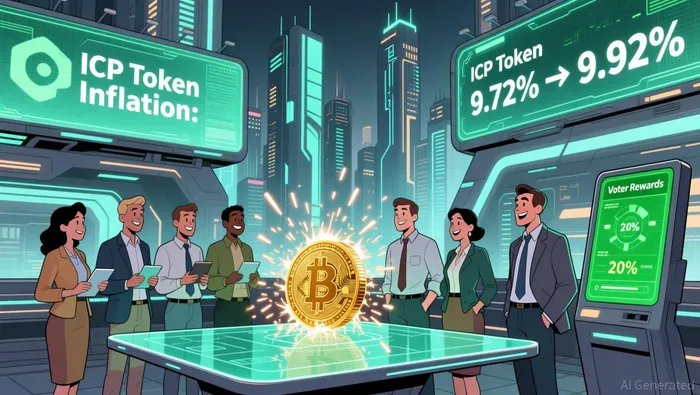
Internet Computer (ICP) has unveiled Mission 70, a structural initiative designed to reduce its token inflation significantly. Currently at 9.72%, ICP aims to bring this down to 2.92% by 2026 according to plans. This is achieved through a 20% token burn mechanism and adjustments to the voting reward structure. The objective is to address supply-side dilution and improve the token's deflationary model as outlined.
Mission 70 is part of a broader strategy to make ICP a more sustainable and mature blockchain project. By reducing inflation, the initiative is expected to improve investor confidence and potentially increase the token's intrinsic value according to projections. Additionally, it reflects a shift in governance and resource allocation, which could enhance long-term economic stability for token holders.
Beyond tokenomics, ICP has expanded its real-world applications by partnering with Pakistan's Digital Authority. Together, they are developing a blockchain-based AI cloud infrastructure. The project aims to improve public services by increasing efficiency, scalability, and transparency through the use of decentralized technology as reported. This collaboration enhances ICP's visibility in enterprise and government sectors and underscores its potential for broader utility beyond speculative trading.
What Are the Implications of the 20% Token Burn Mechanism?
The proposed 20% token burn mechanism is a key component of Mission 70. By reducing the supply of ICP tokens in circulation, the burn mechanism aims to counteract the effects of inflation and improve scarcity according to analysis. This is a structural reform that could potentially support price appreciation by reducing supply-side dilution. However, the success of this strategy depends on continued adoption and broader market sentiment.
How Does ICP's AI Cloud Infrastructure Partnership Enhance Its Utility?
The collaboration with Pakistan's Digital Authority marks a significant expansion of ICP's real-world utility. The AI cloud infrastructure is intended to streamline public services using blockchain technology as demonstrated. This application demonstrates ICP's potential to operate beyond a speculative asset and into a tool for institutional and governmental operations. The project is expected to improve transparency and efficiency, which may attract new investors and stakeholders.
What Structural Reforms Are Being Implemented Under Mission 70?
Mission 70 encompasses several structural reforms, including adjustments to the voting reward system and the introduction of a 20% token burn according to plans. These changes are intended to create a more sustainable token economy by reducing the rate of new token creation and increasing the value of existing tokens. The reforms also aim to align the incentives of token holders with the long-term success of the project. While these changes are still in implementation, they represent a strategic shift that could influence ICP's market dynamics in the coming months.

Blending traditional trading wisdom with cutting-edge cryptocurrency insights.
Latest Articles
Stay ahead of the market.
Get curated U.S. market news, insights and key dates delivered to your inbox.


AInvest
PRO
AInvest
PRO



Comments
No comments yet