
The Internet Computer's Recent Surge: What Drives the Momentum?
 Aime Summary
Blockchain Infrastructure Innovation: A New Era of Scalability and Interoperability
At the heart of ICP's resurgence lies its 2025 protocol upgrades, which position it as a hybrid cloud/Web3 infrastructure. Chain Fusion, a groundbreaking feature, enables ICPICP-- canister smart contracts to interact with Bitcoin, Ethereum, and Solana without centralized bridges, allowing cross-chain operations like native BitcoinBTC-- transfers and EthereumETH-- contract triggers via cryptographic proofs. This interoperability addresses a long-standing pain point in blockchain ecosystems, where siloed networks hindered enterprise adoption.
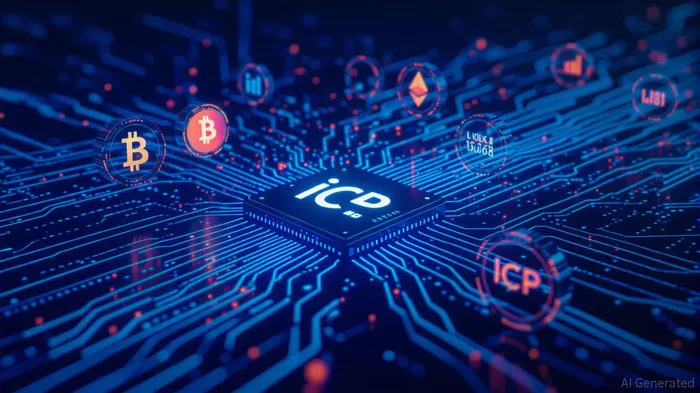 Complementing Chain Fusion are the Flux and Fission milestones, which optimize computational efficiency by enabling canisters to dynamically migrate between subnets to handle intensive workloads. These upgrades ensure minimal downtime and scalability, with dapp subnets processing 11,500 transactions per second and 1-second finality. Such performance metrics rival traditional cloud providers, making ICP an attractive alternative for enterprises seeking decentralized infrastructure.
Perhaps the most transformative innovation is Caffeine, an AI-driven application builder launched in July 2025. By allowing users to create decentralized apps via natural language prompts, Caffeine democratizes development and aligns with ICP's vision of a "self-writing Internet". Early hackathons saw the creation of 270 decentralized apps, underscoring the platform's potential to disrupt AI-driven Web3 workflows according to reports.
Institutional Adoption and Market Sentiment: A Tug-of-War Between OptimismOP-- and Volatility
Institutional confidence in ICP has surged, driven by strategic partnerships with Microsoft, Google, and SWIFT. These collaborations leverage ICP's hybrid cloud capabilities for tokenized fund settlements and AI model execution. For instance, SWIFT's integration of ICP for cross-border payments highlights the platform's appeal to financial institutions seeking cost-effective, secure solutions. Meanwhile, the reverse gas model-where developers, not users, pay transaction fees-has further incentivized institutional participation by reducing friction in user adoption.
Market sentiment, however, has been more volatile. A 30% price rally in November 2025, fueled by the ICP 2.0 launch and TVL growth to $1.14 billion, was followed by a sharp decline to $3.50 by mid-December as AI hype waned and on-chain activity dipped. Analysts remain divided: some project a 2026 price range of $11.15 to $31.89, contingent on sustained infrastructure development, while others caution that reduced dApp engagement and regulatory uncertainties could dampen momentum.
Investment Potential: Navigating Risks and Opportunities
ICP's competitive advantages are clear. Its WebAssembly-based canister development framework supports multiple programming languages, fostering developer diversity. The platform's deflationary tokenomics and focus on privacy-via initiatives like Magnetosphere and Niobium-also align with growing demand for secure, transparent infrastructure according to official documentation. Yet challenges persist. Traditional cloud providers still dominate 62% of the enterprise market, and regulatory ambiguity in AI-integrated blockchains could slow adoption in sectors like finance and healthcare.
For investors, the key question is whether ICP's current price correction represents a buying opportunity or a warning sign. While the drop below $4.33 support has raised concerns, the underlying fundamentals-namely, cross-chain interoperability, AI integration, and institutional traction-remain robust. As one analyst notes, "ICP's ability to bridge the gap between Web3 and enterprise needs positions it as a critical player in the next phase of decentralized infrastructure" according to market analysis.
Conclusion: A Calculated Bet on Web3's Future
The Internet Computer's recent surge reflects a broader shift in blockchain infrastructure, where scalability, interoperability, and AI integration are no longer aspirational but operational realities. While market volatility and regulatory headwinds pose risks, ICP's technological roadmap and institutional partnerships suggest it is well-positioned to capitalize on the evolving Web3 landscape. For investors with a medium-term horizon, the current price dip may offer a strategic entry point-provided they remain vigilant about macroeconomic and regulatory developments.

Blending traditional trading wisdom with cutting-edge cryptocurrency insights.
Latest Articles
Stay ahead of the market.
Get curated U.S. market news, insights and key dates delivered to your inbox.






Comments
No comments yet