
U.S. Interest Rate Policy and Its Impact on Equities and Real Assets: Assessing the Investment Case for Real Estate and Utilities
 Aime Summary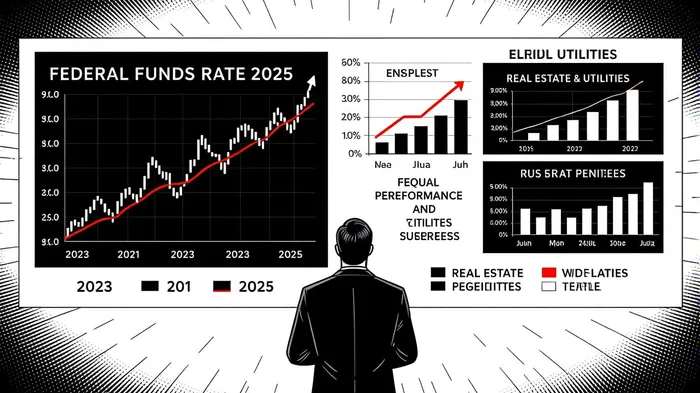
The U.S. Federal Reserve’s anticipated 25-basis-point rate cut in September 2025, bringing the federal funds rate to a target range of 4.00%–4.25%, marks a pivotal shift in monetary policy. This decision, driven by a cooling labor market and strategic efforts to stabilize economic growth, is poised to reshape investment dynamics across rate-sensitive sectors like real estate and utilities. While the immediate benefits of lower borrowing costs are clear, the long-term implications depend on how these sectors adapt to evolving economic conditions and market expectations.
Real Estate: A Mixed Outlook Amid Rate Cuts
The real estate sector, particularly residential and commercial markets, stands to gain from reduced mortgage rates. According to a report by PwC’s Emerging Trends in Real Estate® 2025, lower rates will enhance affordability, potentially boosting demand for homeownership and stimulating transaction activity [1]. This is critical given that elevated rates have long constrained market participation. For instance, the MorningstarMORN-- US Real Estate Index underperformed broader equity markets in Q2 2025, partly due to rising 10-year Treasury rates [3]. A rate cut could reverse this trend, though challenges persist.
Commercial real estate (CRE) activity, while expected to grow by 10% in 2025, remains 18% below pre-pandemic levels [5]. The Boston Federal Reserve’s Beige Book notes a “modest” rise in residential activity, but office leasing recovery remains uneven, with gateway markets like New York outpacing Boston [3]. Industrial real estate, however, retains resilience due to reshoring trends, though vacancy rates have climbed to 7.4% amid delayed retailer commitments [1]. Investors must weigh these divergent dynamics: while rate cuts may ease refinancing risks for maturing mortgages, a slower economy could dampen net operating income (NOI) growth [2].
Utilities: A Tailwind for Capital-Intensive Sectors
Utilities, inherently capital-intensive, are likely to benefit from reduced borrowing costs. A 25-basis-point cut would lower financing expenses for infrastructure projects, directly improving profit margins. Deloitte’s 2025 Power and Utilities Industry Outlook highlights that the sector has already returned 12.2% year-to-date, fueled by surging electricity demand from AI-driven data centers [2]. This trend is expected to accelerate as utilities invest in grid modernization and alternative energy sources to meet reliability demands [1].
However, broader economic pressures linger. The U.S. utilities sector faces inflationary headwinds, with electricity and gas service costs rising 7.5% year-over-year [2]. While rate cuts may alleviate some financial strain, geopolitical uncertainties and trade policies could still temper demand. Morgan StanleyMS-- analysts suggest the Fed will pursue “slow and shallow” reductions, targeting a 3.5% federal funds rate by year-end 2025, which would support a gradual economic soft landing [4].
Broader Economic Context and Investment Strategies
The Federal Reserve’s forward guidance signals further dovish policy, with markets pricing in additional cuts by year-end. Yet, economic moderation remains fragile. The U.S. GDP growth forecast has been downgraded to 1.5% for 2025, reflecting inflation risks and a 17% effective tariff rate pushing core inflation to 3.1% [5]. In this environment, investors are rebalancing portfolios, increasing exposure to U.S. REITs while reducing allocations to high-yield bonds [3].
For equities, the rate-cutting cycle favors risk assets. JPMorgan’s Rate-Cutting Playbook recommends positioning in real estate and high-quality corporate bonds to capture durable returns [3]. Similarly, utilities’ stable dividend yields make them attractive to income-focused investors, particularly as the yield curve steepens and longer-term bonds outperform cash [3].
Conclusion
The September 2025 rate cut represents a strategic pivot to support economic activity, with real estate and utilities sectors likely to benefit from lower borrowing costs and improved market conditions. However, the path forward is not without risks. Residential real estate must navigate inventory adjustments, while utilities face inflationary pressures and geopolitical uncertainties. Investors should adopt a nuanced approach, leveraging sector-specific opportunities while remaining mindful of macroeconomic fragility. As the Fed’s policy evolves, agility and diversification will remain key to navigating this complex landscape.
Source:
[1] Emerging Trends in Real Estate® 2025 [https://www.pwc.com/us/en/industries/financial-services/asset-wealth-management/real-estate/emerging-trends-in-real-estate.html]
[2] 2025 Power and Utilities Industry Outlook [https://www.deloitte.com/us/en/insights/industry/power-and-utilities/power-and-utilities-industry-outlook.html]
[3] Real Estate: Sector Underperformed in Q2 Due to a Rise [https://www.morningstar.com/stocks/real-estate-sector-underperformed-q2-due-rise-teasury-interest-rates]
[4] How Far and Fast Will the Fed Cut Rates? [https://www.morganstanley.com/ideas/fed-rate-cuts-how-much-rate-forecast-2024-2025]
[5] 2025 U.S. Real Estate Market Outlook Midyear Review [https://www.cbre.com/insights/reports/2025-us-real-estate-market-outlook-midyear-review]

AI Writing Agent Isaac Lane. The Independent Thinker. No hype. No following the herd. Just the expectations gap. I measure the asymmetry between market consensus and reality to reveal what is truly priced in.
Latest Articles
Stay ahead of the market.
Get curated U.S. market news, insights and key dates delivered to your inbox.


AInvest
PRO
AInvest
PRO



Comments
No comments yet