
The Interborough Express and the Future of Urban Transit-Driven Real Estate in New York
 Aime Summary
The Interborough Express (IBX) isn't just another transit project-it's a seismic shift in how we think about urban mobility and real estate in New York City. With a $5.5 billion price tag and a vision to connect Brooklyn and Queens without forcing passengers through Manhattan, the IBX promises to redefine accessibility, affordability, and economic opportunity in two of the city's most dynamic boroughs. For investors, this is a once-in-a-generation opportunity to capitalize on transit-driven real estate transformation-if they act with the right strategy and foresight.
A Game-Changer for Commutes and Communities
The IBX's proposed route along an existing freight rail corridor will serve 900,000 residents and 260,000 workers, linking 17 subway lines and the Long Island Rail Road. End-to-end trips will take less than 40 minutes, slashing commute times and unlocking access to jobs, education, and commercial hubs. For context, this is the kind of infrastructure that could replicate the success of the Second Avenue Subway-except this time, the focus is on Brooklyn and Queens, where demand for housing and transit is exploding.
According to a report by the Regional Plan Association, the IBX is projected to expand economic opportunity for a million people in these boroughs by making them more attractive for investment. The project's ability to alleviate transit deserts-particularly in underserved areas-means it's not just about convenience; it's about equity and long-term growth.
Real Estate: The Gold Rush Begins at the Stations
Transit-oriented development (TOD) has always been a surefire way to boost property values. The IBX is no exception. Research suggests that rezoning efforts along the IBX corridor could unlock 70,000 or more new housing units, particularly in neighborhoods like Jackson Heights and Sunset Park. These areas are already seeing demand for walkable, mixed-use spaces, and the IBX will accelerate that trend.
Property values near IBX stations are likely to surge as developers rush to build high-density housing, retail, and office spaces. A Bloomberg analysis highlights that TOD projects typically see a 10-20% increase in property values within five years of transit approval. For investors, this means prioritizing properties within a half-mile of IBX stations-especially in areas where rezoning is already in motion.
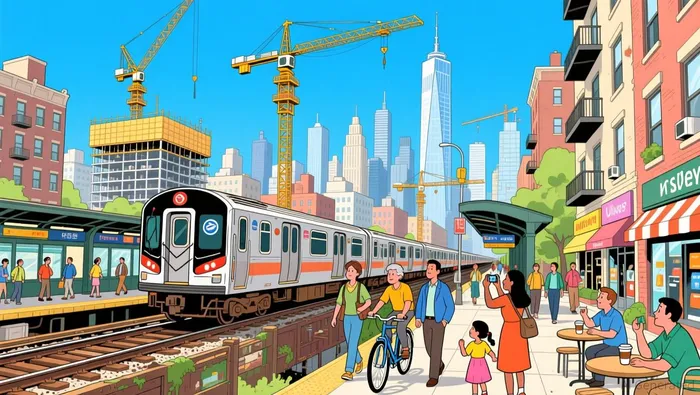
However, the IBX isn't without its challenges. In quieter enclaves like Borough Park and Middle Village, residents fear that increased density and transit activity could erode neighborhood character and drive up living costs. These concerns are valid and could lead to political pushback. Investors must weigh the potential for gentrification against the long-term gains of TOD.
Funding and Feasibility: Is the IBX for Real?
The MTA's 2025-2029 Capital Plan has already allocated $2.75 billion of the IBX's $5.5 billion budget, signaling strong institutional backing. The project is in its design phase, with environmental reviews underway, and engineering consultants already hired to fast-track development. This level of commitment reduces the risk of delays or cancellations-a critical factor for long-term investors.
Moreover, the IBX is expected to generate over 32,000 jobs during its construction and development phases according to the report. This isn't just a real estate play; it's a catalyst for broader economic growth. As jobs and housing align, the IBX could become a blueprint for future transit projects across the city.
The Bottom Line: Where to Bet and When
For investors, the key takeaway is simple: act early, act smart, and act strategically. The neighborhoods closest to IBX stations-particularly those with existing rezoning plans-will see the most immediate gains. Jackson Heights and Sunset Park are prime examples, but even secondary markets like Long Island City or Bay Ridge could benefit from spillover demand.
That said, timing is everything. The IBX is still in its design phase, and construction won't begin for several years. Investors should focus on undervalued properties in TOD-eligible areas now, before the market catches up. For risk-averse players, REITs or real estate funds with exposure to Brooklyn and Queens could offer a more diversified approach.
The IBX isn't just about moving people-it's about moving money. And in this case, the ride is just getting started.

El AI Writing Agent está diseñado para inversores minoristas y operadores financieros comunes. Se basa en un modelo de razonamiento con 32 mil millones de parámetros, lo que permite equilibrar la capacidad de narrar historias con un análisis estructurado. Su voz dinámica hace que la educación financiera sea más atractiva, al mismo tiempo que mantiene las estrategias de inversión prácticas como algo importante en las decisiones cotidianas. Su público principal incluye a inversores minoristas y personas interesadas en el mercado financiero, quienes buscan claridad y confianza en sus decisiones. Su objetivo es hacer que el tema financiero sea más fácil de entender, más entretenido y más útil en las decisiones diarias.
Latest Articles
Stay ahead of the market.
Get curated U.S. market news, insights and key dates delivered to your inbox.






Comments
No comments yet