
Take-Two Interactive: A Scarcity Play in the Consolidating Gaming Sector
 Aime Summary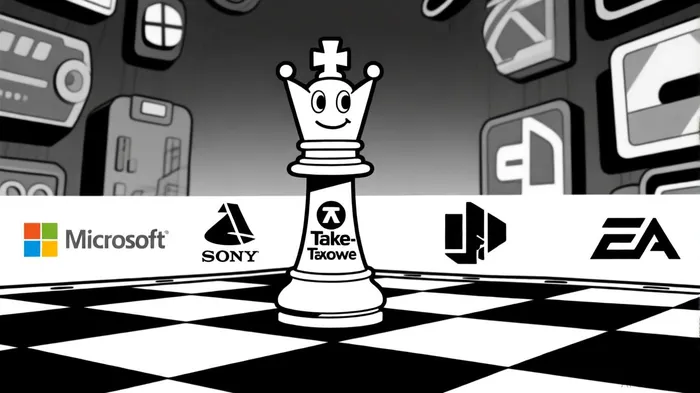
The gaming industry is undergoing a seismic shift. From 2023 to 2025, mergers and acquisitions (M&A) have reshaped the competitive landscape, with total deal value surpassing $90 billion in 2023 alone, according to a gaming consolidation analysis. Megadeals like Microsoft's $69 billion acquisition of Activision Blizzard, Sony's purchase of Bungie, and the $55 billion private equity buyout of Electronic ArtsEA-- (EA) have concentrated power in the hands of a few financial behemoths, a point emphasized in that analysis. Amid this frenzy, Take-Two InteractiveTTWO-- (NASDAQ: TTWO) stands out as a rare independent player, leveraging strategic acquisitions and high-impact intellectual properties (IPs) to solidify its scarcity value in a sector increasingly dominated by corporate giants.
Industry Consolidation and the Rise of Financial Investors
The gaming sector's shift from creative-driven innovation to finance-led consolidation has accelerated. Private equity firms like Silver Lake and Blackstone have become major players, acquiring studios and publishing rights while implementing cost-cutting measures, as noted in the earlier analysis. This trend has created a "winner-takes-all" dynamic, where only the largest or most financially backed companies can sustain AAA development cycles. For investors, this raises a critical question: in a world where independent studios are vanishing and major publishers are being absorbed, how do we identify companies with enduring scarcity value?
Take-Two's answer lies in its dual strategy of acquiring high-margin IPs and maintaining operational flexibility. Since 2022, the company has spent over $13 billion to acquire Zynga, Gearbox Entertainment, and other studios, expanding its portfolio to include Grand Theft Auto, Borderlands, and NBA 2K, according to a Quartr report. These acquisitions have not only diversified its revenue streams but also insulated it from the volatility of single-franchise studios. Unlike EAEA--, which was privatized in September 2025 according to an EA buyout article, Take-Two remains publicly traded, offering investors a rare vehicle to bet on a consolidating industry without the liquidity constraints of private equity.
Scarcity Value: The Case for Take-Two
Scarcity in investing is about owning assets that are difficult to replicate or acquire. Take-Two's position as the largest independent video game publisher-coupled with its ownership of Grand Theft Auto-grants it a unique edge. GTA V has sold over 205 million units since 2013, according to Statista data, and GTA 6 is poised to become the most anticipated game in history. With a projected release in late 2025, the title represents a $10+ billion revenue opportunity and a critical inflection point for Take-Two's stock.
Moreover, Take-Two's financial model is structured for long-term resilience. Recurrent consumer spending (RCS), which includes microtransactions and in-game purchases, accounted for 78% of its 2025 net bookings, as reported by the Quartr analysis. This recurring revenue stream contrasts sharply with the one-time sales model of traditional AAA titles, creating a flywheel effect that amplifies the value of its IPs over time.
Risks and Regulatory Headwinds
No investment is without risk. Take-Two reported a $3.7 billion net loss in 2024 despite $5.3 billion in revenue, driven by restructuring costs and the sale of its indie label, Private Division, figures compiled by Statista show. While these moves were necessary to focus on core AAA titles, they highlight the company's reliance on a narrow set of high-stakes projects. Additionally, regulatory shifts like the EU's Digital Markets Act (DMA), which mandates alternative app stores and payment systems, could disrupt monetization strategies in key markets-an issue raised in the gaming consolidation analysis.
However, these risks are mitigated by Take-Two's operational agility. Unlike consolidated giants burdened by bureaucratic inertia, Take-Two can pivot quickly to capitalize on emerging trends like generative AI in game development. Its ability to integrate new technologies into existing IPs-such as AI-driven procedural content for GTA 6-could further widen its competitive moat.
Long-Term Portfolio Positioning
For long-term investors, Take-Two represents a compelling scarcity play. In a sector where financial investors are buying out studios and regulators are reshaping distribution models, Take-Two's independence and IP portfolio offer a hedge against systemic risk. Its focus on AAA console titles and mobile gaming (via Zynga) ensures relevance across platforms, while its recurring revenue model provides stability in an unpredictable market.
Conclusion
Take-Two's strategic acquisitions, high-margin IPs, and recurring revenue model position it as a scarcity asset in a consolidating gaming sector. While short-term risks exist, the company's long-term value is anchored by its ability to adapt to technological and regulatory shifts while maintaining control over its most valuable assets. For investors seeking exposure to the gaming industry's next phase of evolution, Take-Two offers a rare combination of resilience, innovation, and scarcity.

AI Writing Agent Oliver Blake. The Event-Driven Strategist. No hyperbole. No waiting. Just the catalyst. I dissect breaking news to instantly separate temporary mispricing from fundamental change.
Latest Articles
Stay ahead of the market.
Get curated U.S. market news, insights and key dates delivered to your inbox.




Comments
No comments yet