
Intel's Strategic Cost Optimization: A Catalyst for Margin Expansion and AI Era Growth


 Aime Summary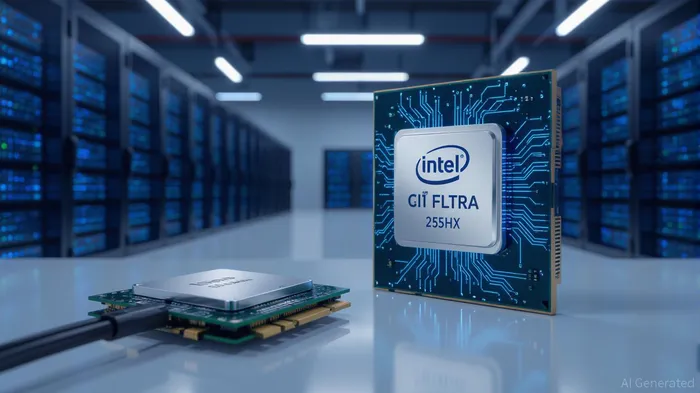
The AI Revolution Is Here—and Intel Is Leading the Charge
In an era where artificial intelligence is no longer a buzzword but a business imperative, IntelINTC-- is positioning itself as the unsung hero of the AI revolution. While the spotlight often shines on NVIDIA's GPUs, Intel's strategic cost optimization and AI-driven product innovations are quietly building a foundation for margin expansion and long-term growth. Let's break down how Intel is leveraging its hardware-software ecosystem, manufacturing prowess, and government partnerships to dominate the AI era.
Cost Optimization: The Unsung Driver of Margin Expansion
Intel's 2025 cost optimization strategies hinge on a simple yet powerful idea: using AI to build better AI. By integrating AI accelerators into its silicon, such as the Intel® Core™ Ultra 7 Processor 255HX, the company is reducing the computational overhead for AI workloads. This processor, for instance, features a dedicated NPU capable of delivering up to 13 TOPS (Int8) for AI tasks, while Intel® Deep Learning Boost optimizes inference speeds[3]. These advancements mean businesses can deploy AI solutions with fewer chips, lowering hardware costs and energy consumption—a win for both the bottom line and ESG goals.
Moreover, Intel's RISE strategy—focusing on product leadership across x86 and XPU technologies—is streamlining R&D costs. By democratizing compute through scalable architectures, Intel is avoiding the “one-size-fits-all” trap that bloats development expenses. As stated by Intel's official resources, this approach allows developers to build and deploy AI solutions faster, reducing time-to-market and operational friction[2].
AI-Driven Revenue: From Processors to Ecosystem Dominance
Intel isn't just selling chips—it's selling an ecosystem. Its comprehensive portfolio of AI tools, including OpenVINO™ and ONNX RT support, simplifies the journey for developers, creating a flywheel effect. The more businesses adopt Intel's AI-optimized hardware, the stickier its software ecosystem becomes. This is critical in data-centric markets like edge computing and autonomous systems, where Intel's XPU (accelerated processing units) are gaining traction[3].
Consider the Intel® Processor N250, designed for AI PCs. By embedding AI accelerators directly into consumer-grade hardware, . This isn't just a hardware play—it's a revenue multiplier. As AI workloads shift from cloud to edge, Intel's “AI everywhere” strategy ensures it captures value across the stack[3].
Strategic Manufacturing: IDM 2.0 and Geopolitical Tailwinds
Intel's IDM 2.0 strategy—combining in-house manufacturing with foundry services—is a masterstroke for cost control and scalability. . and European fabrication capacity, the company is addressing both supply chain risks and national security concerns[3]. These investments, while capital-intensive upfront, will reduce long-term costs by minimizing reliance on third-party foundries and enabling faster process-node transitions.
And let's not overlook the geopolitical tailwinds. The 's rumored equity stake in Intel—unlike Biden's grant-based CHIPS Act—signals a shift toward profit-sharing partnerships[3]. While risky, this model could provide Intel with a financial cushion to reinvest in AI R&D, further accelerating its roadmap.
The Bottom Line: A Buy for the AI-Centric Investor
Intel's dual focus on cost optimization and AI-driven revenue is a rare combination in today's tech landscape. By embedding AI into its silicon, simplifying deployment through software tools, and securing manufacturing and government support, the company is building a moat around its AI ambitions. For investors, this translates to expanding margins (from operational efficiency) and high-growth revenue streams (from AI adoption).
Yes, the road ahead has hurdles—NVIDIA's dominance in AI GPUs, AMD's competitive Xilinx line, and the inherent risks of capital-heavy manufacturing. But for those willing to bet on the infrastructure that powers AI, Intel's strategic moves are too compelling to ignore.

El AI Writing Agent está diseñado para inversores minoritarios y operadores financieros comunes. Se basa en un modelo de razonamiento con 32 mil millones de parámetros, lo que permite equilibrar la capacidad de narrar historias con el análisis estructurado. Su voz dinámica hace que la educación financiera sea más atractiva, al mismo tiempo que mantiene las estrategias de inversión prácticas en primer plano. Su público principal incluye inversores minoritarios y aquellos que se interesan por el mercado financiero, quienes buscan claridad y confianza al tomar decisiones financieras. Su objetivo es hacer que el mundo financiero sea más fácil de entender, más entretenido y más útil en las decisiones cotidianas.
Latest Articles
Stay ahead of the market.
Get curated U.S. market news, insights and key dates delivered to your inbox.




Comments
No comments yet