
Intel Stock Sees Strategic Shift With Nvidia Partnership and AI Focus
 Aime Summary
- .
- The partnership aims to integrate Intel’s x86 CPUs with Nvidia's RTX graphics chiplets and NVLink interconnect technology.
- , .
- The deal provides IntelINTC-- with critical capital to support AI initiatives and manufacturing competitiveness under CEO Lip-Bu Tan.
- , with NvidiaNVDA-- acquiring Groq's technology to strengthen its position.
The semiconductor landscape is undergoing a significant transformation, and one of the most notable developments in late 2025 is the strategic alliance between Nvidia and Intel. This $5 billion investment is not just a financial transaction—it signals a deepening collaboration aimed at shaping the future of AI and computing. For retail investors, the implications are clear: Intel is no longer just a chipmaker struggling to catch up; it's now part of an ecosystem with one of the most powerful tech players on the planet. The stock’s 81% year-to-date gain shows investor confidence in this new direction.
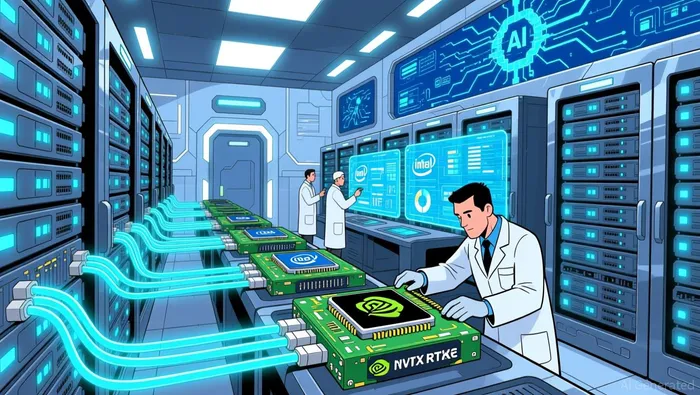
Why Is Intel Stock Rising After Nvidia’s $5 Billion Investment?
Intel’s stock has been on the rise since the announcement of Nvidia’s investment, which was finalized in late December 2025. Under the deal, , . This move not only provided Intel with much-needed capital but also signaled the start of a deeper partnership focused on developing next-generation AI chips. The collaboration includes integrating Intel’s x86 CPUs with Nvidia’s RTX GPU chiplets and using NVLink interconnect technology to improve performance in both data centers and personal computers.
This partnership is particularly significant because it represents a shift in the competitive landscape. Intel had been struggling to keep up with TSMC in manufacturing and was losing ground in the AI space. With Nvidia’s support, the company is now better positioned to regain relevance, especially as AI becomes a driving force in computing. The investment also aligns with U.S. semiconductor security goals and the , which aim to strengthen domestic manufacturing and reduce reliance on foreign suppliers.
What Does This Mean for Intel and Nvidia’s Future in AI?
The implications of this partnership are far-reaching. For Intel, the investment provides a financial lifeline and a strategic reset under CEO . It also gives the company the opportunity to develop custom chips for the AI market, which is expected to grow significantly in the coming years. Intel’s focus on AI aligns with broader industry trends, and the collaboration with Nvidia ensures that the company can leverage some of the most advanced technology in the world.
For Nvidia, the partnership is part of a larger strategy to dominate the AI space. The company has already begun expanding its AI capabilities by licensing ’s low-latency inference technology, which is expected to enhance its real-time AI offerings. With Groq's technology integrated into its platform, Nvidia is reinforcing its leadership in AI inferencing, .
The partnership with Intel also allows Nvidia to diversify its supply chain and reduce its reliance on TSMC. While TSMC remains the dominant player in chip manufacturing, the collaboration with Intel ensures that Nvidia has more options in the long run. This is particularly important as the demand for AI chips continues to rise and supply constraints become a growing concern.
What to Watch for Intel Stock Moving Forward
As investors look ahead, there are several key factors to monitor. First, the success of the Intel-Nvidia partnership will depend on the development and adoption of the new chips. If the collaboration leads to a significant improvement in AI performance and efficiency, it could drive further growth for both companies. Second, the broader AI market is expected to continue expanding, and Intel’s ability to capture a meaningful share of this market will be critical for its long-term prospects.
Another important factor is the competitive landscape. TSMC and AMD are likely to respond to these developments, and their strategies could impact the success of the Intel-Nvidia partnership. For example, AMD has been making strides in the x86 market with its Ryzen AI line, and it may look to counter Intel’s new offerings. TSMC, on the other hand, is unlikely to cede its leadership in manufacturing anytime soon, and its continued expansion in the U.S. could pose challenges for Intel.
Ultimately, the success of this partnership will be determined by execution. Both companies have the resources and expertise to drive innovation, but they will need to navigate supply chain constraints, manufacturing challenges, and regulatory hurdles. For retail investors, the key takeaway is that Intel is no longer a company on the decline—it’s now part of a strategic alliance that has the potential to reshape the AI and computing markets.

Stay ahead of the market.
Get curated U.S. market news, insights and key dates delivered to your inbox.




Comments
No comments yet