
Intel's Stock Faces Turbulence Amid Strategic Transformation Challenges
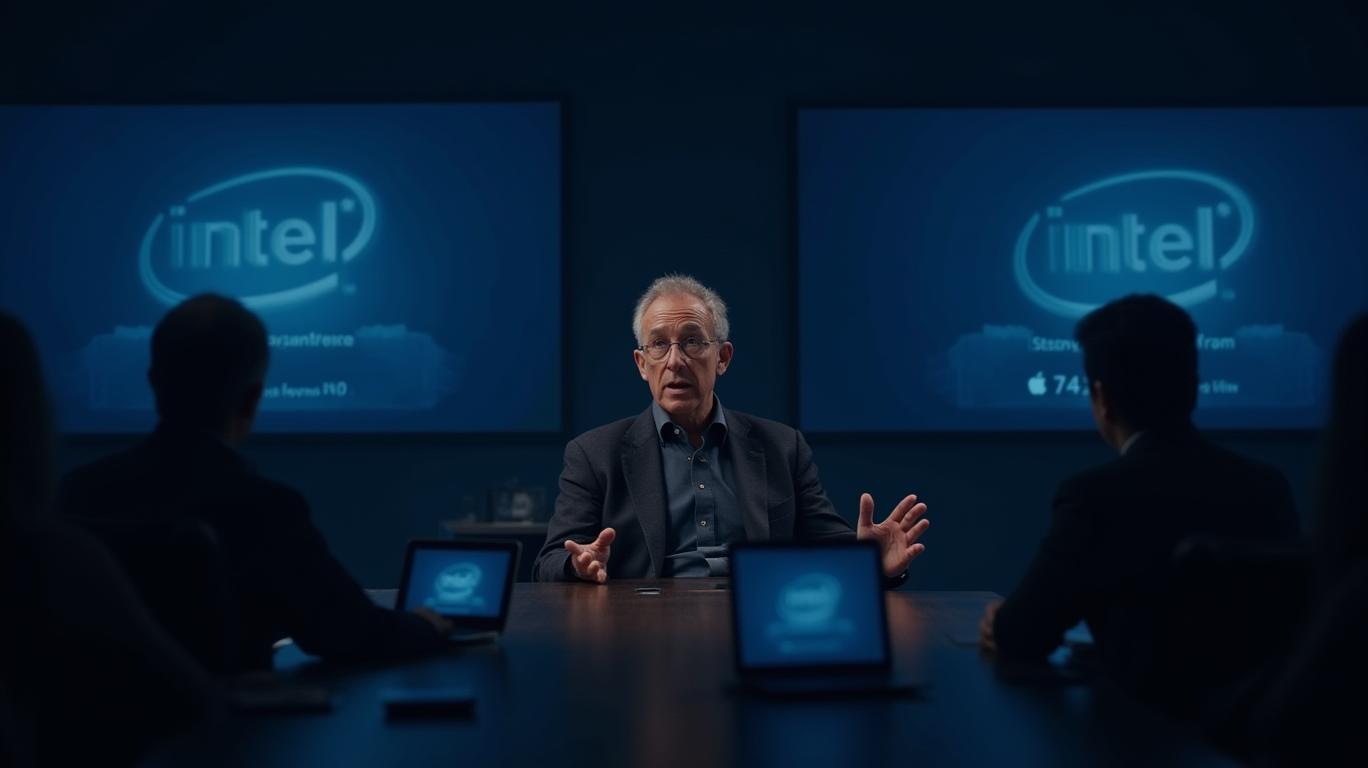
In the fiercely competitive semiconductor industry, IntelINTC-- has long been a leading player. However, its market position has faced unprecedented challenges in recent years. Recently, former Intel CEO Pat Gelsinger, during an interview with CNBC, expressed his unwavering support for his successor, David Chin, and his team, urging Wall Street to focus on long-term investments rather than short-term gains.
With rapid technological advancements, the competition in the semiconductor industry has intensified, especially with formidable challenges from companies like TSMCTSM-- and Samsung. Gelsinger mentioned his strong belief in the previously proposed "IDM 2.0 strategy" (Integrated Device Manufacturing 2.0), which he believes remains the right direction for Intel's future transformation. This strategy not only necessitates continued in-house chip production but also actively seeking external client foundry business.
However, achieving these goals is not without difficulties. Gelsinger emphasized that constructing next-generation wafer fabs requires substantial financial backing, which entails a long capital return cycle that burdens any company. Market analysis suggests that as Intel's core business faces further decline, the company will increasingly rely on external funding to drive its transformation.
Gelsinger sharply criticized Wall Street's short-term focus, pointing out this approach conflicts with Intel's long-term strategic goals. In the tech sector, especially within semiconductors, maintaining competitiveness often requires sustained investment and development, yet the quarterly scrutinies and market expectations of Wall Street add unseen pressures on companies.
“Balancing a multi-year strategic transformation while meeting quarterly earnings expectations poses a colossal challenge,” Gelsinger noted, highlighting a common issue faced by many tech companies. CEO David Chin has the formidable task of balancing five-year strategic planning with quarterly financial assessments and managing investor pressures, making it one of the most challenging roles in today’s business landscape.
Despite departing from Intel, Gelsinger remains hopeful for the company he's dedicated decades to. His confidence in Chin and the team's ability to complete the transformation is evident, though he acknowledges the process will be fraught with difficulties. "I sincerely hope Intel and David Chin can accomplish this crucial transformation," Gelsinger emphasized, asserting its importance not only to Intel but to the semiconductor industry and the U.S. economy at large.
Looking ahead, the semiconductor industry is at a pivotal transformation juncture. New technologies like AI, IoT, and 5G offer unprecedented opportunities. As an established tech giant, Intel's ability to position itself strategically in this volatile market is a topic of interest. However, formidable challenges such as financial constraints, fierce market competition, and rapid technological changes also pose significant hurdles on its transformation path.
Ultimately, Gelsinger's support and confidence in Intel not only reflect his personal sentiments but also convey anticipation for the industry's future. The transformation path may be fraught with difficulties, but with firm belief and strategic innovation, Intel is expected to navigate through the challenges ahead.
In this fast-evolving industry, the future holds many unknowns. Observers are eager to see how Intel will reinvent itself amid challenges and hope more capital market participants will view corporate long-term development goals with a broader perspective beyond short-term financial metrics.

Stay ahead of the market.
Get curated U.S. market news, insights and key dates delivered to your inbox.




Comments
No comments yet